
Israel has given the green light to BILS, a new shekel-pegged stablecoin issued by local crypto exchange Bits of Gold, marking a major step for the country’s digital-asset ecosystem. The Capital Market, Insurance and Savings Authority approved the launch in a Monday notice after a two-year pilot of BILS on the Solana blockchain, making it one of the first stablecoins tied directly to the Israeli shekel. Under the approval, BILS reserve assets will be held in Israel in designated, segregated accounts — a custody structure designed to make oversight easier as regulators continue to build out local rules for digital assets. The decision is part of a broader regulatory push by the Israel Tax Authority and the Finance Ministry to bring selected stablecoin operations under domestic supervision. Youval Rouach, founder and CEO of Bits of Gold, framed the stablecoin as a bridge between Israel’s fiat currency and blockchain finance. “BILS creates a direct bridge between the Israeli shekel and the global digital assets economy, enabling real-time payments, on-chain trading and programmable financial applications based on a regulated local currency,” he said. The move comes as stablecoins gain increasing traction globally. The stablecoin market is currently worth more than $320 billion, dominated by U.S. dollar-pegged tokens such as Tether’s USDT. Israel’s approval underscores growing interest from national authorities in offering domestically regulated alternatives to dollar-centric stablecoins. Internationally, stablecoin regulation remains a live political issue. In the United States, lawmakers have been negotiating a digital-asset market structure bill that would address stablecoin yields, tokenized equities and ethics concerns tied to prominent crypto figures. That bill has been stalled in the U.S. Senate since July 2025 and still requires a markup from the Senate Banking Committee before it can advance. With BILS now approved and reserves to be kept onshore, Israel is positioning itself to offer a regulated, shekel-based on-ramp to blockchain finance — potentially opening new rails for real-time payments and on-chain services tied to a national currency. Read more AI-generated news on: undefined/news

Article
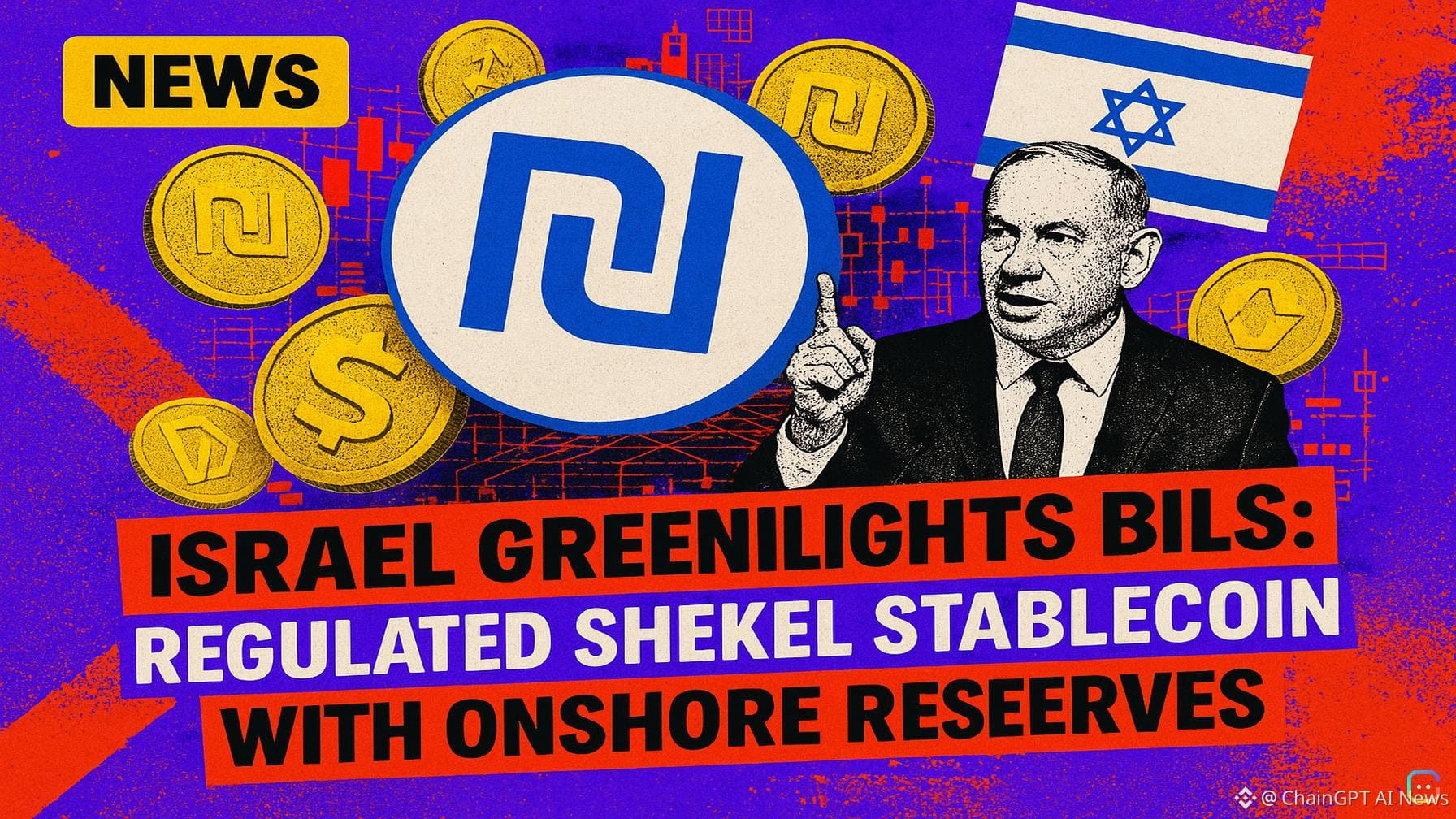
Israel Greenlights BILS: Regulated Shekel Stablecoin With Onshore Reserves
Disclaimer: Includes third-party opinions. No financial advice. May include sponsored content. See T&Cs.