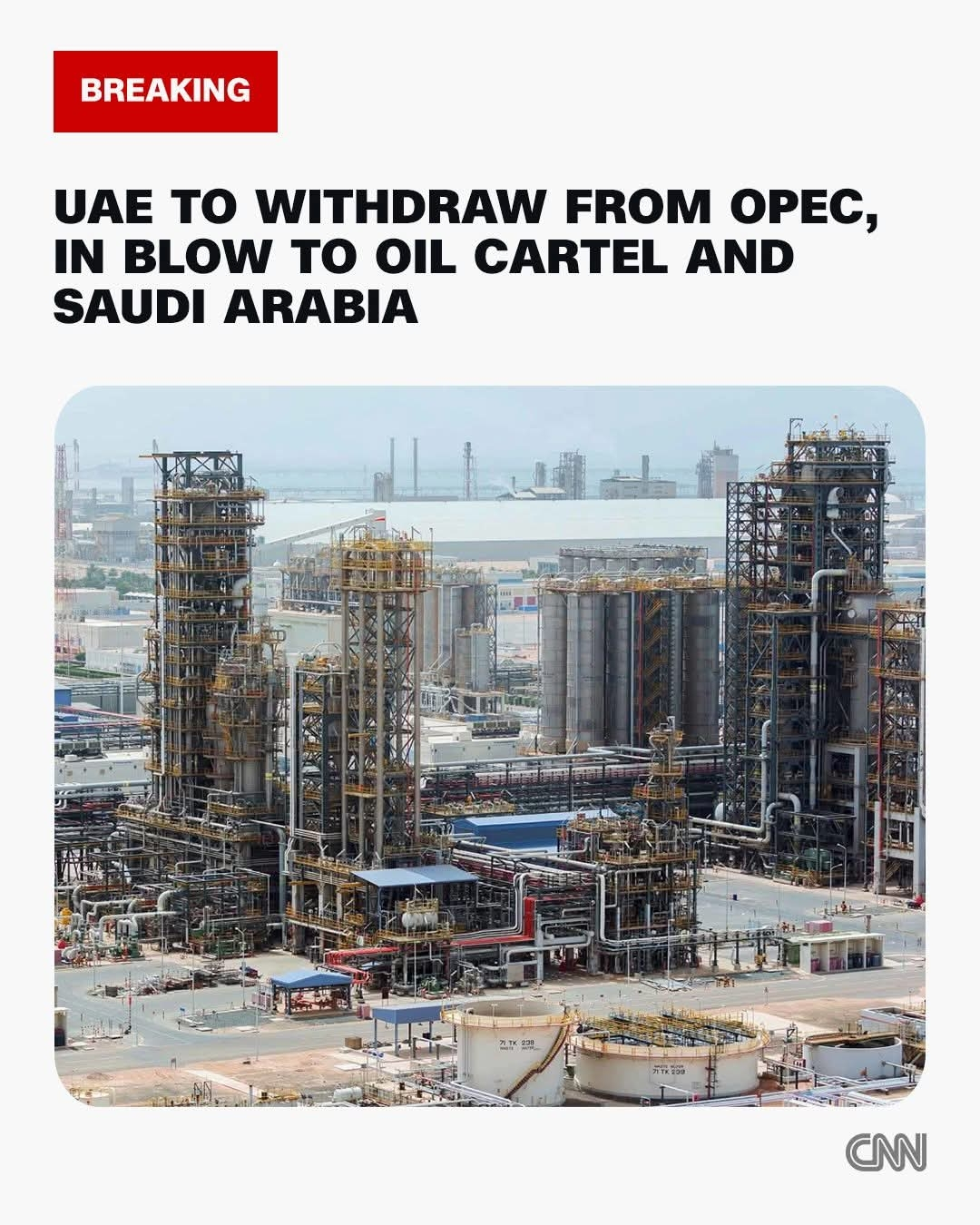
The geopolitical landscape of the Middle East has just shifted on its axis. In a move that has sent shockwaves through global markets, the United Arab Emirates (UAE) officially announced its withdrawal from OPEC and the wider OPEC+ alliance, effective May 1, 2026. 📉🛢️
This landmark decision comes at perhaps the most volatile moment for global energy in decades, as the ongoing Iran war continues to roil international markets and disrupt critical supply chains.
⚡ A Strategic Divorce
For years, the UAE has quietly chafed under the production quotas set by the p SirishaVienna-based cartel. By exiting, Abu Dhabi is reclaiming full sovereignty over its "black gold."
Production Freedom: The UAE has invested billions to expand its production capacity to 5 million barrels per day. Staying in OPEC meant leaving that capacity—and potential revenue—on the table.$ETH
National Interest: The Ministry of Energy stated the move follows a "comprehensive review" aimed at aligning with their long-term strategic and economic vision.
The Saudi Rift: This exit marks a definitive cooling of relations with Saudi Arabia. As Riyadh and Abu Dhabi compete for foreign investment and regional dominance, the UAE is no longer willing to play second fiddle to Saudi oil policy.
⚔️ The Shadow of War
The timing is critical. With the Strait of Hormuz facing unprecedented disruptions due to the conflict with Iran, the "Greatest Global Energy Security Challenge" is no longer a hypothetical.
Supply Shocks: Global oil supply plummeted by over 10 million barrels per day in March alone.
Price Volatility: Brent Crude has seen historic swings, at times surging past $120/bbl.
Economic Rebuilding: Analysts suggest the UAE needs the flexibility to maximize exports to fund domestic recovery and infrastructure protection following recent regional missile and drone tensions.
🌍 What This Means for the World
The End of Cartel Dominance? Without the UAE—one of the few members with significant spare capacity—OPEC’s ability to "balance" the market is severely diminished.
Market Fluctuations: While the UAE promised a "gradual and measured" increase in production, the sudden loss of a core member creates deep uncertainty for traders.
New Alliances: Look for the UAE to align more closely with non-OPEC producers and the U.S. as it navigates a post-cartel world.
"The UAE is choosing flexibility over fraternity. In a world at war, they are prioritizing their own economic survival and future-proofing their energy sector." — Market Analyst
What do you think about the UAE's exit? Is this the beginning of the end for OPEC? 👇
#OPEC #UAE #OilPrices #EnergyCrisis #SaudiArabia #BreakingNews #GlobalEconomy #Geopolitics #IranWar2026 #Abu Dhabi #Riyadh #OilAndGas
@UAE_MOEI @OPECSecretariat @SaudiEnergyMin