
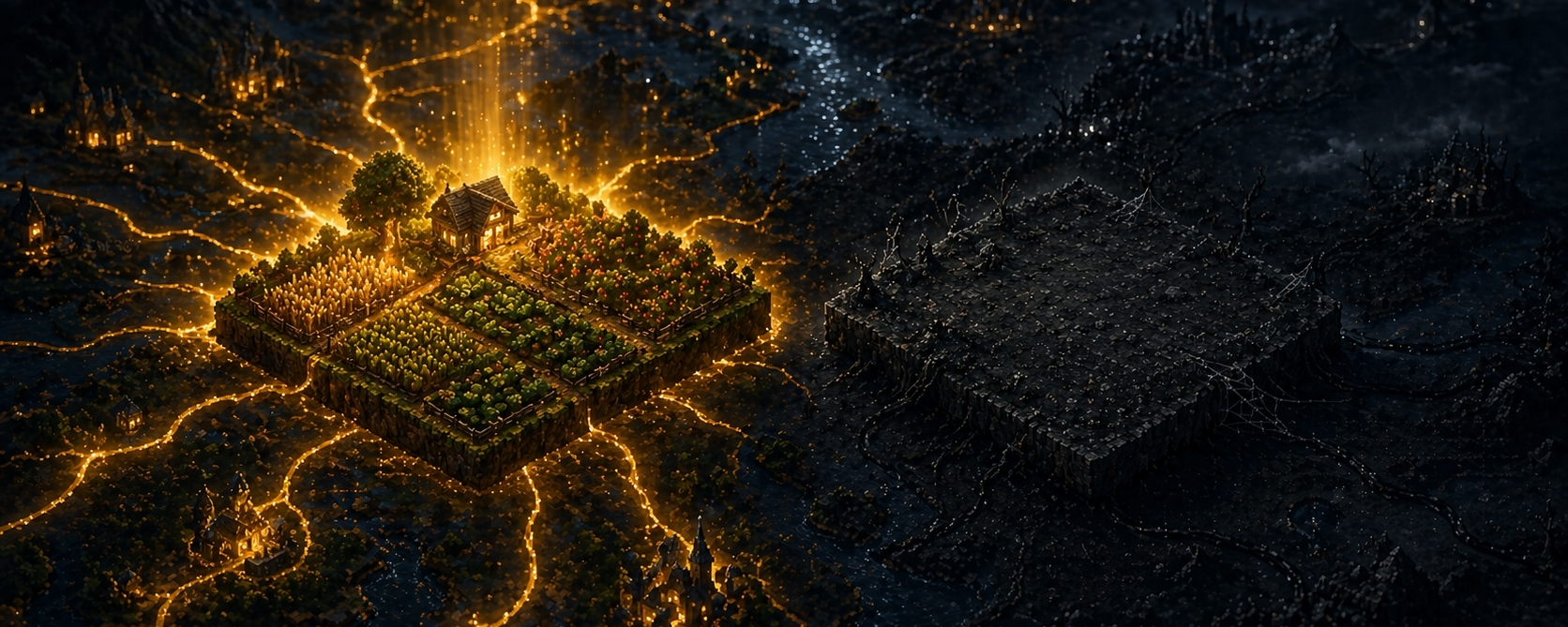
I bought the land and then I did nothing with it. That felt fine at first.
Most NFT ownership works that way. You hold, you wait, the value either moves or it doesn't. The asset sits in your wallet and the market decides what happens next. So when I first picked up a Pixels land NFT I applied the same logic. Got it, noted it, moved on. Checked the floor price occasionally. Didn't think much about what was actually happening on the plot itself.
Then I started paying attention to the plots that were actually working.
There's a visible difference inside Pixels between land that's being actively configured and land that's just sitting there. Active plots attract workers. Workers generate harvests. Harvests feed crafting chains. The whole thing creates a kind of gravitational pull — players naturally drift toward land that's producing something useful, and away from land that isn't offering anything. It's not enforced by any rule. It just happens because people optimize for output. And idle land produces no output worth optimizing around.
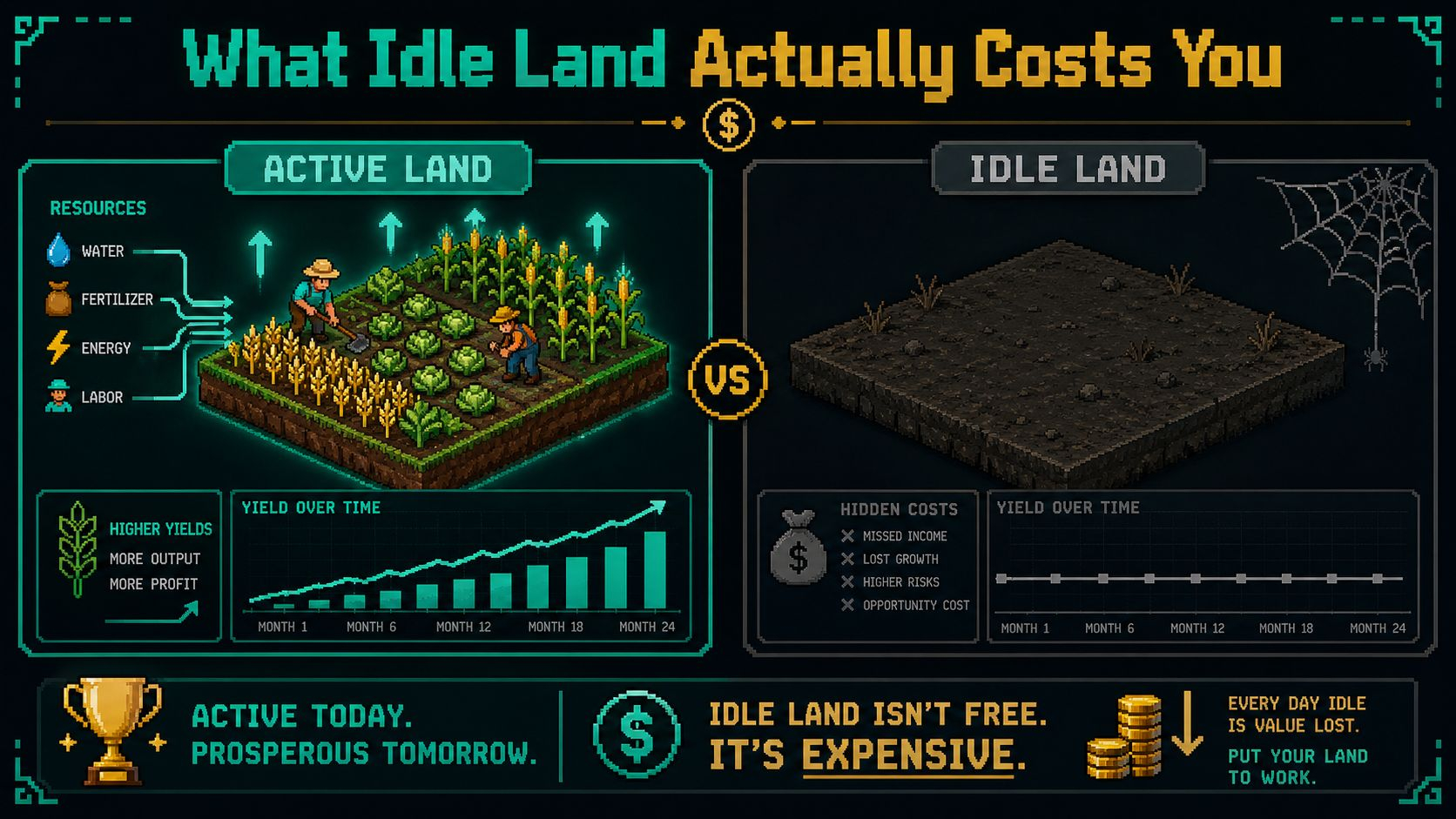
What I hadn't expected was how quickly idle land starts feeling like a drag rather than a neutral position. It's not that nothing happens when your land sits empty. It's that everything around it keeps moving while yours doesn't. The opportunity cost becomes visible in real time. Other plots are accumulating history — worker patterns, resource flows, a reputation for reliability. Mine was accumulating nothing. And in a system where the land's value is partly defined by what it consistently does, doing nothing is its own kind of loss.
The $PIXEL mechanic that connects to this is subtle but real. Configuring land properly — setting crops, adjusting for what workers need, staying responsive to what the economy actually demands — requires engagement with the token layer. Upgrades cost something. Better configurations cost something. The land doesn't improve passively. It improves because someone kept making decisions about it and those decisions required spending. Idle land isn't just unproductive. It's falling behind every plot where an owner stayed involved.
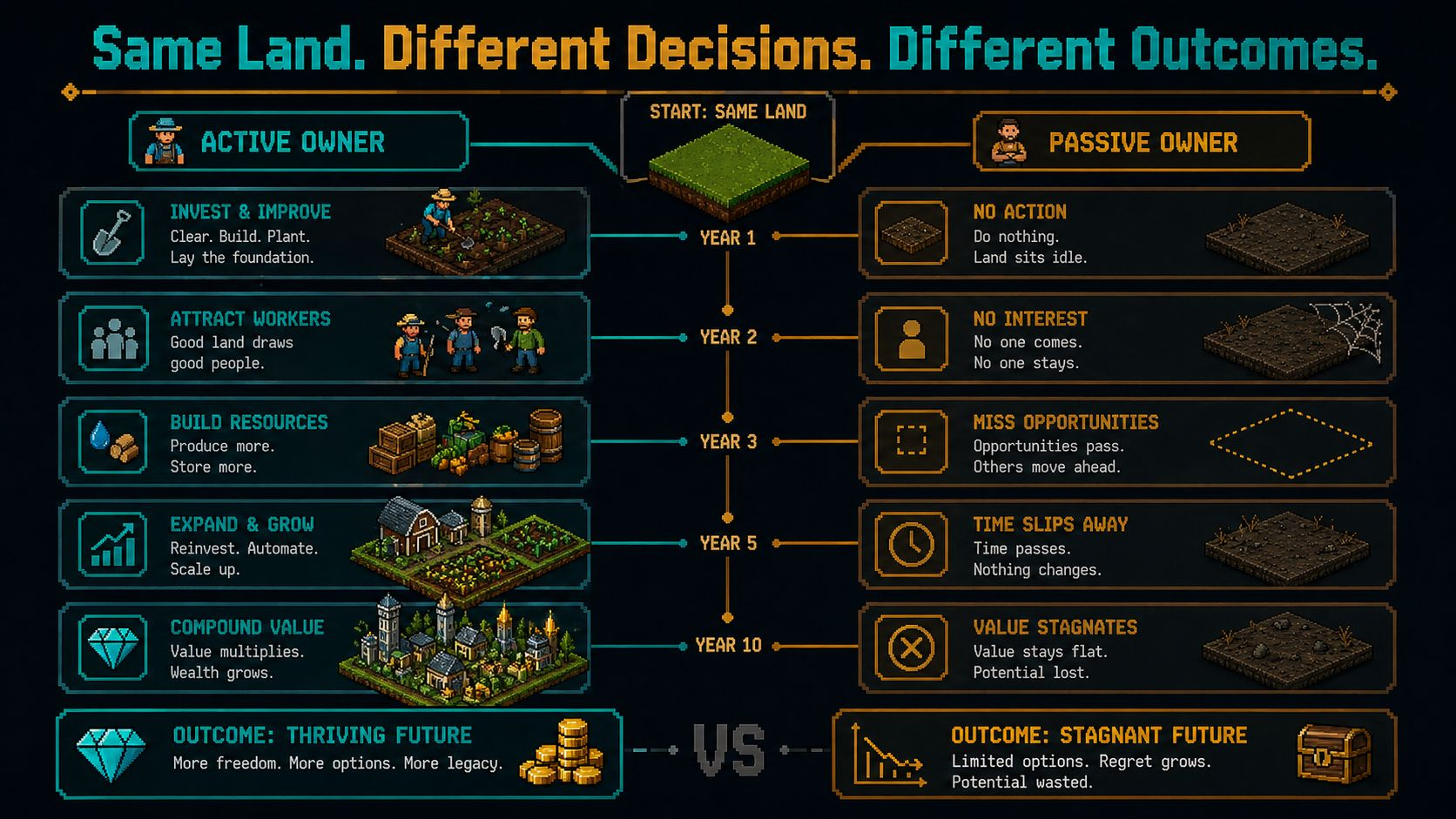
Here's what sits uncomfortably with me. The people most likely to hold land passively are probably the people who paid the most for it. Early buyers, larger holders, people who came in with investment logic rather than gameplay logic. And those are exactly the people whose idle plots create dead zones in an ecosystem that needs active participation to stay healthy. The ownership is real. The contribution isn't.
There's a version of this where Pixels land NFTs slowly sort themselves into two categories — plots with economic history and plots without it. And the gap between those two categories keeps widening the longer one owner stays active and another stays idle.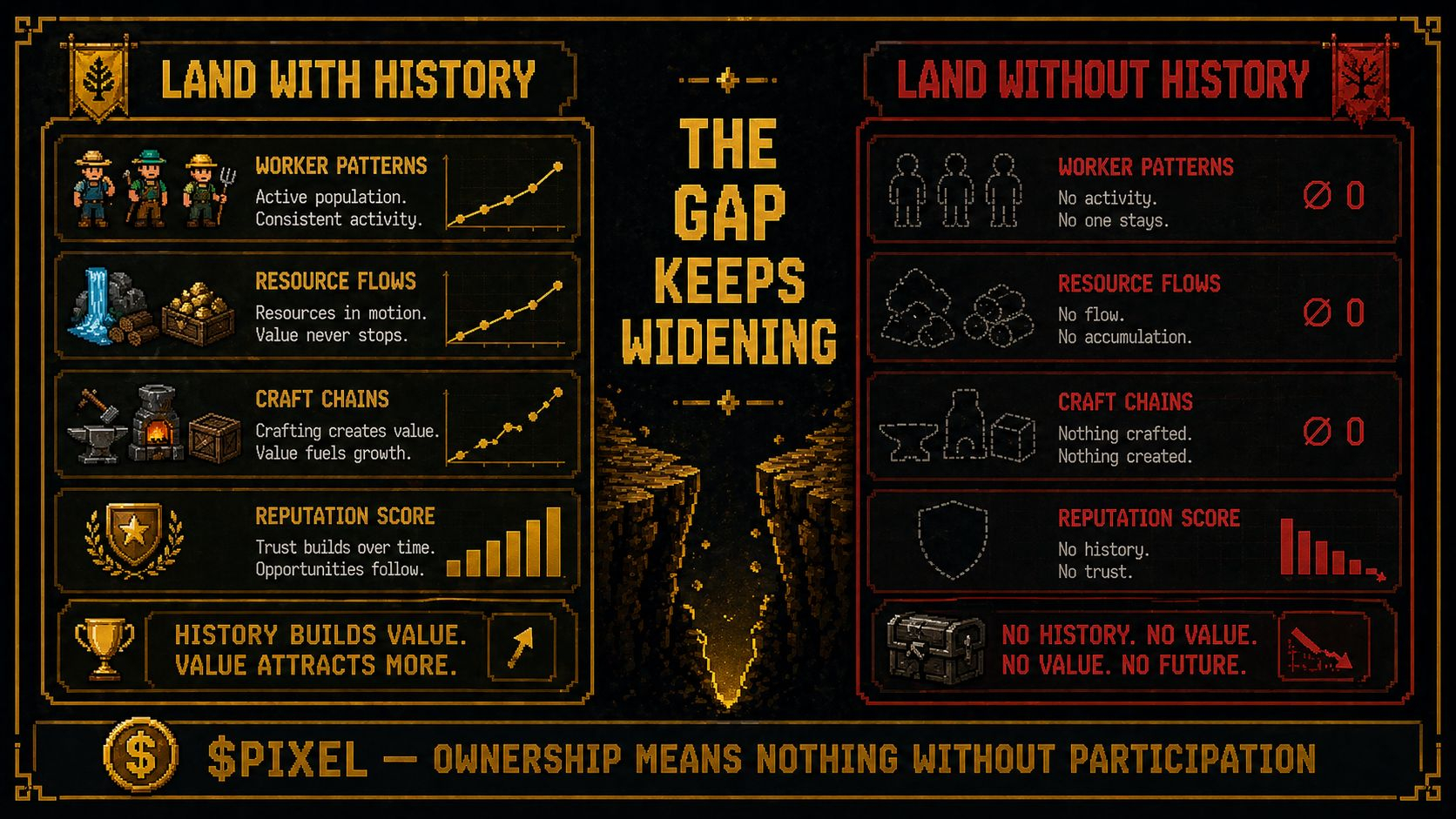
Passive ownership in most asset classes just means waiting. In Pixels it might mean slowly becoming irrelevant inside the very system you own a piece of.
Is holding land here actually ownership — or is it just an option that expires quietly if you never use it?
$PIXEL @Pixels #pixel #web3gaming #RONIN #nft #Web3
