
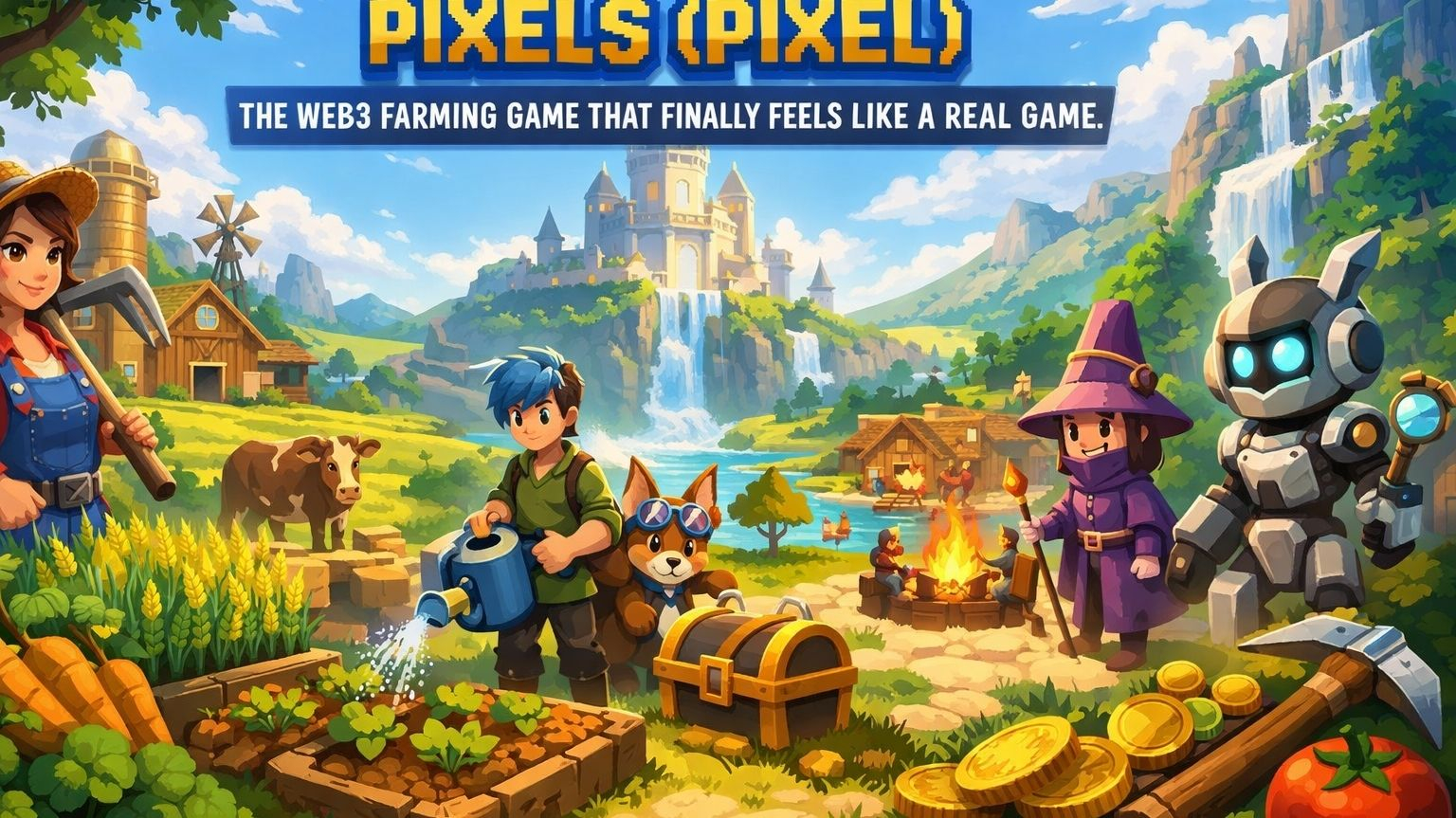
For years, Web3 gaming has struggled with one big problem: it often felt more like financial speculation disguised as gameplay. Many projects promised earnings but delivered shallow experiences. That’s where Pixels (PIXEL) changes the narrative.
Built on the Ronin Network, Pixels is not trying to reinvent gaming—it’s trying to fix what Web3 got wrong. Instead of pushing players to “earn fast,” it invites them to play, explore, and gradually build value over time.
And surprisingly, it works.
What Exactly Is Pixels?
At first glance, Pixels looks like a simple pixel-art farming game. But under the surface, it’s a social, player-driven economy wrapped inside a game world.
You start small:
A basic farm
Limited energy
Simple tools
Then slowly, through farming, crafting, and interacting with others, you grow into something bigger.
It’s less about grinding endlessly—and more about building your own digital life at your own pace.
Why Pixels Feels Different
🌱 1. Gameplay Comes First
Unlike early Web3 titles, Pixels doesn’t throw tokens at you immediately. Instead, it focuses on:
Progression systems
Resource management
Exploration
Earning is part of the experience—but not the only goal.
🌍 2. A Living, Social World
Pixels isn’t a solo grind. It feels alive because:
Players share the same world
Guilds and communities matter
Events bring players together
It’s closer to a social sandbox than a traditional farming game.
🔗 3. Web3 That Doesn’t Get in the Way
One of the smartest things Pixels does is hide the complexity of blockchain.
You don’t need to understand NFTs or wallets to start playing. But if you choose to go deeper:
You can own land
Trade assets
Earn tokens
This layered approach makes it accessible without losing depth.
The Core Gameplay Loop
Pixels keeps things simple—but meaningful.
🌾 Farming
Plant crops
Harvest resources
Optimize your farm
It’s relaxing, but also strategic over time.
🔨 Crafting & Building
Turn raw materials into useful items
Upgrade tools and efficiency
Create value from effort
🧭 Exploration
Discover new areas
Complete tasks
Interact with NPCs and players
💬 Social Interaction
Join guilds
Trade with others
Compete or collaborate
This is where Pixels truly stands out—it turns routine gameplay into a shared experience.
The Economy: A Smarter Approach
Earlier Web3 games failed because they rewarded too much, too fast. Pixels takes a different route.
💡 “Play Smart” Instead of “Play to Earn”
Rewards are tied to activity and contribution
Progression matters more than shortcuts
Inflation is controlled more carefully
There are two main systems:
Coins → used for everyday gameplay
PIXEL token → holds real value
This balance helps the game stay fun without breaking its own economy.
Real Value, Without the Pressure
Yes, Pixels allows you to earn—but it doesn’t force you to.
You can:
Play casually and enjoy the game
Or go deeper and optimize for rewards
That flexibility is rare—and it’s a big reason why players stay.
The Growth Story
Pixels didn’t become popular overnight.
It started as a small experimental game
Grew steadily through community feedback
Exploded after moving to Ronin
Today, it’s one of the most active Web3 games, with massive daily engagement.
But more importantly—it has retention, something most Web3 games struggle with.
Where Pixels Still Needs Work
Let’s be real—it's not perfect.
🔁 Gameplay can feel repetitive over time
📉 Token value depends on the market
🧠 Some systems still require learning
But unlike many projects, Pixels is actively evolving. Updates feel meaningful, not just cosmetic.
The Bigger Picture: Why Pixels Matters
Pixels isn’t just a game—it’s a proof of concept.
It shows that:
Web3 games can be fun
Economies can be sustainable
Players don’t need to be investors to enjoy the experience
This shift—from hype to utility—is what the space has needed for years.