


I used to think failed games were just dead weight.
That sounds harsh, but in gaming it usually feels true. A game launches, users try it, rewards bring some early activity, then the loop gets quiet. The community moves on. The studio either patches harder, spends more, or lets it fade into the background.
Most ecosystems treat that like failure.
For a long time, I did too.
If a game doesn’t hold attention, doesn’t create strong revenue, doesn’t become the next big title, then what is left?
But Pixels made me look at that question differently.
Because inside Pixels, a game may not need to become a hit to still become useful.
That was the first shift for me.
I started noticing some weaker loops would disappoint players publicly, then later the broader system felt sharper. Reward timing improved. User flow changed. Certain incentives looked more selective. At first I thought I was forcing patterns that were not there.
Then I kept seeing it.
Maybe the real question is not only whether a game wins.
Maybe it is what the system learns when it doesn’t.
That is where the mechanism starts.
A normal gaming ecosystem loses value when a title fails. Pixels may be able to absorb failure as data and turn it into better future decisions.
That changes the meaning of failure.
It becomes less like waste.
More like training material.
I started thinking about this after watching how player behavior changes when a new loop appears.
At first, every new game looks like content. Fresh map, fresh mode, fresh tasks, maybe some rewards to pull users in. You expect players to try it, judge it, and either stay or leave.
But the important part is not just who stays.
It is who leaves, when they leave, why they leave, and what kind of player leaves first.
That sounds small, but inside a connected system it matters a lot.
A failed game can reveal things a successful game hides.
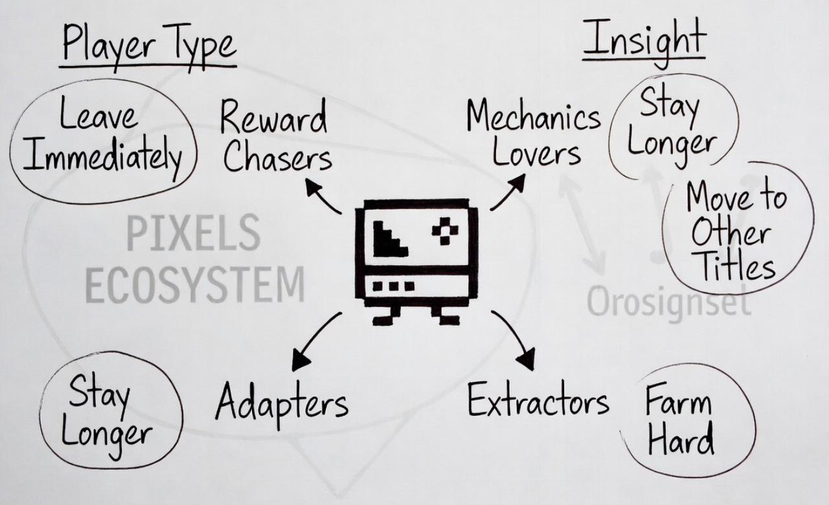
A strong game keeps many types of users active at once. Real players, farmers, social users, speculators, casual users, deep grinders. They all stay because the loop is already strong enough to carry them.
But a weaker game separates them faster.
Some players vanish immediately when rewards are not enough. Some stay because they enjoy the mechanic. Some only appear if incentives rise. Some test the system and leave when friction appears. Some quiet players suddenly become more active because the new loop fits them better than the main one.
That is not useless.
That is signal.
This is where Pixels feels different from a normal portfolio of games.
In a normal ecosystem, each title carries its own fate. If it fails, the loss mostly stays local. Bad launch, low users, weak retention, wasted budget.
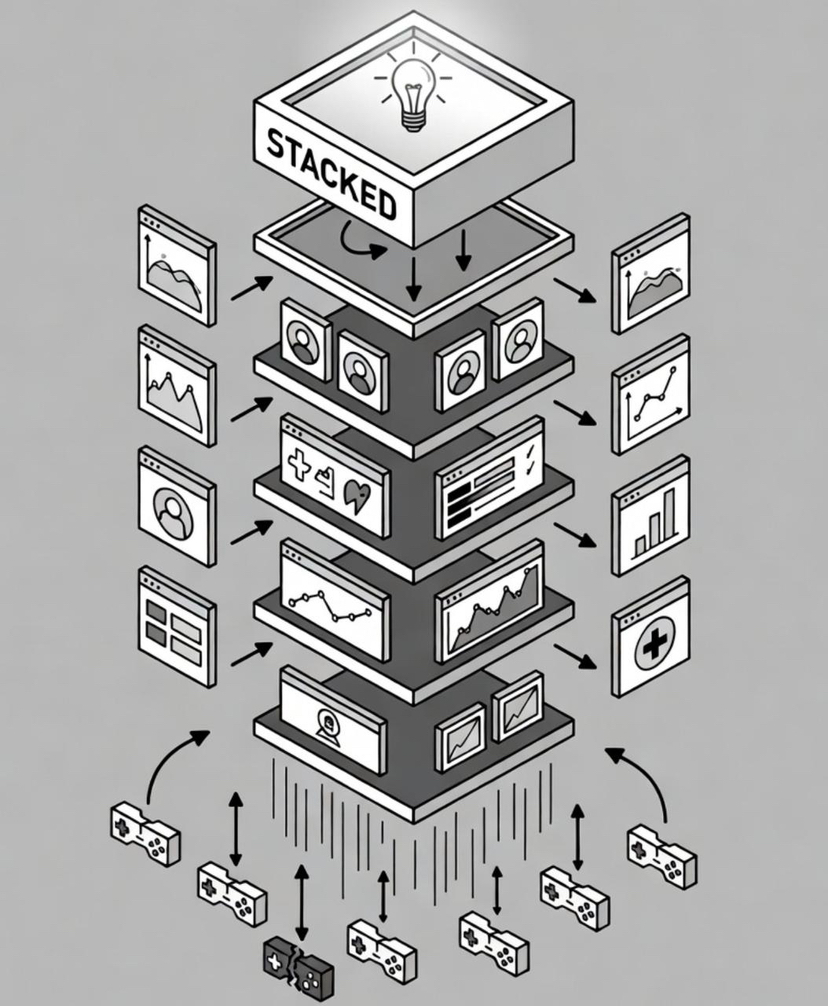
But Pixels has Stacked sitting above the visible game layer.
That matters.
Because the farm loop, new titles, missions, task behavior, reward response, session patterns, and cross-game movement do not have to remain trapped inside one game. They can become part of a wider behavioral map.
The game itself may fail as a product.
But the behavior it reveals can still strengthen the system.
That is the anchor.
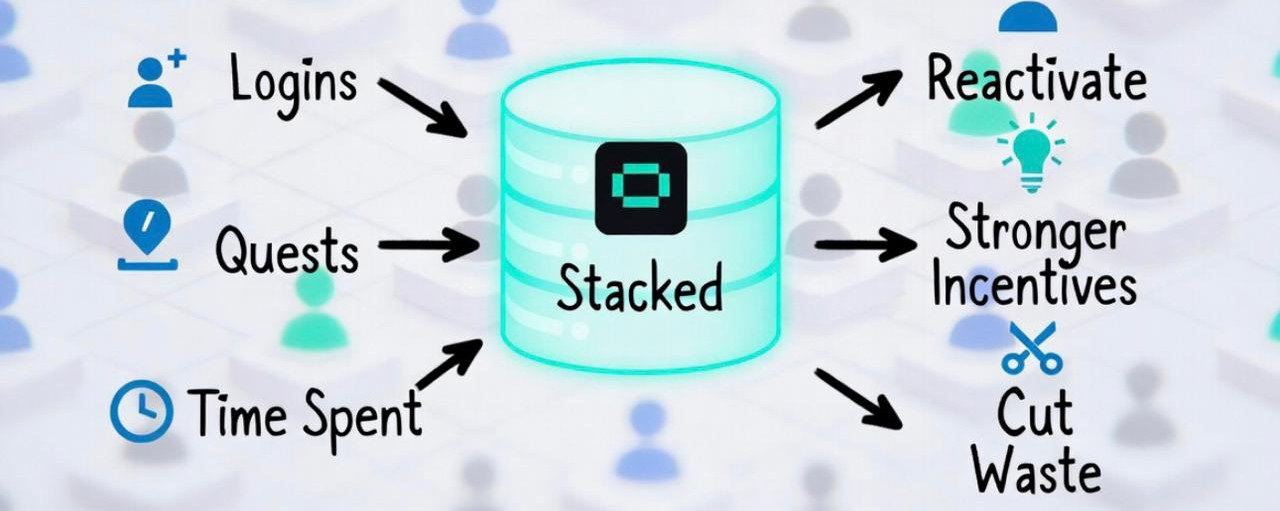
I stopped seeing Stacked as a reward tool a while ago. It feels closer to memory. Pixels runs the visible loops, but Stacked seems to remember who adapted, who extracted, who disappeared, who returned only when incentives changed. If that memory is real, then weak games are not empty launches. They are tests.
Pixels can use weak games as stress tests for player quality.
Not in a fake motivational way.
In a real architecture way.
A weak loop shows which users only respond to payout. It shows which users adapt when mechanics change. It shows who moves across titles naturally. It shows who needs constant rewards to stay visible. It shows which mechanics create dead zones and which still create surprising retention.
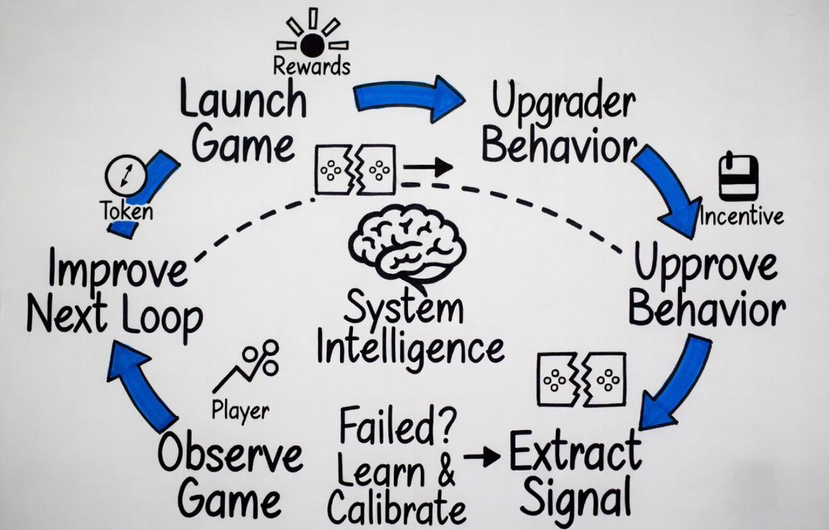
That information can flow back into the next incentive cycle.
So the failed game is not just abandoned.
It becomes part of the system’s memory.
I think this is where many people misread game ecosystems.
They look at every new title as a yes or no event.
Did it win?
Did it flop?
Did it pump the token?
Did it bring users?
Those questions matter, but they are not enough for Pixels.
Because if Pixels is building a learning layer around games, then even bad outcomes have value.
A title with weak retention may tell the system which incentive structure was too shallow.
A title with high reward claims but no return behavior may expose extractive cohorts.
A title with low total users but strong repeat sessions may reveal a niche player type worth supporting.
A title that fails publicly may still teach the system privately.
That last part kept bothering me because it feels true in many systems, not just games. Public numbers say one thing, internal learning says another. Pixels may be one of the few places where both can exist at once.
I started seeing Events this way too.
Events are not just campaigns.
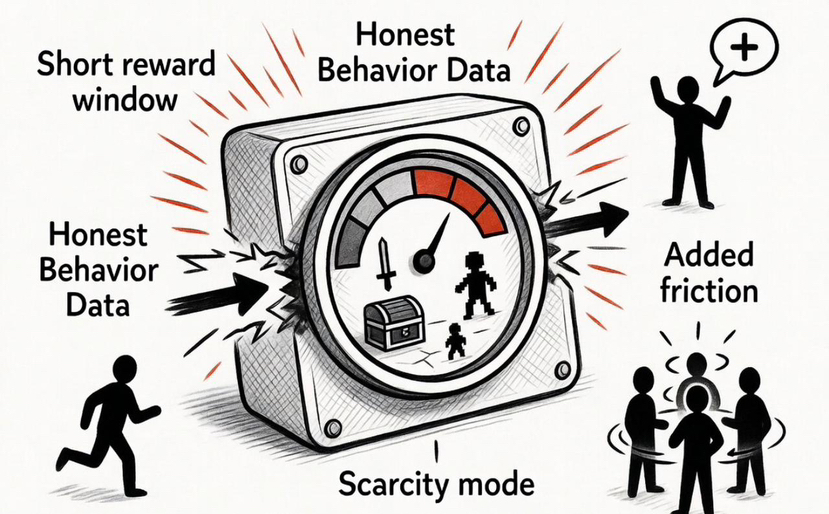
They are controlled moments where users reveal how they behave under pressure.
Give them a short window and see who rushes.
Reduce rewards and see who stays.
Add friction and see who adapts.
Change the mechanic and see who gets lost.
Push people toward another title and see who follows naturally.
This is where failed loops can become useful.
Because failure creates contrast.
When everything is rewarding and exciting, everyone looks interested.
When the loop is weaker, interest becomes more honest.
That honest behavior is valuable.
Stacked becomes important here because it can turn that behavior into future action.
Not just “this game failed.”
More like:
This cohort left when token rewards dropped.
This group stayed when progression mattered.
This player type crossed into the new game without extra reward pressure.
This mechanic created activity but no retention.
This reward size attracted volume but no loyalty.
This segment should not receive the same incentive next time.
That is not simple game publishing.
That is feedback infrastructure.
And this is exactly where Pixels has a possible edge.
Most ecosystems only learn after they burn budget.
Pixels can learn while routing future incentives differently.
I used to think failed games only damaged trust.
Sometimes they do.
If a team launches poor products again and again, users stop caring. No system can magically turn bad execution into strength forever.
But there is a difference between failure that disappears and failure that gets processed.
Most ecosystems let failure disappear.
Pixels may be able to process it.
That means a weak game can still help answer questions the main game could not.
What happens when the easy farming loop is removed?
What happens when users must coordinate?
What happens when reward timing changes?
What happens when players face scarcity instead of abundance?
What happens when the game demands skill instead of repetition?
Each answer can sharpen the next title, next task board, next campaign, next reward distribution.
That is how a failed game becomes an asset.
Not because the game itself is valuable.
Because the information extracted from it is.
This also changes how I think about expansion.
Most projects expand like they are throwing darts.
Launch enough games and hope one hits.
Pixels could be doing something more layered.
Each game becomes a different environment for reading behavior.
One title reveals patience.
Another reveals timing.
Another reveals social coordination.
Another reveals pure farming.
Another reveals whether players can handle strategy when simple rewards are not enough.
If one of those games fails, it still adds to the map.
The system understands the player base with more resolution.
That matters because rewards are expensive.
Attention is expensive.
Token emissions are expensive.
If a failed game helps Pixels waste less on the wrong users next time, then it created value.
Not loud value.
But real value.
There is a strong economic side to this.
In Web3 gaming, failed incentives are usually deadly.
You pay users, users leave, token weakens, confidence drops, and the next campaign needs even more spending to create less effect.
That spiral is brutal.
But if a system learns from failed incentive design, the loss does not stay purely negative.
It improves underwriting.
Who should receive rewards?
Which behaviors should be ignored?
Which loops attract mercenary users?
Which users are worth reactivating?
Which games create real depth even if the early numbers are smaller?
This is where Pixels becomes more interesting than a single game economy.
Because it may be building a way to make failure less destructive.
Not painless.
Just more useful.
I don’t think this means every failed game becomes good.
That would be too easy.
Some failures are just failures.
Bad design is still bad design. Weak execution still matters. Players will not keep forgiving endless experiments if nothing improves.
But the difference is whether the ecosystem has a layer that can remember the failure properly.
Without that layer, failure is only loss.
With that layer, failure can become calibration.
That is the real point.
Pixels’ architecture gives it a chance to turn game outcomes into system intelligence.
The visible game may end, but the signal can still move forward if the system knows how to keep it.
This is also hard to copy.
A competitor can launch more titles.
They can run more campaigns.
They can copy quest boards and reward pools.
But they cannot instantly copy the history of which players behaved in which ways across multiple loops and incentive conditions.
That history is not marketing.
It is earned through running the system.
Through mistakes.
Through weak events.
Through strong seasons.
Through users leaving and returning.
Through campaigns that worked and campaigns that quietly exposed waste.
That history becomes judgment.
And judgment is what makes the next decision better.
What changed my view on Pixels was simple.
I stopped seeing failed games as empty outcomes.
I started seeing them as pressure tests.
A game that fails can still reveal what kind of ecosystem you actually have.
Do users only stay when paid?
Do they adapt when mechanics shift?
Do they move across titles naturally?
Do they form habits around the system or only around rewards?
Those answers matter more than one launch headline.
The old ecosystem model is easy to understand.
Launch a game.
If it wins, celebrate.
If it fails, bury it.
Pixels may be moving toward something stronger.
Launch a game.
Watch how players behave.
Extract signal.
Adjust incentives.
Improve the next loop.
Carry the learning forward.
That model is slower and less glamorous.
But it is also more durable.
Because systems that can learn from failure are harder to kill than systems that need every launch to be perfect.
So when I think about Pixels now, I don’t only ask whether every new title will become a hit.
I ask a different question.
If it does not become a hit, what does Pixels learn from it?
That question feels more important than it first looks.
Because in most gaming ecosystems, failed games are liabilities.
In Pixels, they might become part of the intelligence layer.
And if that is true, then Pixels is not just building games.
It is building a system where even failure can feed the next decision.