
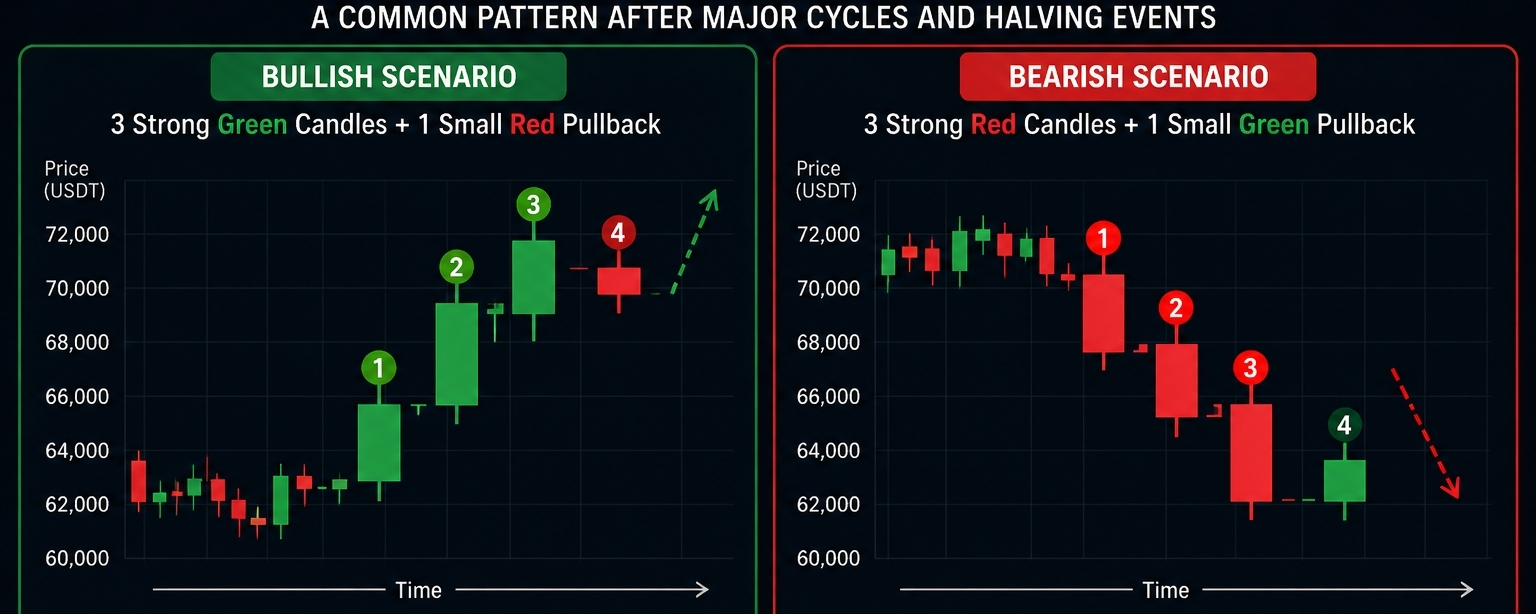
Everyone talks about the halving…
but very few understand what happens after.
The recent $BTC Bitcoin Halving has once again reduced the supply of new coins entering the market. Historically, this event has been one of the strongest long-term drivers for Bitcoin price.
But here’s the catch👇
👉 The real move doesn’t happen immediately.
📊 What Usually Happens After Halving
In past cycles:
First → Sideways or slow movement
Then → Accumulation phase
Finally → Strong bullish trend (months later)
👉 This delay happens because markets need time to absorb the reduced supply.
Miners earn less BTC, selling pressure decreases, and gradually demand starts to dominate.
🧠 But This Time Is Different
This cycle is not identical to previous ones.
Why?
Institutional interest is higher
Spot ETF demand has changed market structure
Global macro conditions are uncertain
👉 Meaning: price may not follow the exact same timeline.
⚠️ What Most Traders Get Wrong
Many expect:
“Halving happened → price should pump instantly”
That’s not how markets work.
👉 Halving is a trigger, not an instant result.
Short-term, you may even see:
dips
fake breakouts
choppy movement
🧠 My View
This phase right now is likely: 👉 Post-halving consolidation
Not the top.
Not the full bull run.
Just the setup phase.
⚡ What to Watch
Long-term accumulation zones
Volume during dips
Institutional inflows
If demand keeps building while supply is reduced…
👉 pressure builds silently.
🔚 Final Thought
Halving reduces supply.
But price moves only when demand reacts.
And that reaction…
usually comes later than people expect.
📊 Simple Expectation
Short-term → sideways / volatility
Mid-term → accumulation
Long-term → bullish bias remains
Will BTC impact on$BNB $ETH or other coin?
#StrategyBTCPurchase #BinanceLaunchesGoldvs.BTCTradingCompetition #AaveAnnouncesDeFiUnitedReliefFund #cryptouniverseofficial