
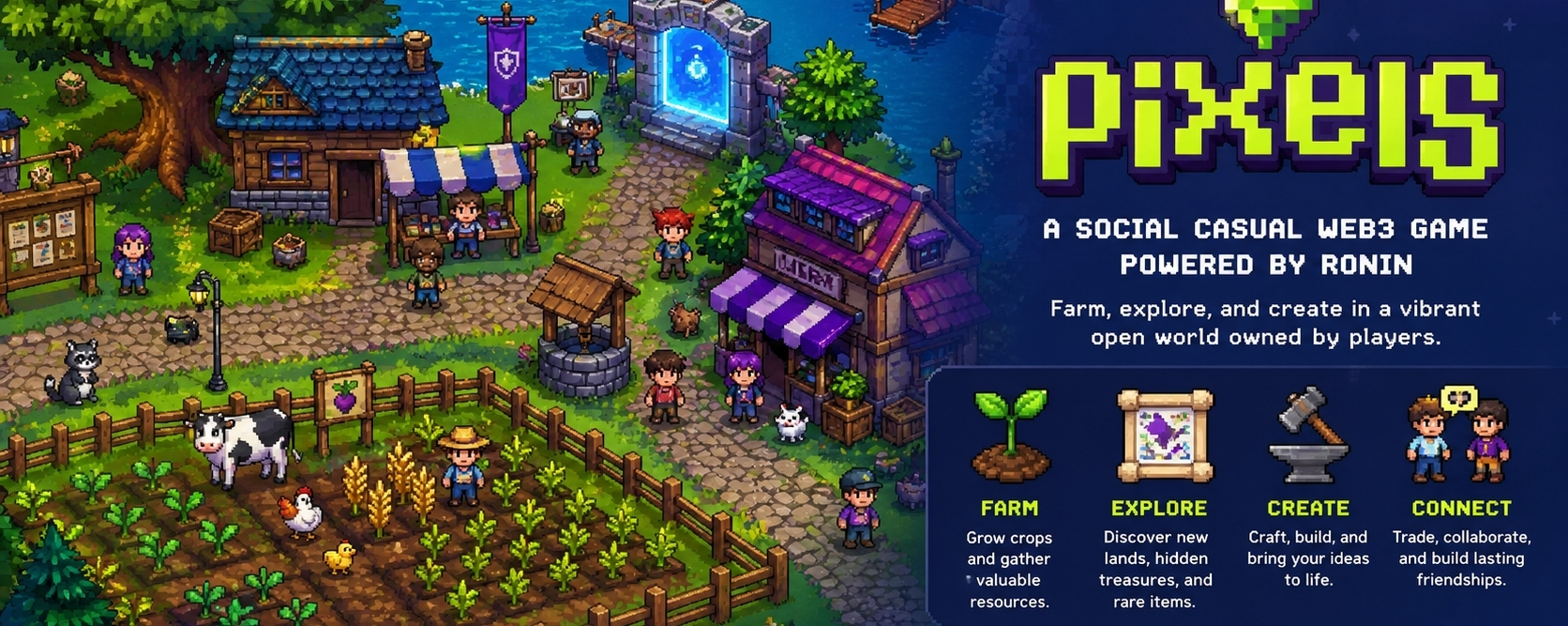
In a space where many Web3 games struggle to balance fun with functionality, Pixels (PIXEL) quietly takes a different path. It doesn’t try to overwhelm players with complexity or buzzwords. Instead, it focuses on something far more powerful: creating a world that feels alive, social, and genuinely rewarding to be part of.
Built on the Ronin Network, Pixels introduces a refreshing take on open-world gaming. At first glance, it may look like a simple farming and exploration game, but beneath that simplicity lies a deeper system designed around player freedom, creativity, and long-term value.
More Than Just Farming — A Player-Driven Economy
Farming in Pixels isn’t just a repetitive task. Every crop you grow, every resource you gather, feeds into a larger ecosystem shaped by players themselves. The game subtly turns everyday actions into economic decisions. What you plant, when you harvest, and how you trade can all influence your progression.
This creates a sense of purpose. You’re not just playing — you’re participating in a digital economy where your time and strategy actually matter.
Exploration That Feels Rewarding
Pixels encourages curiosity. Instead of guiding players down a fixed path, it opens the world and lets discovery lead the way. Hidden opportunities, rare items, and unexpected interactions make exploration feel organic rather than forced.
This design keeps the experience fresh. There is always something new to uncover, and no two journeys feel exactly the same.
Ownership That Changes the Game
One of the most valuable aspects of Pixels is true digital ownership. Unlike traditional games where your progress is locked inside a centralized system, Pixels gives players control over their assets.
Land, items, and resources exist beyond the game itself. This means your effort isn’t temporary. It has continuity, and in some cases, real-world value. That shift alone changes how players think about gaming — from consumption to investment of time and creativity.
Why Ronin Network Matters
The foundation of any Web3 game is its infrastructure, and Pixels benefits from being built on Ronin. With fast transactions and minimal fees, players can interact seamlessly without technical frustration. It removes the barrier that often holds Web3 gaming back and keeps the focus where it belongs — on the experience.
A Social World, Not Just a Game
What truly gives Pixels its identity is its community. This isn’t a solo experience. Players trade, collaborate, and build connections naturally as they progress. The social layer isn’t forced — it evolves from shared goals and interactions.
Over time, this transforms Pixels from a game into a digital society where relationships and reputation carry real weight.
Final Perspective
Pixels doesn’t try to be everything at once, and that’s exactly why it works. It combines simplicity with depth, creativity with ownership, and casual gameplay with meaningful value.
In a rapidly evolving Web3 landscape, Pixels stands out not because it promises the future — but because it quietly starts building it.