
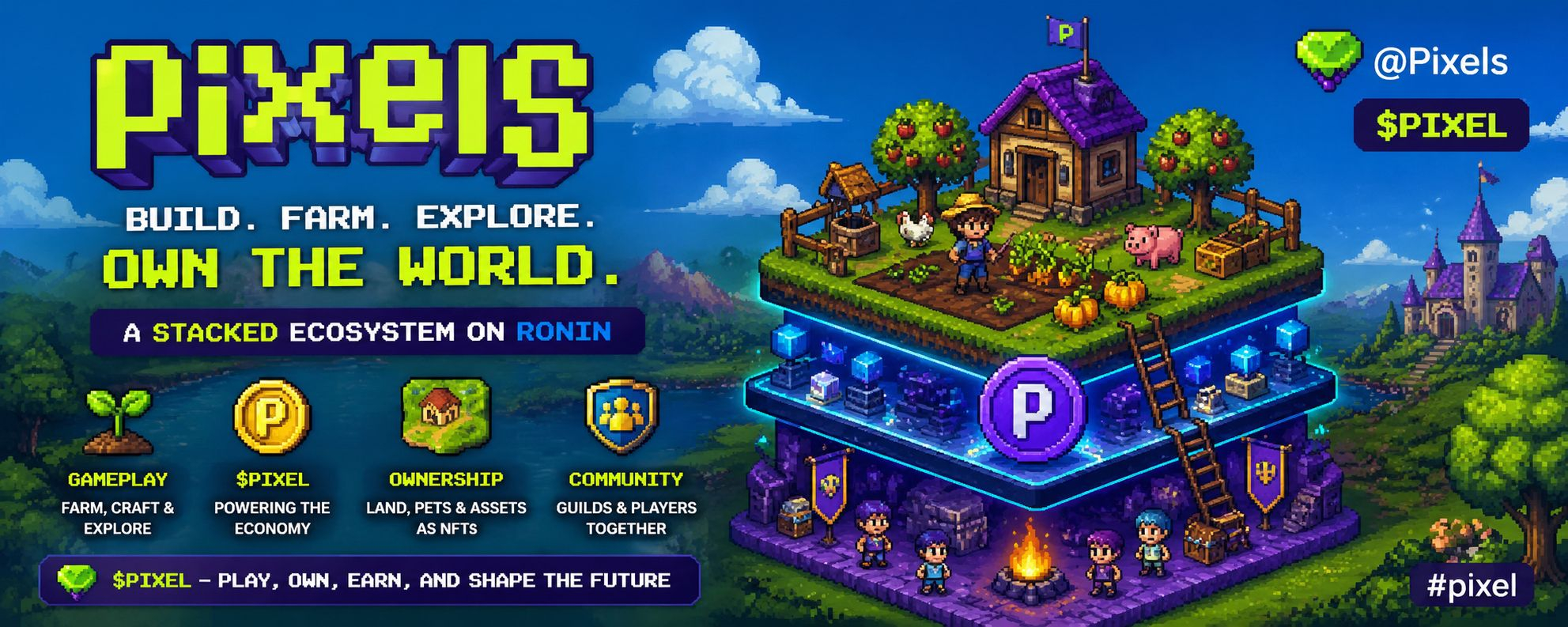
The Web3 gaming space is evolving fast, and one project leading this transformation is @Pixels. Built on the Ronin Network, Pixels is not just a simple farming game it’s a fully integrated GameFi ecosystem where gameplay, ownership, and economy merge seamlessly.
At its core, Pixels combines social interaction, land ownership, and resource management into a decentralized world. Players can farm, craft, explore, and trade while earning real value through $PIXEL . Unlike traditional games, where assets are locked, Pixels allows players to truly own their progress through NFTs and blockchain-based assets.
What Makes the Stacked Ecosystem Powerful?The real strength of Pixels lies in its “stacked ecosystem” approach:
• Game Layer: A free-to-play farming and exploration game that attracts mass adoption
• Token Layer ($PIXEL): Used for governance, premium features, NFT minting, and guild access
• NFT Layer: Land, pets, and in-game assets that players can own and trade
• Social Layer: Guilds and community-driven economies that boost engagement
This layered structure ensures sustainability. Instead of relying purely on speculative rewards, Pixels focuses on player-driven demand and long-term engagement.
Why Pixels Stands Out in Web3 Gaming
Most GameFi projects fail due to unsustainable tokenomics—but Pixels is different. It blends fun gameplay with real economic incentives. The introduction of VIP features, guild systems, and premium upgrades powered by $PIXEL creates continuous demand for the token.
Moreover, Pixels is shifting away from pure “Play-to-Earn” toward a “Play-and-Own” model, making it more appealing to mainstream gamers.
Final Thoughts
Pixels is not just a game—it’s a blueprint for the future of Web3 ecosystems. With its stacked design, strong token utility, and growing user base, it has the potential to become a dominant force in blockchain gaming.
If you’re bullish on GameFi, keeping an eye on @Pixels and $PIXEL could be a smart move.