On April 24, 2026, an independent researcher named Giancarlo Lelli officially received a reward of 1 BTC from the Project Eleven.
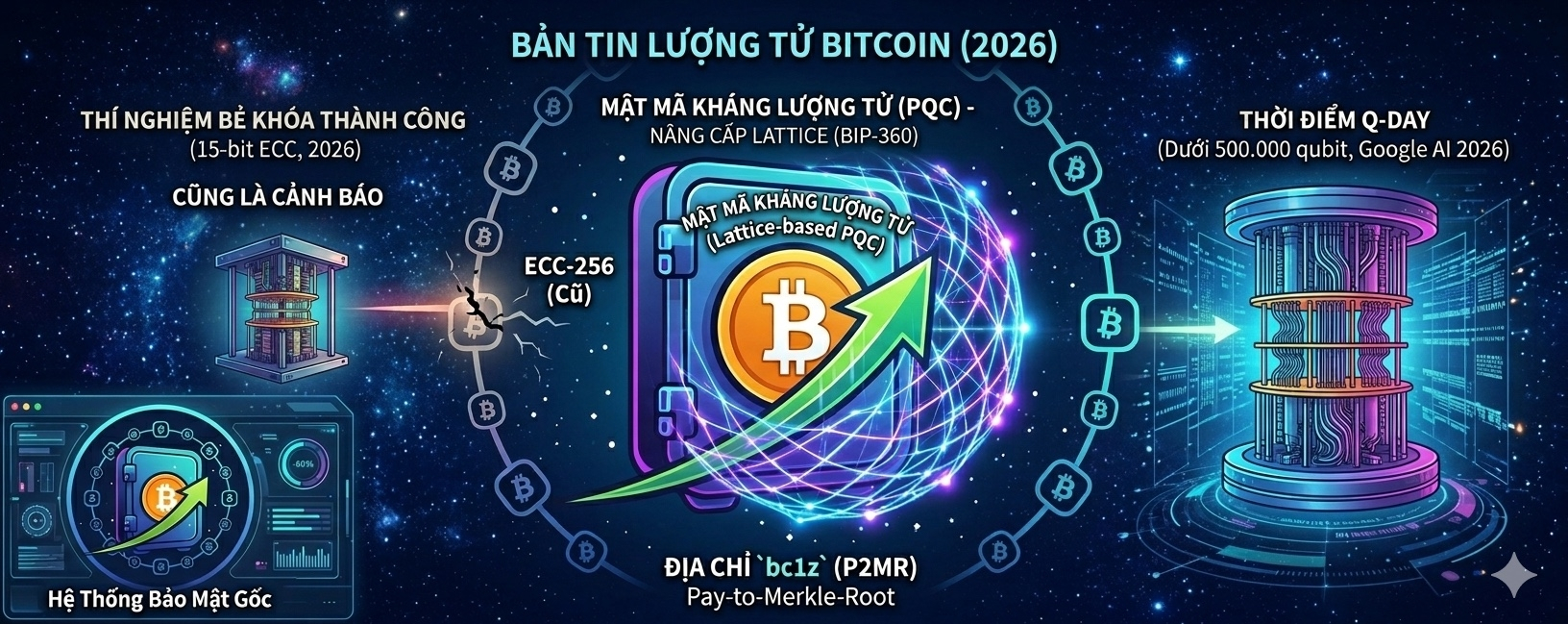
📌 Hack details: Lelli leveraged a quantum computer (accessed via the cloud) to successfully crack a 15-bit Elliptic Curve (ECC) key.
📌 Importance: Even though 15-bit is tiny compared to Bitcoin's current 256-bit standard, this is a frightening milestone as the scale of this quantum attack has increased 512 times compared to previous experiments in just one year.
📌 Conclusion: Bitcoin hasn't "crashed", but the door that quantum computers are pushing through has started to show cracks.
🧬 Update "Q-Day": When does Bitcoin really face danger?
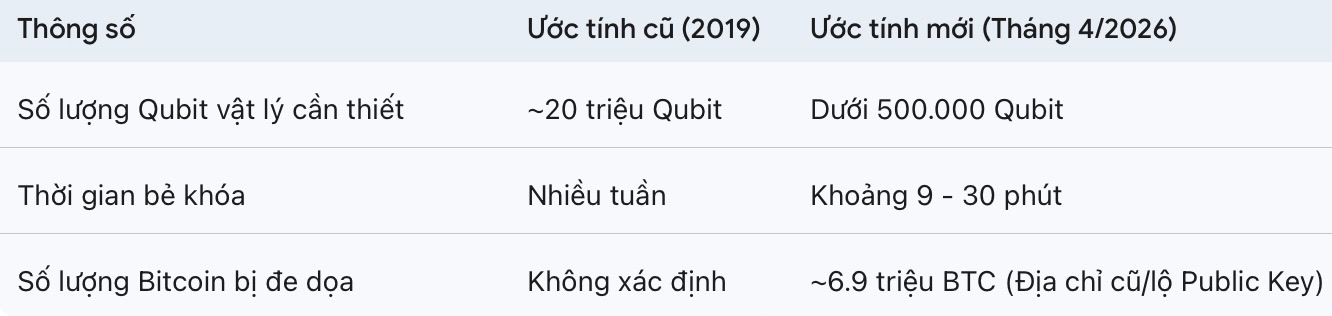
In early April 2026, Google Quantum AI released a shocking whitepaper. They optimized the algorithm to significantly reduce the resources required to break ECDSA-256 encryption (the encryption protecting Bitcoin).
🛡️ Bitcoin "strikes back": Quantum Resistance update
Don't worry too much, Bitcoin developers (Bitcoin Core) are not sitting idle. The year 2026 marks a major turning point in upgrading Bitcoin's "armor":
1. BIP-360 and P2MR Address
In February 2026, proposal BIP-360 was officially merged into Bitcoin's source code. It introduces a new type of address called Pay-to-Merkle-Root (P2MR).
📌 Mechanism: Using lattice-based cryptography algorithms instead of elliptic curves.
📌 New address: You may soon see wallets starting with the prefix bc1z – these are wallets designed to be "quantum-proof."
2. Hashing protection layer
There's an interesting fact: If you use a new Bitcoin address (like SegWit or Taproot) and have never sent a transaction from that address, quantum computers are also "stumped."
Why? Because the wallet address you see is essentially a "Hash" of the public key. Quantum computers can calculate the private key from the public key, but they haven't been able to "reverse" the Hash function (like SHA-256) effectively.
3. Controversy over "Freezing" assets (BIP-361)
A controversial proposal (BIP-361) is being discussed to allow the network to freeze old wallets from the Satoshi era (where public keys have been exposed) to prevent malicious nation-states or organizations from exploiting quantum computers.
💡 Advice for you right now
Although the news seems "tense", this feels more like an arms race than an immediate disaster.
📌 If you hold Bitcoin: Make sure to transfer funds to modern addresses and avoid reusing old addresses.
📌 Stay tuned for updates: As wallets supporting the bc1z standard (Quantum-Safe) become more common, make the switch early.
Quantum computers could be the "destroyer" of old encryption, but they also drive Bitcoin to evolve to an unprecedented level of security.
#Bitcoin2026 #QuantumComputing2026 #BIP360 #BlockchainSecurity