
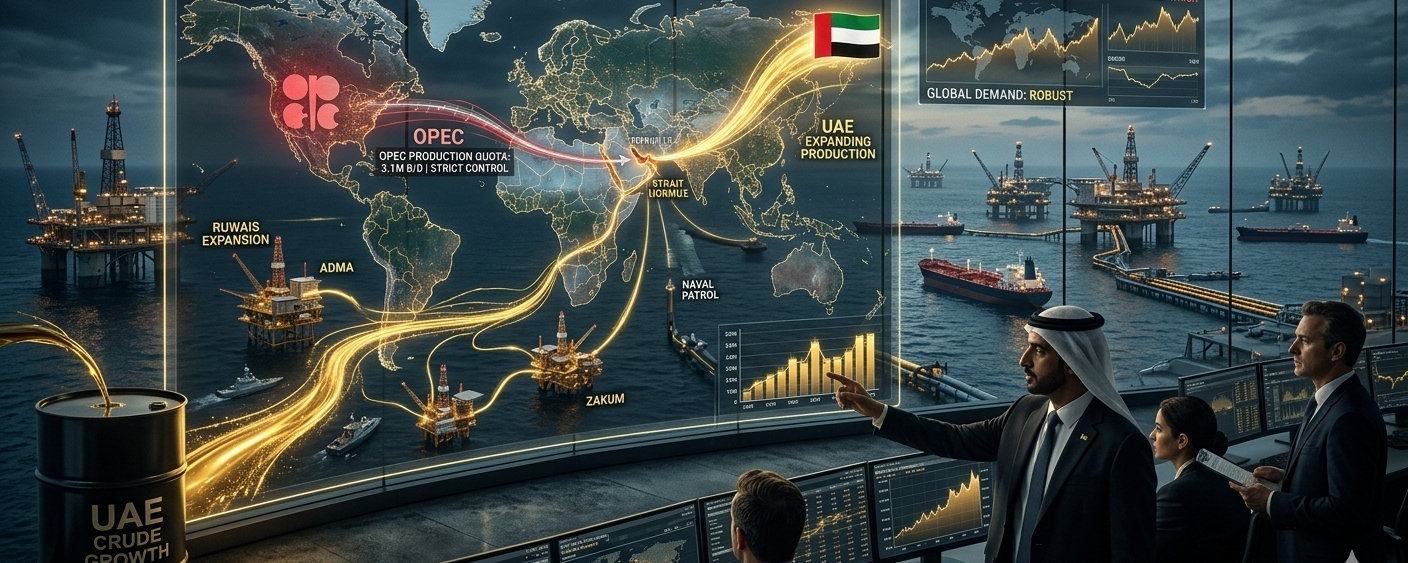
Do you think OPEC can still control prices…
or are we entering a free-supply phase?
Everyone saw the headline:
👉 UAE stepping away from OPEC+ constraints.
But the real story isn’t the headline — it’s the strategy behind it.
📊 The Build-Up No One Talked About
Over the past few years, the UAE — through Abu Dhabi National Oil Company — has been aggressively expanding production capacity.
Target:
👉 ~5 million barrels per day by 2027
That’s not a short-term move.
That’s a long-term national strategy.
⚖️ The Core Conflict
Here’s the problem:
OPEC works on a simple idea:
Limit production
Support prices
Maintain stability
But that only works if everyone agrees to leave capacity unused.
👉 The UAE is signaling it no longer wants to play that role.🔍 What This Really Means
Official messaging sounds calm:
“Strategic alignment”
“Market balance”
“Gradual increases”
But in practical terms:
👉 “We built the capacity — now we want to use it.”
🌍 Why Timing Is Critical
This shift is happening during heightened tension around the
Strait of Hormuz
~20% of global oil flows through this route
Any disruption tightens supply instantly
👉 This gives the UAE a strong narrative:
Not breaking rules —
but supporting global supply stability🧠 The Strategic Move
This isn’t confrontation.
It’s positioning.
UAE gains production flexibility
Buyers anticipate more supply
OPEC structure stays intact — but weaker
👉 Discipline doesn’t disappear overnight…
but it starts to fade.
📉 Market Implications
If this trend continues:
Supply pressure could increase
Price control becomes harder for OPEC
Volatility in oil markets rises
And that flows directly into:
Inflation expectations
Global risk sentiment
Crypto market behavior
🪙 Why Crypto Traders Should Care
Energy markets drive liquidity.
When oil shifts:
Capital reallocates
Risk appetite changes
Volatility increases across assets
👉 Including crypto narratives and altcoin rotations. 🔥 Final Insight
The cartel isn’t gone.
But the rules just became… optional.
And markets always react when structure starts to weaken.
⚡ Closing Thought
Watch actions — not headlines.
Because the biggest shifts
rarely get announced loudly.