
I used to think cyberattacks were carried out by highly skilled hackers sitting in dark rooms.
But I was wrong.
What shocked me the most was discovering how ordinary people are now being pulled into cybercrime — not through force, but through something that feels like a game.
And even worse… they’re being paid for it.
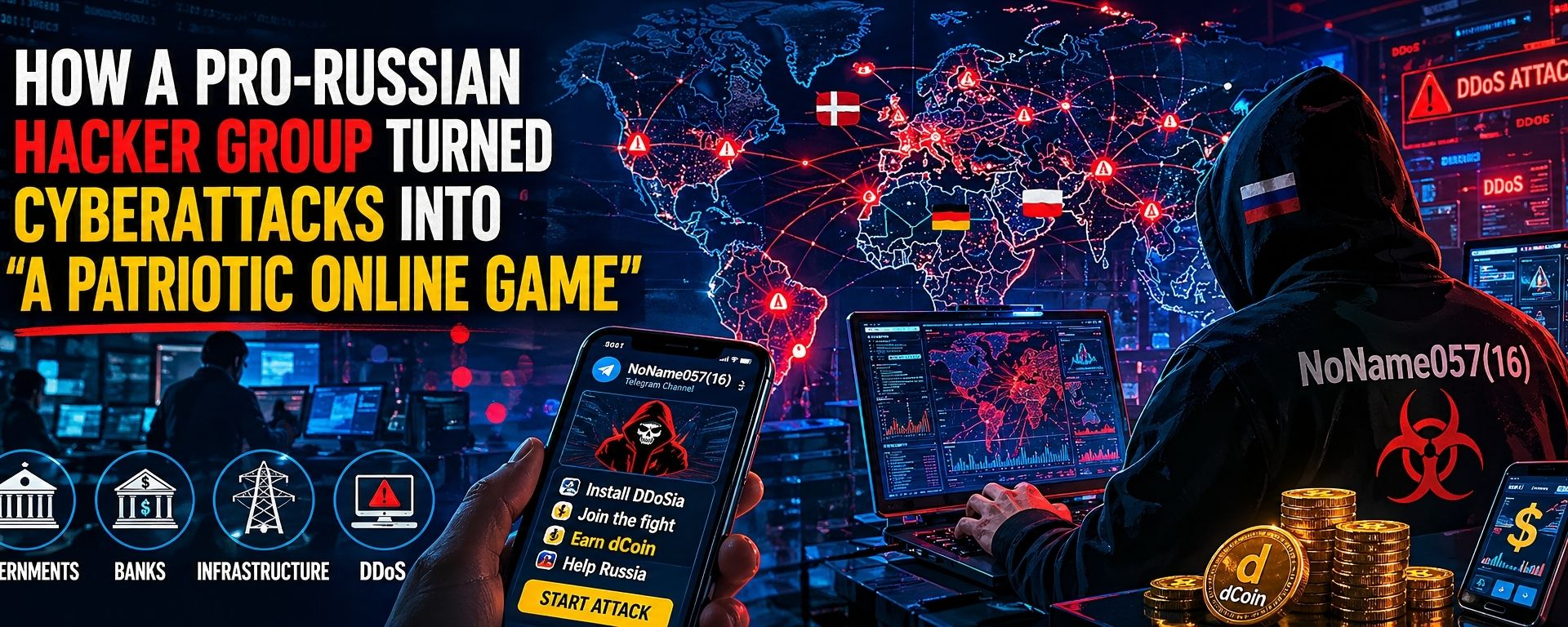
It started when I came across a group called NoName057(16).
At first glance, it looked like just another hacking group.
But the deeper I looked, the more disturbing it became.
This wasn’t just hacking.
This was organized, gamified cyber warfare.
Since 2022, after Russia’s invasion of Ukraine, this group has been launching waves of DDoS attacks across Europe.
Governments. Banks. Infrastructure.
Nothing was off-limits.
But here’s the part that changed my perspective completely:
👉 They weren’t doing it alone.
👉 They were recruiting regular people.
Through Telegram, they turned cybercrime into something that looked simple, even attractive.
“Earn money.”
“Help your country.”
“Learn hacking in 15 minutes.”
Sounds harmless, right?
That’s exactly how they hook you.
I looked into how it works.
And honestly… it’s terrifying how easy it is.
They use a tool called DDoSia.
You install it on your phone, laptop, or even router.
Then you press Start.
That’s it.
You don’t choose targets.
You don’t need skills.
The system does everything for you.
Your device quietly becomes part of a cyberattack network.
What really surprised me was the reward system.
They created their own internal currency — dCoin.
The more traffic your device sends during attacks, the more you earn.
For example:
500,000 requests per day = 50 dCoin
1 dCoin ≈ 2 rubles (~2.4 cents)
Then it gets converted into crypto like TON… and eventually into real cash.
It felt less like hacking…
…and more like a mobile game with rankings and rewards.
They even added military-style ranks:
Private. Sergeant. Colonel.
And at the top?
“General Dosi.”
At that moment, I realized something important:
This isn’t just cybercrime anymore.
This is psychological manipulation at scale.
One case really stood out to me.
During Denmark’s municipal elections in 2025, authorities were so worried about attacks that they:
Prepared backup generators
Printed paper voter lists
Bought camping lanterns
All because of a possible cyberattack.
And yes… the attacks came.
Government websites, police systems, transport services — all hit.
Even though the damage wasn’t permanent, the disruption was real.
And despite a massive crackdown called Operation Eastwood in 2025…
Nothing really stopped.
In fact, attacks increased.
Before the operation:
👉 ~6,300 attacks per month
After:
👉 ~7,700 attacks per month
That’s when it became clear to me:
You can shut down servers…
…but you can’t easily shut down an idea.
Because this system doesn’t rely on a few hackers.
It relies on thousands of everyday users.
People who don’t even fully understand what they’re part of.
People who think they’re just earning money… or helping a cause.
And that’s the most dangerous part.
Not the technology.
Not even the hackers.
But the normalization of cybercrime.
I’ve come to see this as a new kind of battlefield.
Not fought with weapons…
…but with:
Devices
Networks
And human psychology
And the scariest truth?
Anyone with a phone and internet…
could unknowingly become part of it.
#RussianHackers #Russia #Hacking