
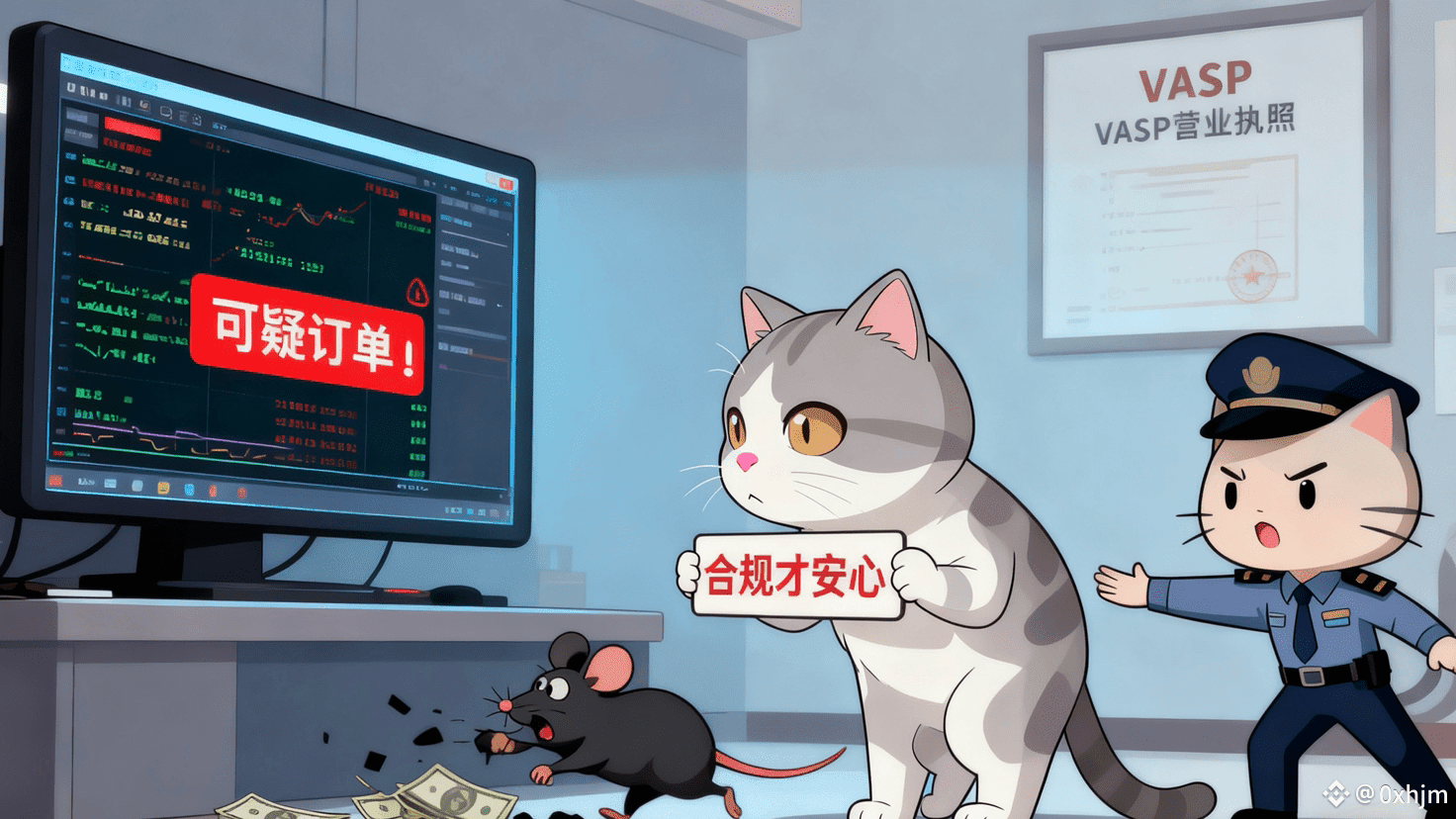
Plasma's first line of defense is the requirement to verify identity for large transactions, akin to Popu's rule of 'registering for 1000 packs of dried fish'. Regardless of whether it's depositing or transferring USDT, if the amount meets regulatory standards, identity verification (KYC) must be completed — submitting identification and conducting facial verification to confirm you are a legitimate user and not attempting to launder money. Previously, bad actors tried to bypass regulations by breaking down transactions into smaller amounts; this strategy no longer works, as the owner of each fund can be accurately identified.
More critically, the second line of defense is the 'suspicious order alarm'. Plasma is equipped with the world-class Elliptic blockchain monitoring tool, similar to Popu's alarm that can identify anomalies like 'anonymously purchasing large amounts' or 'frequently changing accounts to buy'. This tool monitors the flow of every USDT transaction. Whether the funds originate from fraudulent or gambling-related addresses, or if someone is repeatedly splitting transfers and taking circuitous routes across platforms, the alarm will be triggered immediately, and staff will intervene for verification without delay. In Q3 2025, Plasma intercepted 2300 suspicious transactions in a single quarter, just like Popu's recent interception of a 'mouse order that bought 1000 packs without leaving a name', effectively cutting off the route for money laundering at the source.

These monitors are not just "blindly watching", but are following global anti-money laundering rules—such as the FATF's "travel rule" which requires that large transfers must share information about both parties; Plasma will automatically report large transactions, allowing regulatory authorities to trace the flow of funds throughout the entire process, just like a property management company would keep records of large orders to prevent bad actors from having an opportunity.
