


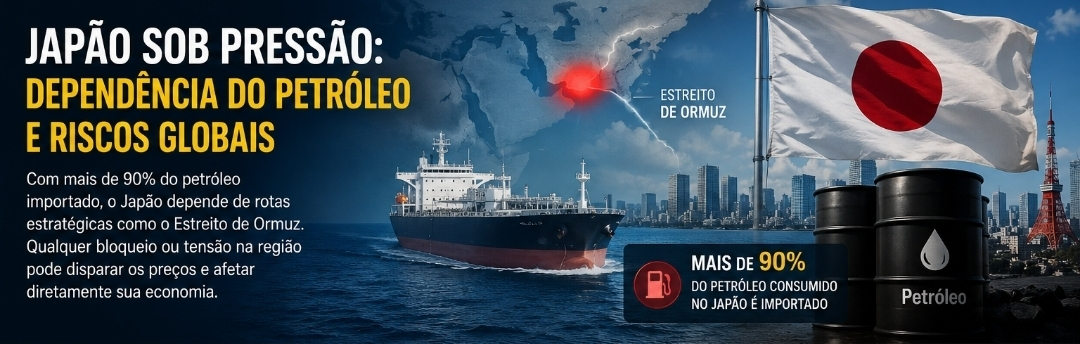
Japan has returned to the geopolitical spotlight for an old yet increasingly sensitive reason: its heavy reliance on imported oil. With over 90% of its energy coming from abroad, the country remains vulnerable to any instability in the Middle East—especially in critical routes like the Strait of Hormuz.
This scenario creates a domino effect. When there's a risk of blockage or tension in the region, oil prices skyrocket. For Japan, this means an immediate spike in production costs, pressure on the yen, and an economic slowdown. It's no coincidence that the Japanese government tends to ramp up its diplomatic efforts during times of energy crisis.
But the impact doesn't stop at traditional economics. The crypto market feels it too. A spike in oil prices raises global inflation, which might force central banks — like the Bank of Japan — to rethink their monetary policies. Higher interest rates tend to dampen the appetite for risk assets, including cryptocurrencies.
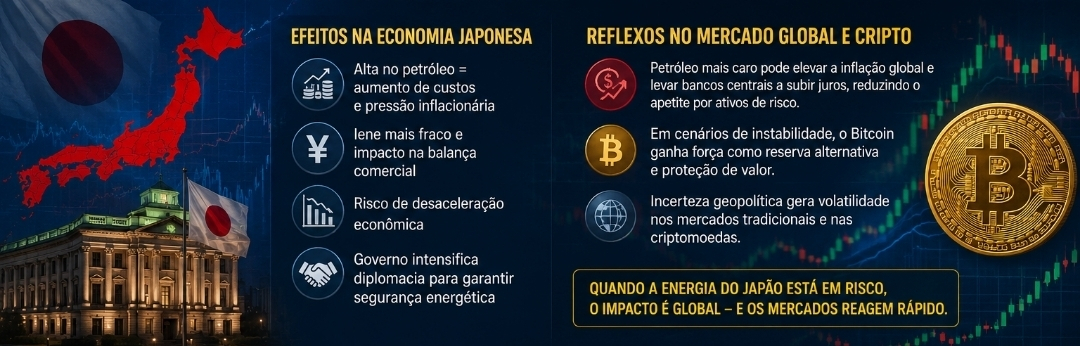
On the flip side, scenarios of instability also strengthen the narrative of Bitcoin as an alternative reserve. In times of uncertainty, part of global capital seeks protection outside the traditional system.
The result is a delicate balance: while the energy crisis pressures the markets, it also creates room for structural changes — both in energy policy and the adoption of digital assets.
Japan, once again, becomes a global thermometer: when its energy is at risk, the impact is worldwide — and the markets react fast.