
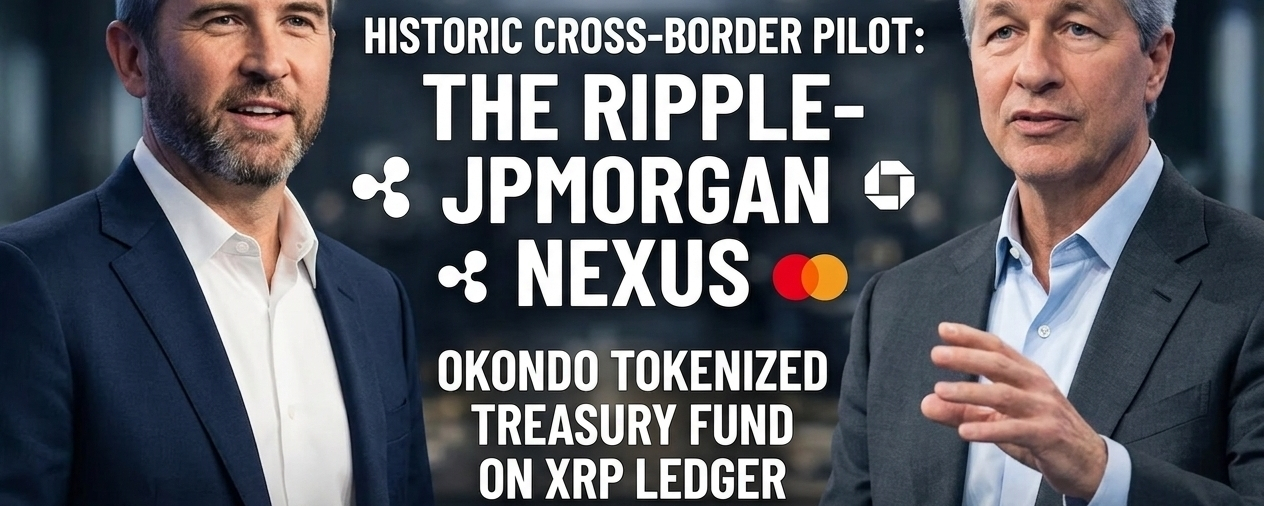
Ripple, JPMorgan, Mastercard, and Ondo complete a historic experiment for tokenized Treasury bonds on the XRP Ledger.
Ripple has been linked to one of the most significant institutional blockchain experiments we've seen so far in 2026, as JPMorgan, Mastercard, and Ondo Finance completed the first near real-time cross-border redemption of a 'tokenized' U.S. Treasury bond on the XRP Ledger. The importance of this transaction lies in its connection of the public blockchain infrastructure with traditional banking systems in a live and direct workflow, not just a theoretical experiment.
For XRP holders, this is not just another news headline about partnerships or speculation; it’s a concrete example of how the convergence of tokenized assets, banking settlement systems, and blockchain execution is beginning within a unified financial process.
A live experiment... not just a rumor
According to the official announcement, Ripple has reclaimed part of its holdings in short-term US government bonds from Ondo on the XRP Ledger. Meanwhile, the cash side of the transaction was routed through the multi-token Mastercard network and the Kinexys infrastructure of JP Morgan. Subsequently, the settlement in dollars was delivered to Ripple's bank account in Singapore via JP Morgan's correspondent banking network.
The most impressive part of this experiment is the speed; the asset side was settled on the XRPL in under five seconds, demonstrating how public blockchain networks can support institutional-level trade execution without having to wait for traditional banking hours.
Why is the market interested in this?
The significance of this development lies in the fact that the narrative is no longer just about crypto companies talking about future adoption. We now have heavyweight names in the finance world actually testing a real transaction framework that links tokenized treasury bonds, blockchain correspondence, and banking settlement in a single integrated flow.
This type of setup is exactly what investors have been waiting for; it indicates that tokenization is no longer confined to whitepapers and conference pitches but has transitioned to a functional financial infrastructure that can scale across borders and institutions.
What does this mean for XRP?
The biggest takeaway for XRP is that the XRP Ledger is now being used as part of a real institutional settlement process, not just a market asset with speculative value. This strengthens the argument that XRPL has become an operational layer for tokenized finance, especially with major banks and payment networks involved.
This also aligns with the broader message that Ripple has been promoting throughout the year: 2026 is the year of widespread institutional adoption. Monica Long has repeatedly stated that this year represents a turning point for organized adoption, and this experiment lends significant weight to that perspective.
Why is this bigger than just price?
Some traders might immediately question the impact of this on XRP's price, but that question overlooks the most important point. Events like these pertain to infrastructure, not momentary price candles; infrastructure is what typically drives long-term valuations in financial markets.
The better comparison here isn’t a short-term price pump, but rather the early building of a financial network before the market fully prices it in. This is why the alliance between Ripple, JP Morgan, Mastercard, and Ondo is so important: it demonstrates to the market what institutional crypto adoption looks like when it moves from concept to execution.
The way forward
If the success of such experiments continues, it could open the door to broader use of tokenized treasury bonds, on-chain settlements, and cross-border asset reclamation among more institutions. This would make the XRP Ledger even more important in the ongoing shift towards 24/7 financial markets that never close.
Right now, the message is clear: the discussion around Ripple is no longer just about a crypto project or a payment company; it is increasingly part of the real financial plumbing being tested by banks and asset managers as the era of tokenization accelerates.
Conclusion
The Ripple and JP Morgan and Mastercard and Ondo experiment is one of the clearest signals yet that blockchain infrastructure is penetrating deeper into institutional finance. It proves that tokenized assets, public ledgers, and traditional banking systems can indeed work together in a live, cross-border settlement flow.
For XRP, this might be the most critical part: the network is being used in a way that supports its long-term significance, not just short-term marketing narratives.