

On October 15, the Filecoin network celebrated the fifth anniversary of its mainnet launch and subsequently held a two-day FIL Dev Summit online conference. This was a gathering of developers, builders, and active community members, all dedicated to advancing the development of the core protocol and shaping the future of the Filecoin network.
During the FDS-7 online summit, the governance team of the Filecoin Foundation shared in-depth insights into the history of network governance: its starting point, development direction, and future plans. This article reviews the content of the speeches at that time and kicks off ongoing discussions for the FIL Dev Summit 7 @ DevConnect, which will be held from November 13 to 15, 2025, in Buenos Aires (https://luma.com/lql41ipv).
A governance system based on decentralized proposals
From the very beginning, Filecoin's governance has been rooted in a decentralized, proposal-driven process inspired by Ethereum, with Filecoin Improvement Proposals (FIPs) being central to the network's development.
FIPs have always been the mechanism for coordinating technical upgrades in the network, helping to define the direction of protocol evolution. Core developers review the feasibility of proposals to ensure they can be safely implemented before FIPs are deployed to various nodes. This process has led to many milestone achievements, such as the launch of the Filecoin Virtual Machine (FVM), new storage incentive mechanisms, and countless technical improvements. However, as the Filecoin network continues to evolve, the demands on its governance system are increasing.
Limitations of technology-first governance
An initially technology-focused protocol has now evolved into a fully mature decentralized economy that must be able to respond to macroeconomic trends, support an ever-growing ecosystem of builders, customers, and services, and manage public goods funding at scale.
This evolution has exposed the limitations of our current governance model. We have seen an increasing number of proposals that go beyond the scope of protocol mechanisms, such as changes to incentive structures, funding support for shared infrastructure, or coordination across the ecosystem.
While other blockchain protocols rely on mining-based governance or validator voting to make these decisions, this approach does not fully match the situation of Filecoin. The Filecoin network is composed of a diverse group of stakeholders, including developers, storage providers, customers, ecosystem partners, and token holders, each with different needs, goals, and levels of participation. The Filecoin network requires a governance model that recognizes and supports this complexity.
Listening, learning, and addressing backlogs
In recent months, we have been in a listening phase: collecting community feedback, interviewing stakeholders, and studying the models of other decentralized protocols. This process has helped the governance team of the Filecoin Foundation better understand areas for improvement and potential opportunities.
Unclear roles and responsibilities are hindering effective decision-making; establishing clear guidelines will ensure confidence and accountability.
Some stakeholders have expressed concerns about transparency and inclusivity, highlighting the need to strengthen trust by ensuring their perspectives are adequately reflected in the governance process.
The prioritization of FIPs and recognition of completed work should be more consistent and visible.
The lifecycle of FIPs needs clearer structure and communication.
Many contributors are shouldering heavy workloads, resulting in limited time for reviewing and prioritizing proposals.
A clear theme has emerged: governance roles need clearer expectations of responsibilities, stronger guidelines, and better tools. According to a survey conducted by the Filecoin Foundation (FF) in the Asia-Pacific region, we found that nearly 60% of current ecosystem members do not actively participate in governance, but 43% of them hope that Filecoin's governance remains flexible and experimental. These feedbacks are guiding our next steps as we strive to build a more effective, inclusive, and transparent governance framework. Click here (https://youtu.be/ipAkEFlolD0?si=hM2oWw0nZiBy0KRw&t=581) to watch the full “Status Assessment” presentation from the FDS-7 online summit.
Introducing the Constellation plan
In response to the current situation, the governance team of FF has launched the Constellation plan - a structured, community-driven initiative aimed at reforming and modernizing Filecoin governance.
The core idea of the Constellation plan is that good governance does not emerge out of thin air. It is a careful, iterative process that must be thoughtfully designed, repeatedly tested, and aligned with the needs of the ecosystem. The plan includes three phases:
Phase 1 - Discovery: Identifying pain points, recognizing key stakeholders, and studying the governance models of other decentralized protocols.
Phase 2 - Operating Model Design: Clarifying how governance operates, including the scope of governance, decision-making methods, and the roles of stakeholders involved.
Phase 3 - Implementation Planning: Starting from FIL Dev Summit 7, we will collaboratively develop a roadmap and identify tools and resources that best reflect the needs of the Filecoin community.
The three pillars of Filecoin governance
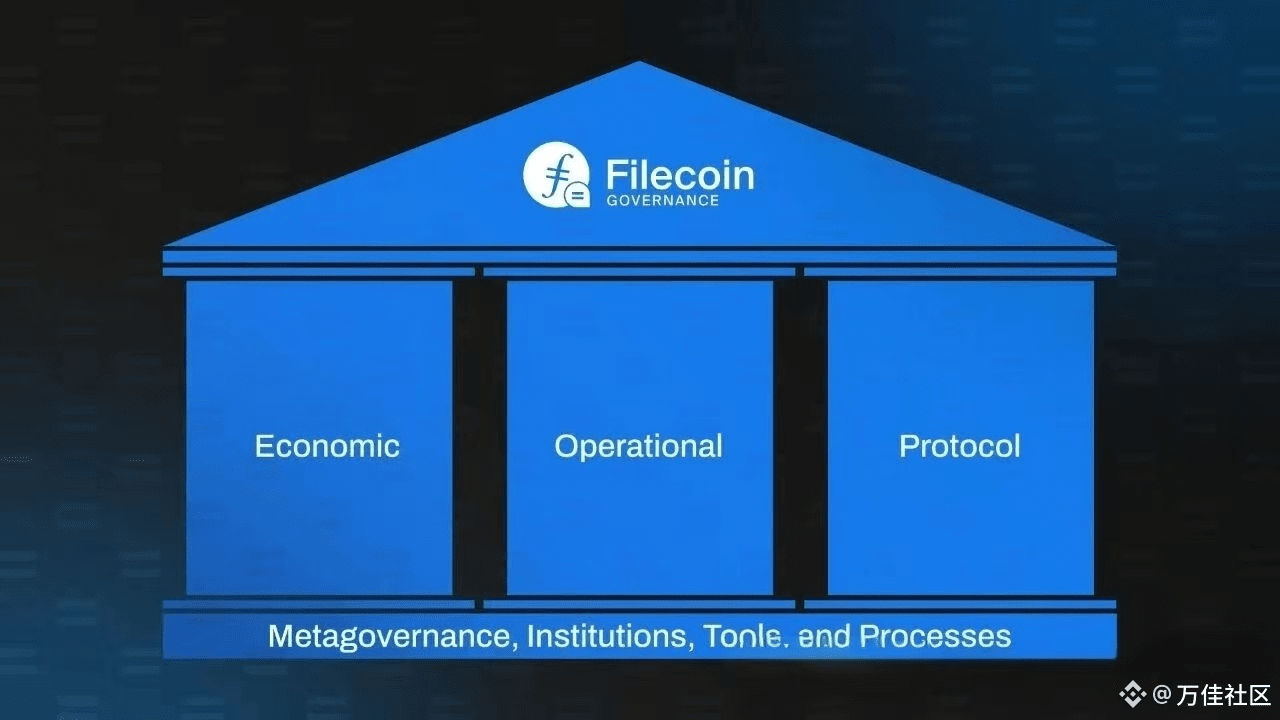
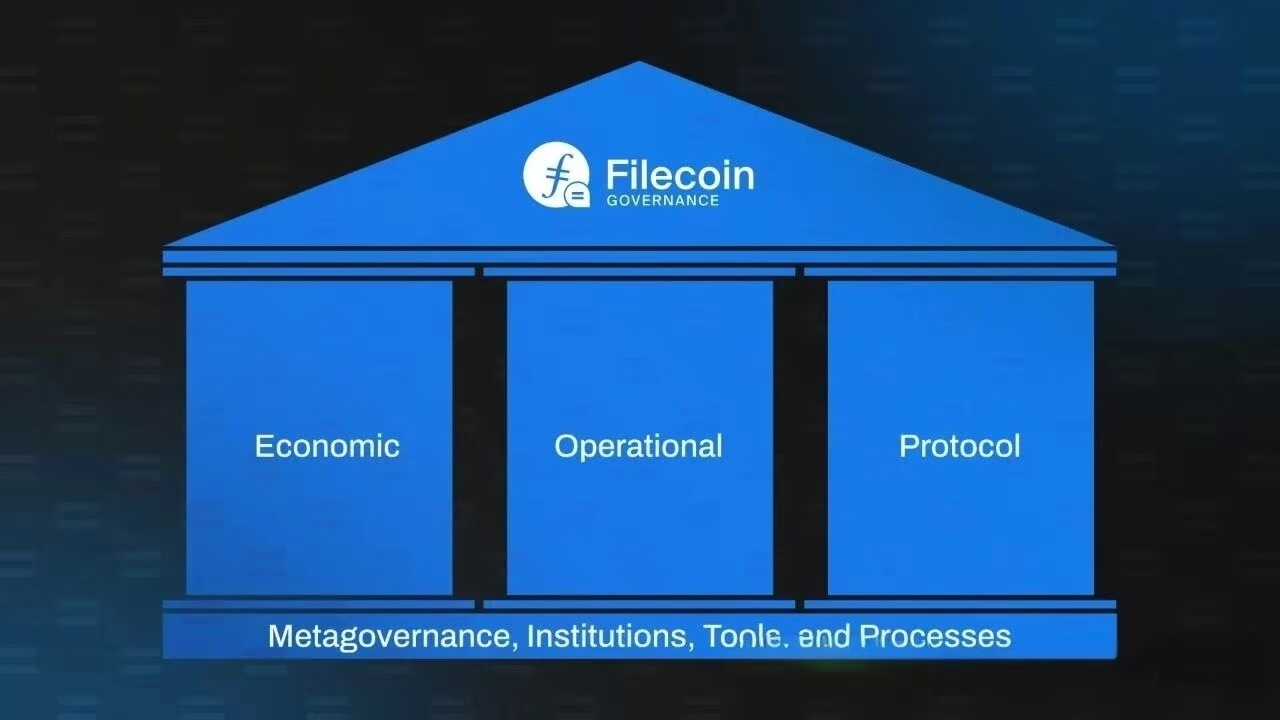
After completing the discovery phase, the governance team has entered a second phase focused on operating model design. As part of this phase, we propose a three-pillar governance framework that encompasses all governance categories. We can envision this governance framework as the architecture of a sturdy building. Each pillar is a crucial structural element that collaborates to support the entire system. The roof represents values and vision, while the foundation consists of various institutions, processes, and rules that collectively ensure the overall stability.
Economic Governance: Focused on funding, incentive mechanisms, and sustainability, covering everything from storage and retrieval economics to the use of the network treasury. This includes supporting public goods funding (PGF) that struggle to fit entirely into business models, such as shared developer tools and infrastructure.
Operational Governance: Focused on translating decisions into actions, this pillar aims to ensure that the governance process is clearly defined, inclusive, and reliably executed, while having clear roles, responsibilities, and decision lifecycle management.
Protocol Governance: Focused on the rules and logic of the network itself. Decisions regarding consensus mechanisms, FIPs, and technical upgrades fall within this scope. Protocol governance also includes the on-chain operation of voting mechanisms and the direct execution of governance outcomes.
Looking ahead: FDS-7 and beyond
The final outcome of this work will be reflected in the practical workshops at FIL Dev Summit 7 (https://luma.com/lql41ipv), where the community will come together to collaboratively design the next phase of Filecoin governance reform, including exploring voting methods suitable for the Filecoin network.
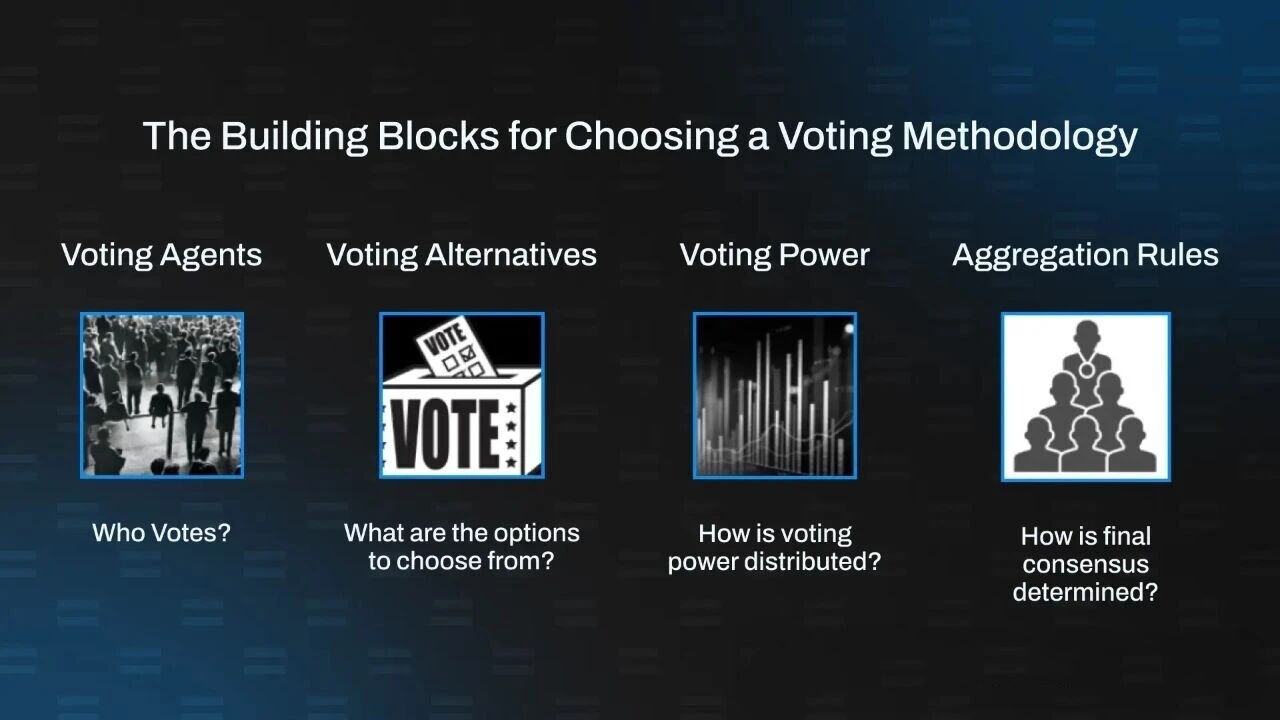
For each of the above dimensions, we will hold workshops to explore how to tailor a decision-making approach to the needs of the Filecoin network. For more details on the issues we will explore in Argentina, please watch this video (https://youtu.be/ipAkEFlolD0?si=1bfVSbgoZMR1KhAx&t=1320) previewing the planned activities for FDS-7. Click here (https://www.youtube.com/watch?v=ipAkEFlolD0&t=772s) to explore our benchmarking analysis of various decision-making approaches and weighted voting methods, and to learn more about FF's research on voting models.
Building the future of governance together
All of this sets the stage for FIL Dev Summit 7, where the community will gather to collaborate on the opportunities that will define the future of Filecoin. The governance team of FF will hold multiple meetings to discuss the governance model for Filecoin's future. From defining voting rights and economic management responsibilities to strengthening the community's role in decision-making, we will design a system that supports the development of Filecoin over the next decade as a community.
The Filecoin ecosystem is entering a new era. As we prepare for significant technological and economic changes - including the launch of Filecoin on-chain cloud (https://www.filecoin.cloud/) - it is time to match these innovations with a similarly forward-looking governance system.
If you care about the mission and future of Filecoin, now is the best time to get involved.
Participate in upcoming governance discussions on GitHub (https://github.com/filecoin-project/FIPs/discussions)
Join FIL Dev Summit 7 from November 13 to 15 in Buenos Aires
Source material from official media/network news
The content published by this account is for learning and communication purposes only. The materials in this article are sourced from publicly available information on the internet. If there are any copyright issues, please leave a message to contact us, and we will correct or delete it as soon as possible. This article aims to convey more market information and does not constitute any investment advice.