
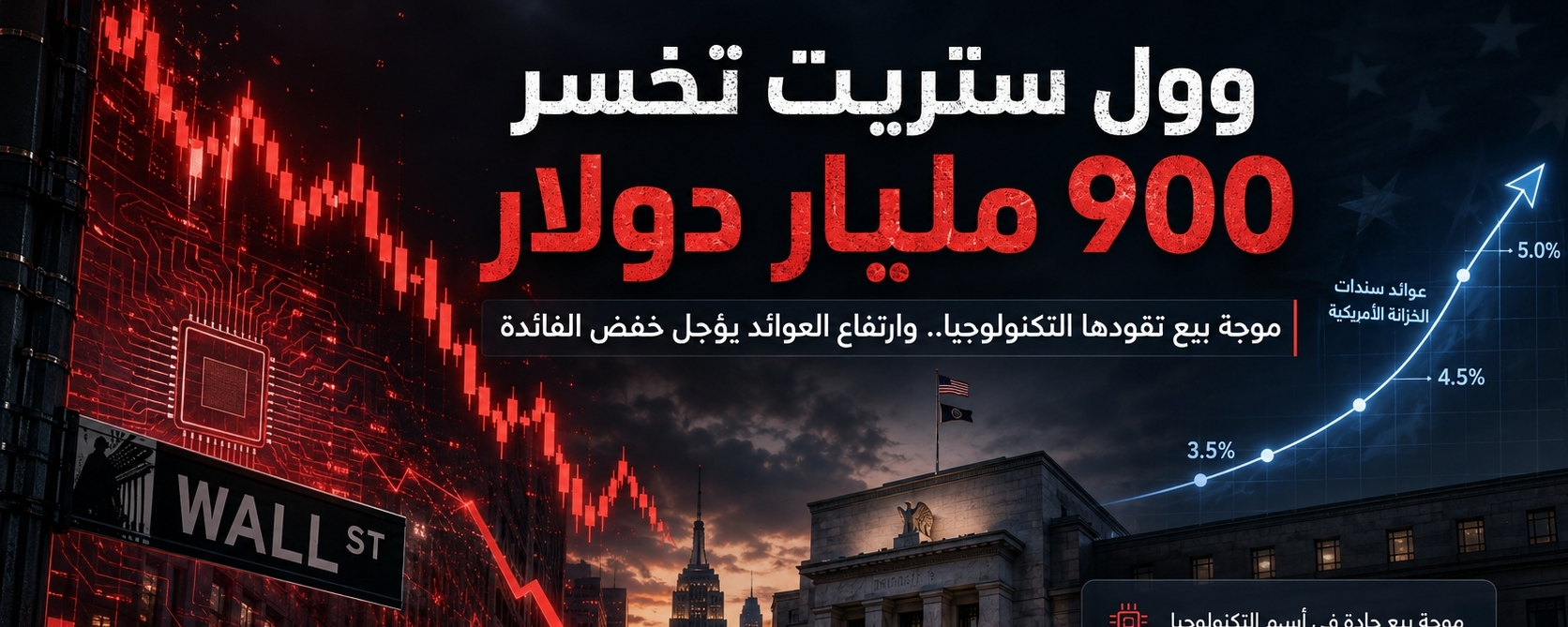
Wall Street loses $900 billion... when markets fear interest rates more than profits
The loss of over $900 billion in market value for U.S. markets wasn't just a temporary dip in a volatile trading session; it was a clear signal from investors: the market is no longer just pricing in profits, but also the fear of interest rates staying high for longer.
The broad sell-off was led by the tech sector, after U.S. Treasury yields rose sharply, prompting investors to reevaluate their positions in high-growth stocks, particularly AI and semiconductor firms that led the rally in the past period. Major U.S. indices dropped on Friday, with both the Dow Jones and S&P 500 and Nasdaq falling more than 1%, while tech stocks faced clear pressure with rising yields and increasing inflation fears.
Why did the markets drop?
The direct cause was a dangerous mix of three factors:
High bond yields, stubborn inflation, and a less urgent Fed to cut rates.
When U.S. bond yields rise, bonds become more attractive compared to stocks, as they offer lower-risk returns. This particularly pressures tech companies, as their valuations often depend on future growth expectations. The higher the rates, the lower the present value of those future earnings.
At the same time, recent inflation indicators have heightened fears that price pressures are not over yet. A recent report indicated that the core inflation reading came in higher than expected, prompting investors to reduce their bets on a near-term rate cut.
Tech is at the heart of the storm
The tech sector was the most sensitive to this wave, as it had strongly benefited from the optimism surrounding AI in recent months. But when rate expectations change, investors start selling high-valuation stocks first.
Semiconductor stocks and AI firms have faced clear pressure, not because their story is over, but because the market has started asking a different question:
Are the current prices justified if rates remain high?
And here lies the danger. The market isn't punishing tech solely due to weak demand, but because of overpricing after a long bull run.
The Fed is resetting the mood
Markets were betting that the Fed would soon begin a rate-cutting path. But persistent inflation and rising energy prices and long-term yields have made this scenario less clear. Some reports indicated that investors have even started pricing in the possibility of a return to tightening or delaying cuts longer if inflation remains strong.
This means the equation has changed:
The question is no longer 'when will the Fed cut rates?'
But rather: can the Fed actually lower rates without igniting inflation again?
Is this a crash or a correction?
So far, what has happened seems closer to a violent correction in expectations rather than a full-blown crash. U.S. markets had surged strongly on the back of AI and rate cut expectations, so any change in these expectations naturally leads to swift sell-offs.
But the real danger appears if bond yields continue to rise. Rising yields not only pressure stocks but also increase borrowing costs for companies and consumers, making investors more cautious towards high-risk assets like tech and cryptocurrencies.
In summary
A loss of $900 billion in market cap isn't just a huge number; it's a signal that Wall Street has entered a more sensitive phase. Investors are no longer buying the growth story at any price, nor are they ignoring inflation like they did before.
If bond yields cool off and weaker inflation data appears, markets might quickly regain some of their losses. However, if yields continue to rise and the Fed remains cautious, we could witness a deeper repricing wave, especially in tech stocks that were the biggest drivers of the rally.
In other words:
The market isn't afraid of tech... the market is afraid of rates.