

Over the past few years, the biggest wealth in the AI industry isn't actually the models themselves, but the 'data.'
The issue is that, right now, the vast majority of global AI data resources are controlled by a handful of tech giants. Everyday users are contributing content, behavioral data, and language data, but the ones truly cashing in are still the centralized platforms.
That's also why I've been keeping an eye on OpenLedger lately.
OpenLedger isn't your typical AI project; it's more like an 'AI data economy infrastructure.' It's trying to tackle one of the core issues in the AI space: data contributions can't be verified, traced, or yield long-term profits.
Currently, OpenLedger's overall architecture is mainly divided into several parts:
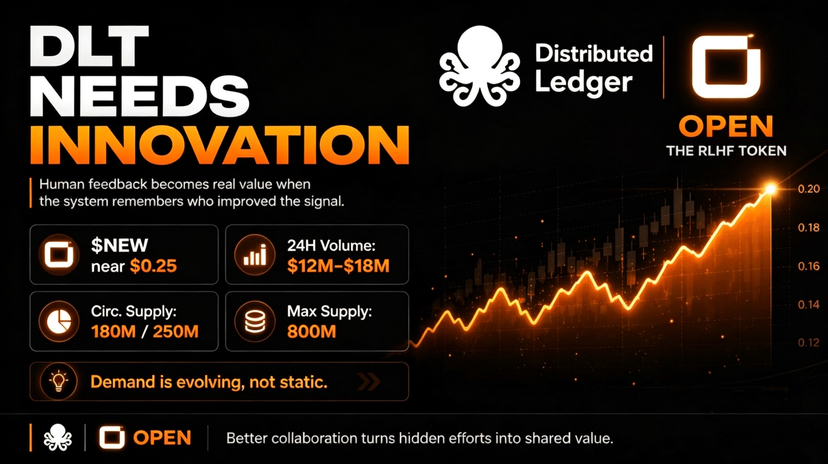
Datanets
Users can upload, build, and share specialized datasets, turning data into assets.ModelFactory
Allows developers to train AI models based on community data, with the entire training process having on-chain transparency.OpenLoRA
Used for low-cost deployment of large-scale AI models, the official proposal even suggests running multiple fine-tuned models on a single GPU.Proof of Attribution
This is, in my opinion, the most critical part.The future use of AI models, the sources of training data, and who contributed can all be tracked and recorded, forming an automated revenue distribution system.
Many people may not realize that if this mechanism truly materializes, it will change the entire benefit structure of the AI industry.
Right now, the biggest issue with AI isn't the model's capability, but rather:
Confusion over data ownership
Data contributors can't profit.
The AI training process is a complete black box.
Regular users can't participate in the AI economy.
The direction of OpenLedger is to transform 'data' from private assets on internet platforms into tradable production materials on-chain.
This is actually quite similar to the early changes DeFi brought to finance.
In the traditional finance era, banks held the rights to asset liquidity;
After DeFi emerged, users began to gain control over their assets.
Similarly:
In the traditional AI era, large companies controlled data value;
What OpenLedger aims to do is to grant data contributors the right to profits.
Current official data shows that$OPEN Not just governance tokens, but also taking on:
Gas fees
AI inference costs
Model training costs
Data contribution rewards
Ecosystem governance
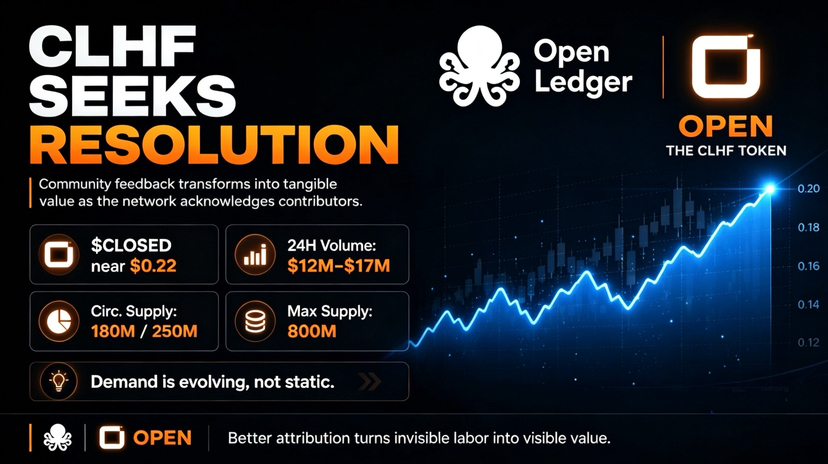
The total supply is 1 billion tokens, of which over 60% is allocated to the community and ecosystem.
Of course, I think OpenLedger will also face several challenges in the future:
First, AI projects currently generally face the problem of 'narrative exceeding implementation'.
Many AI+Crypto projects still rely on centralized computing power and off-chain computation. Academic research has also pointed out that many AI Token projects still exhibit 'pseudo-decentralization'.
Secondly, a real data attribution system is technically very challenging.
Because training AI models involves a lot of complex parameters, accurately determining the contribution of certain data to model outputs is a world-class problem in itself.
Thirdly, competition in the AI track is extremely fierce.
Projects like Fetch.ai, Bittensor, and Ocean are all vying for the 'AI infrastructure' market.
But even so, I still believe the direction of OpenLedger is worth long-term observation.
Because in the future, the most important thing in the AI industry may not be who has the largest model, but who can establish a 'sustainable data economy system'.
Who can truly solve:
'Who owns the data?'
'Who should receive AI profits?'
'How can ordinary people participate in AI value distribution?'
Who could become the core infrastructure for the next wave of AI+Crypto.
And OpenLedger has at least started attempting to answer these questions.
@OpenLedger $OPEN #OpenLedger