
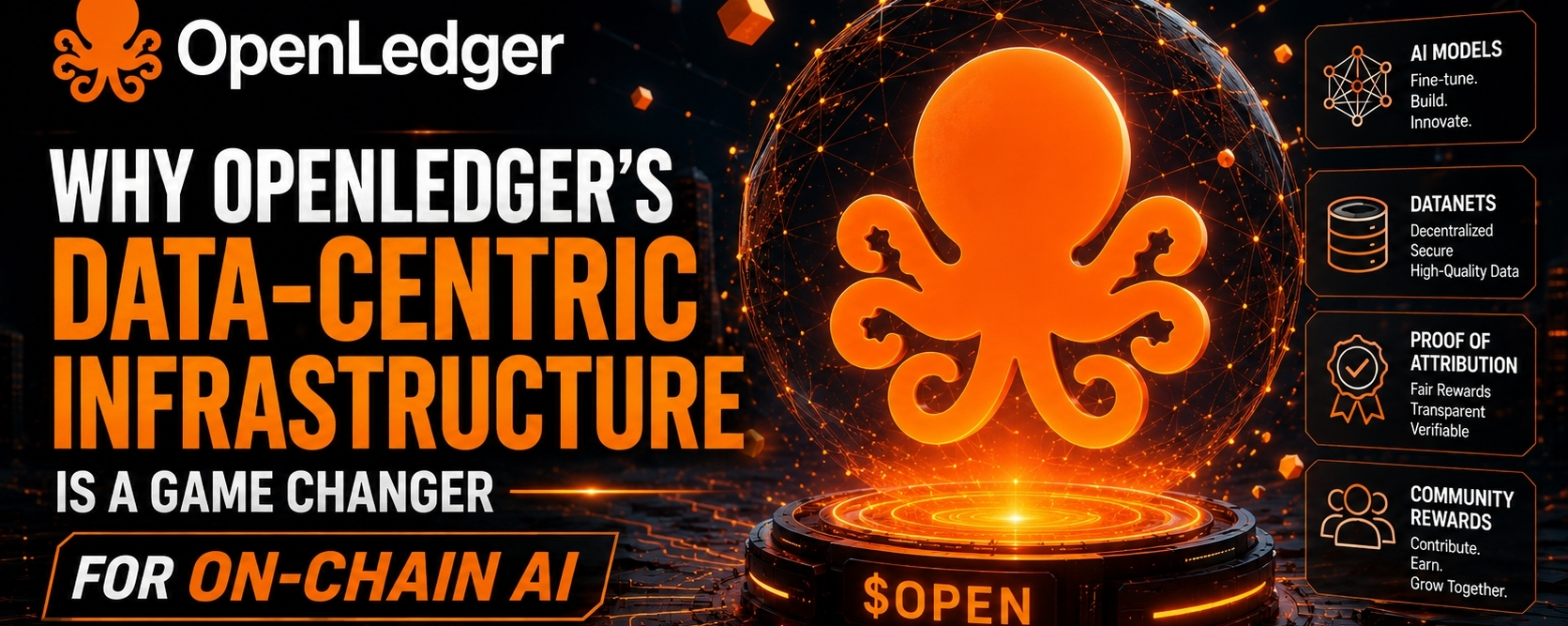
Finding Web3 projects that offer real structural utility instead of temporary marketing hype is getting tougher. However, the intersection of decentralized infrastructure and Artificial Intelligence continues to produce actual innovation. A project that demands a closer look right now is $OPEN . Instead of positioning itself as another general-purpose blockchain or a basic GPU-renting marketplace, it is built from the ground up as an AI-native Layer 2 network leveraging the OP Stack.
What makes this network highly interesting from an operational perspective is how it manages the entire data lifecycle for complex artificial intelligence models. If you have ever looked into training machine learning protocols, you know that clean, topic-specific data is the single most expensive and difficult resource to secure. The network addresses this bottleneck by introducing "Datanets"—which function as decentralized, specialized, and highly secure data pools. Developers can access their ModelFactory dashboard to effortlessly pull foundational open-source AI models and fine-tune them using these verified data streams.
Furthermore, their unique Proof of Attribution consensus mechanism completely changes the data contribution game. It mathematically calculates exactly how much a specific piece of community-provided data influenced the final output or weights of an AI model. This enables the blockchain ledger to automatically distribute micro-rewards directly back to the original data providers. It effectively democratizes data ownership, ensuring everyday users get paid transparently for the actual value they feed into massive AI models, countering the traditional model of invisible data extraction.
To ensure hosting remains cost-effective for developers, the framework allows thousands of low-rank adaptation fine-tuned models to safely share a single GPU backbone simultaneously. This solves a massive hardware scalability issue that many modern AI startups face, where computing costs typically drain their capital before achieving product-market fit.
From a market and trader perspective, the token is building a solid on-chain foundation. While early token unlock schedules later this year are a common talking point among long-term market analysts, the current structural consolidation phase presents an intriguing entry window for active ecosystem participants. The network utility itself—where gas fees, dataset access rewards, and AI model staking all run natively via the token—creates a sustainable, cyclical demand loop on-chain.
Community momentum is seeing a massive surge right now, particularly with the official 50,000 USDC reward campaign currently live on Binance Square's CreatorPad. It represents an excellent opportunity for both creators and everyday traders to get involved early, share high-quality technical insights, and claim a piece of the incentive pool before the deadline.
If you want to dive deeper into how they are scaling on-chain AI data networks and handling decentralized fine-tuning, make sure you head over and follow the official @OpenLedger account on Square to track their development roadmap, mainnet expansion milestones, and ecosystem partner integrations. The intersection of secure data and localized AI fine-tuning is going to be a dominant structural trend for the remainder of the year, and keeping tabs on how this platform scales over the coming months is highly recommended#OpenLedger .