
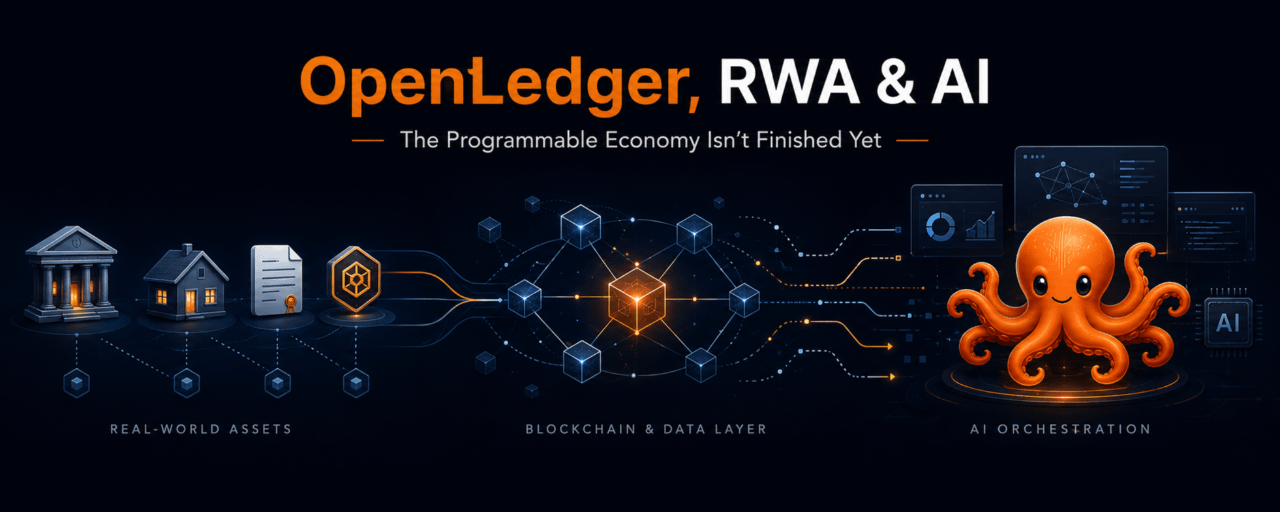
When we mention Web3, AI, and RWA all at once, things are often presented in a pretty neat package. RWA takes real assets onto the blockchain, AI adds the ability to automatically analyze and process, while Web3 turns it all into a programmable economy.
Sounds smooth, but the more I think about it, the more I realize this narrative isn't as straightforward as it seems.
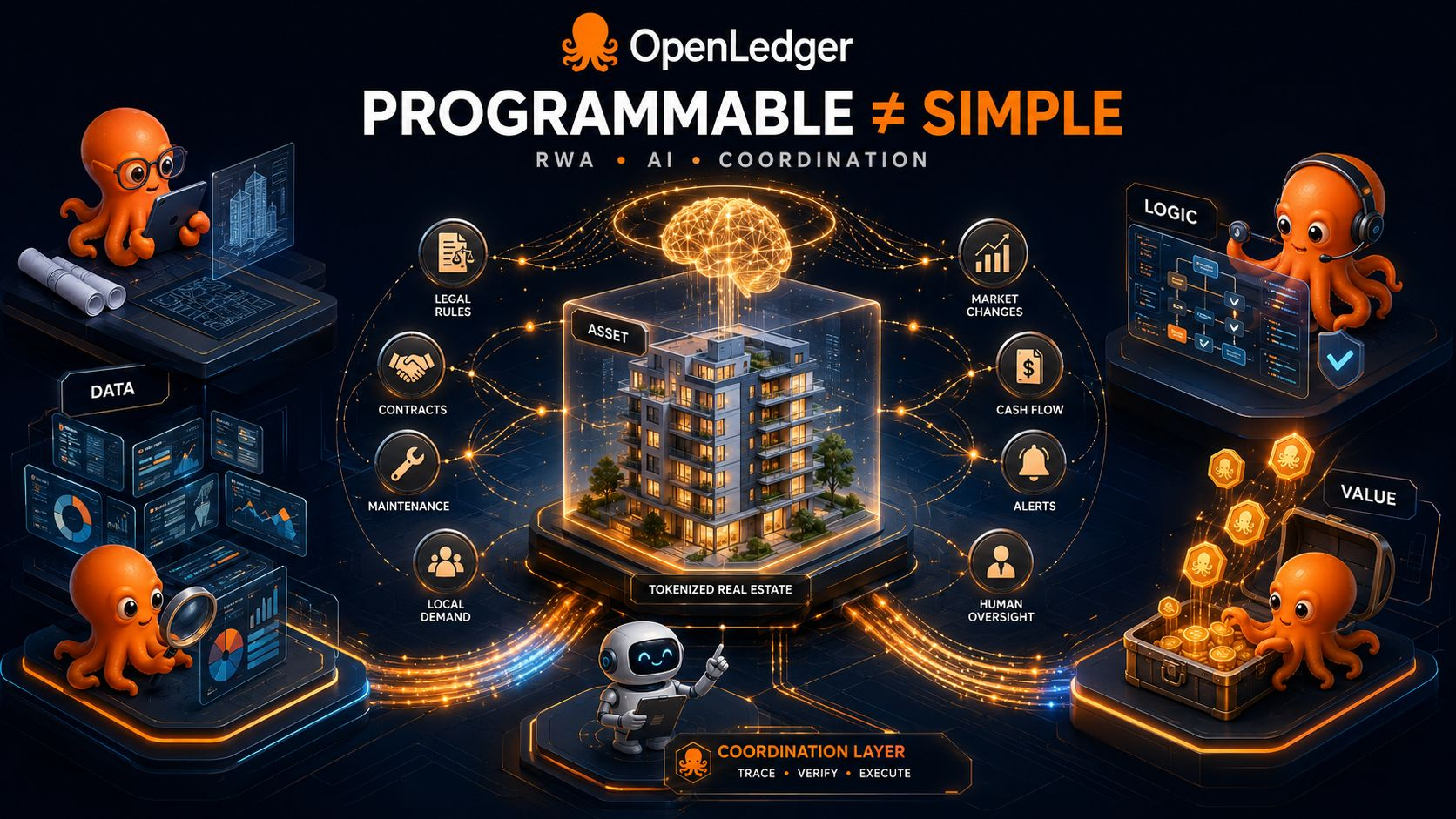
Real assets aren't just a number that can be tokenized. A house, for example, has more than just market value. It's also tied up in legalities, contracts, maintenance costs, local demand, disputes between people, and a ton of other hard-to-measure factors. When we put it on-chain, we don't make those things disappear. We just shift them to a new layer of representation.
So the question isn’t just whether RWA can bring real assets onto the blockchain. The deeper question is whether that actually makes the assets easier to understand or just shifts the complexity to another level.
AI makes the narrative even more complex.
Many folks call AI intelligence, but the truth is it still relies on data, behavior patterns, and signals that the system picks up. Data is never perfect. It has flaws, biases, and unseen parts, so AI isn't a neutral decision-making layer sitting above reality. It's more like a machine constantly interpreting incomplete bits of information.
When RWA and AI intersect, what forms isn’t an immediately complete system. It resembles an operational layer that’s continuously changing.
Imagine a tokenized asset like a rental building. Cash flow fluctuates, rental demand shifts, repair costs pop up, and the local market moves. AI can track those signals faster than humans, detect issues sooner, and suggest better responses, but that also means the asset isn’t just a hold and chill anymore. It starts to operate like a living system, continuously adjusting based on data.
This is a point I think is worth pondering.
When assets start to respond more automatically to external conditions, the question isn’t just about performance anymore. The question is where control lies. Who sets the limits on those automated actions? Who is liable if the system optimizes incorrectly? And who has the right to intervene when machine logic collides with human reality?
This is also why I find #OpenLedger noteworthy in this picture. If AI, data, assets, and value flows start connecting, then the system needs a more reliable layer for recording and coordinating. Not just to run faster, but to understand where actions come from, who contributes data, what logic is applied, and how value is redistributed.
A programmed economy sounds super appealing, but the reality is never completely clean. The real world always has emotional, legal, cultural factors, and unpredictable variables. AI can help react faster, blockchain can offer more transparency, but neither automatically makes everything easier to control.
Perhaps what’s forming isn’t a perfect economy.
It’s like an intermediary layer between real assets and digital logic. A layer that helps the system react faster and coordinate better, but also raises new questions about responsibility, control, and how much humans truly understand what’s operating behind the scenes.
So I don’t see AI + RWA as a clear endpoint, but rather as a transitional phase.
And if @OpenLedger could become part of that coordinating layer, where data, assets, AI, and rewards are more clearly traceable, then the narrative of $OPEN could be bigger than a typical AI story.
Not because it simplifies everything, but because it tries to create a system transparent enough for us to see how the complexity is being handled.