
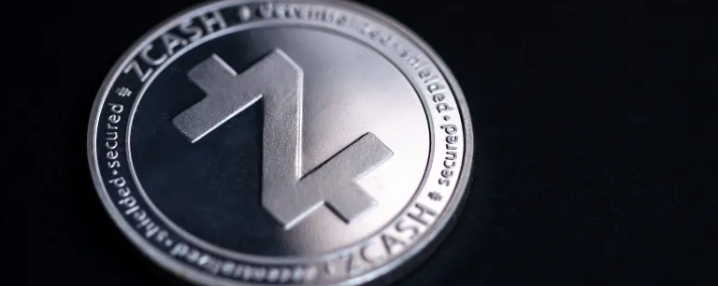
Zcash.. a digital currency betting on trust and privacy
Zcash's system is quite similar to Bitcoin but with added features, most notably transaction privacy (Getty)
A digital currency system launched in 2016, it stands out for its ability to provide encrypted transactions that allow users to hide details of their assets and transactions, while still maintaining verifiability within the network.
Zcash (Zcash) is also commonly referred to as 'ZEC' in general usage, and both terms are often used to refer to the currency itself. However, the more technically accurate expression is that 'Zcash' refers to the protocol and network, while 'ZEC' refers to the digital currency used within this system.
Zcash's overall design is based on a structure similar to Bitcoin, as it was initially developed based on Bitcoin's original code, but it fundamentally differs in its privacy model; while Bitcoin relies on a public and transparent transaction ledger that anyone can view and trace the history of transfers, Zcash allows for transactions where the details of the sender, receiver, or transfer amount are obscured, while still maintaining the ability to verify the validity of the transaction according to network rules.
This level of privacy is achieved through the use of what is known as 'Zero-Knowledge Proofs', a cryptographic technique that allows one party to prove the validity of certain information without needing to disclose the data that proves it, thus enabling a balance between privacy and reliability within the system. Zcash derived its name from this technique.
Zcash's model also mimics Bitcoin in that it has a fixed maximum supply of 21 million units, which gives it a rarity feature and reduces the likelihood of inflation like traditional fiat currencies.
Kharkov, Ukraine - November 15, 2021: Zcash ZEC cryptocurrency symbol, logo. Business and financial concept. Hand with smartphone, screen with crypto icon closeup
'ZEC' is the name of the digital currency used in the Zcash system (Shutterstock)
Creation
The Zcash system was created and developed by Electric Coin Company and American Zooko Wilcox, with the initial seeds of this project dating back to 2013, when a group of scientists gathered to address the privacy issue in the Bitcoin system, which allows for viewing transaction details—such as sender, receiver, and amount—within a public ledger.
Initially, a proposal was put forward to add a privacy layer to Bitcoin under the name 'Zerocoin', as an extension of the Bitcoin protocol. However, the research team later decided to develop the idea further, moving from just an addition to creating a completely independent protocol, which led to the birth of the Zcash project.
In 2015, Zerocoin Electric Coin Company, later known as 'Electric Coin Company', was founded to turn the idea into a practical, usable system. After years of research and development, Zcash was officially launched in 2016.
A year after its launch, the 'Zcash Foundation' was established to support and develop the system, along with the 'Zcash Grants Organization' created to fund projects aimed at its evolution.
Zcash attracted investors amid the rising interest in what are known as privacy coins (Shutterstock)
Zero-knowledge proofs
At its core, the Zcash system relies on the principle of zero-knowledge proofs, a mathematical concept that serves as a foundation for solving the privacy dilemma without compromising the reliability of transaction verification. This principle enables one party to prove the validity of certain information without disclosing the data that actually proves it.
For example, a person can prove they have enough balance to complete a purchase without revealing their bank balance or account details. Thus, this technology enables financial transactions that can be verified on the network while keeping their details confidential, providing a high level of privacy and security for users.
This type of proof is divided into two types: interactive and non-interactive. Zcash uses the non-interactive type, specifically what is known as 'zk-SNARKs', which stands for 'Zero-Knowledge Succinct Non-Interactive Argument of Knowledge'.
This type of technology allows for proof of possession of information without disclosing it without the need for any direct interaction or repeated dialogue between the prover and the verifier.
To achieve this, the Zcash system utilized an initial setup phase known as the 'Trusted Setup Ceremony', a collective cryptographic process conducted during the system's establishment, involving multiple parties to create the system's public settings used later to verify transaction validity, ensuring that no party retains the confidential information used in this process, in a data destruction phase sometimes referred to as 'toxic waste', symbolizing the secret data in the setup process that could enable system manipulation or falsification of proofs if retained.
The Zcash system relied on multi-party involvement during the foundational phase to ensure the security of the setup process. In this design, each participant contributes an independent piece of data and then disposes of it, so that no participant's secret relies on the secrets of others, but these parts are combined to form the public settings of the system.
Zcash has a fixed maximum supply of 21 million units (Getty)
Increasing interest
The Wall Street Journal reported in May 2026 that several key Bitcoin supporters have started shifting towards Zcash, with Tyler and Cameron Winklevoss at the forefront, who are considered early investors in the crypto market.
The newspaper added that Zcash experienced a nearly 50% increase in a month and 1140% over the year, while Bitcoin rose only about 8% in a month and fell 24% over the year.
According to data from CoinMarketCap, Zcash was trading at around $528, with a market cap of approximately $8.82 billion on May 15, 2026, placing it among the largest cryptocurrencies by market cap, although its volume remains modest compared to Bitcoin.
Regulatory concerns
Despite the privacy feature that attracts users and investors, it also raises concerns for regulators, who fear that the concealment capability might facilitate sanction evasion, money laundering, or funding of illicit activities.
The Financial Action Task Force indicates that international standards for combating money laundering and terrorist financing have included virtual assets and their service providers since the update of Recommendation 15 in 2019, but it notes that global implementation is still lagging.
