

@OpenLedger is trying to change the approach to AI economics, rather than just combining AI and blockchain into another trendy product, and in my opinion, this is one of the most interesting aspects. I keep noticing the same thing. Today, most AI systems operate as closed mechanisms, where users don’t know what data the models are trained on, who created these datasets, and who really profits from AI's work. What catches my attention is that #OpenLedger offers a different model where every contribution to the creation of models, data, or infrastructure can be tracked on-chain through the Proof of Attribution mechanics. Essentially, if you look closer, there’s a different vibe; the project aims to make AI more transparent and fair for all ecosystem participants. One of the key elements of OpenLedger is the concept of Datanets — community data networks that turn information into a separate digital asset. This means users can upload, license, and monetize their data while models gain access to permissioned datasets without full centralization.
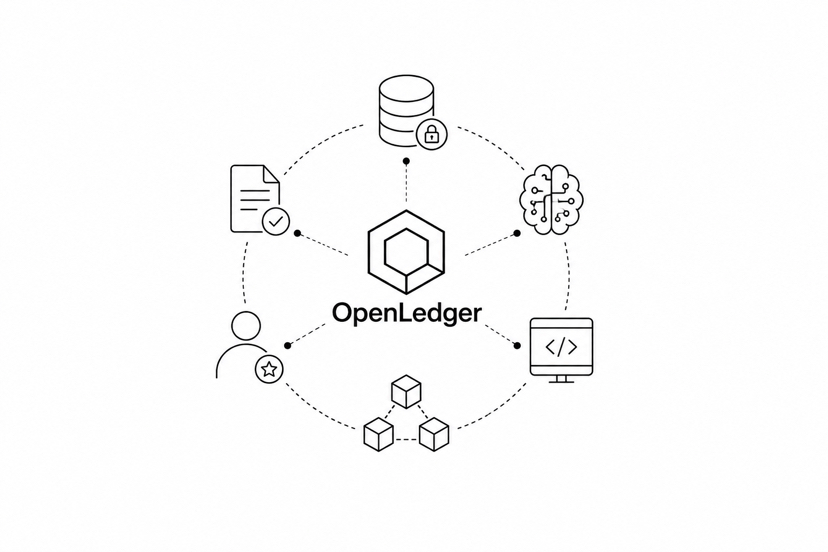
In a sense, OpenLedger aims to create a data market where information stops being free raw material for big corporations and becomes part of an open economy. After digging deeper, another interesting feature emerged: the project's idea doesn't focus on chasing universal AGI, as much of the AI industry does. Instead, the ecosystem bets on niche models for specific fields and tasks. This approach seems closer to real business use of AI because, in many cases, companies don't need all-knowing systems, but rather precise models for specific processes. I was also impressed by the OpenLoRA technology, which allows running a large number of fine-tuned models on a single GPU. This is crucial! Because inference and scaling AI today remain some of the most expensive parts of the industry. OpenLedger is essentially trying to build an infrastructure where AI operates cheaper, more efficiently, and at scale. All of this gradually shapes a completely different perspective on the AI ecosystem. The project doesn't look like just another token with a trendy AI wrapper, but rather an attempt to create a separate infrastructure layer for the new artificial intelligence economy. OpenLedger functions as an EVM-compatible Layer 2 based on the OP Stack and uses EigenDA for data availability, highlighting the serious technical foundation of the project. But… perhaps the most intriguing idea is that $OPEN aims to make AI composable. Similar to how DeFi once transformed liquidity into a system of interconnected financial blocks, OpenLedger wants to make data, models, agents, attribution, and inference composable. If this concept works, AI could turn into not a closed set of separate platforms but an open network of interacting intelligent components, where each participant receives a transparent role and a share of the value created. We'll see, time will tell. Whether the project is indeed building a separate category or over time all these AI ecosystems will start to look much closer to each other than they seem now.
