
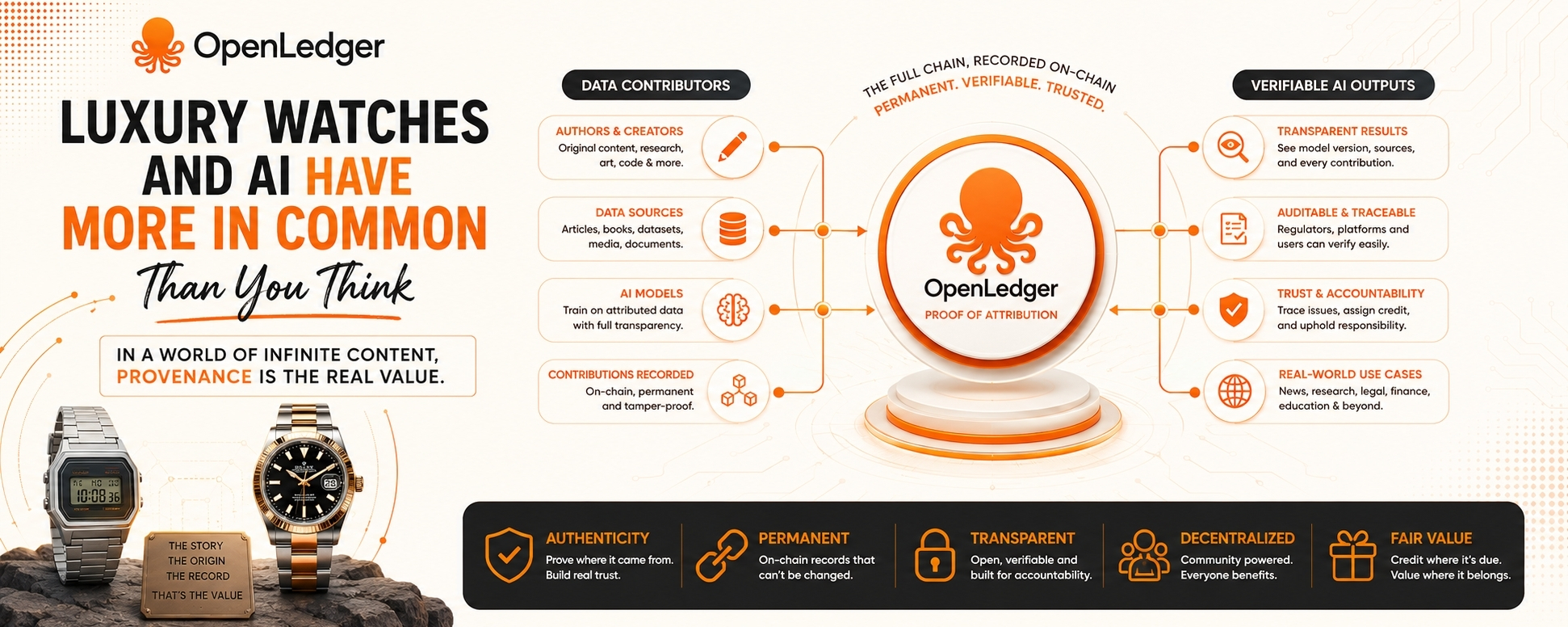
Luxury Watches and AI Have More in Common Than You Think
A cheap watch and a Rolex both tell time.
Same job. Completely different price. Nobody pays $50,000 for better timekeeping. They pay for what's behind it — who made it, where it came from, every hand it passed through. The record is the value.
I thought about that while going down the OpenLedger rabbit hole.
The internet moved information everywhere. It never tracked where it came from.
That was fine for a while. Now it's a real problem.
Content gets copied, reposted, summarized, remixed — three steps later the original source is completely gone. The information survives. The origin doesn't. And AI is making this happen ten times faster than before.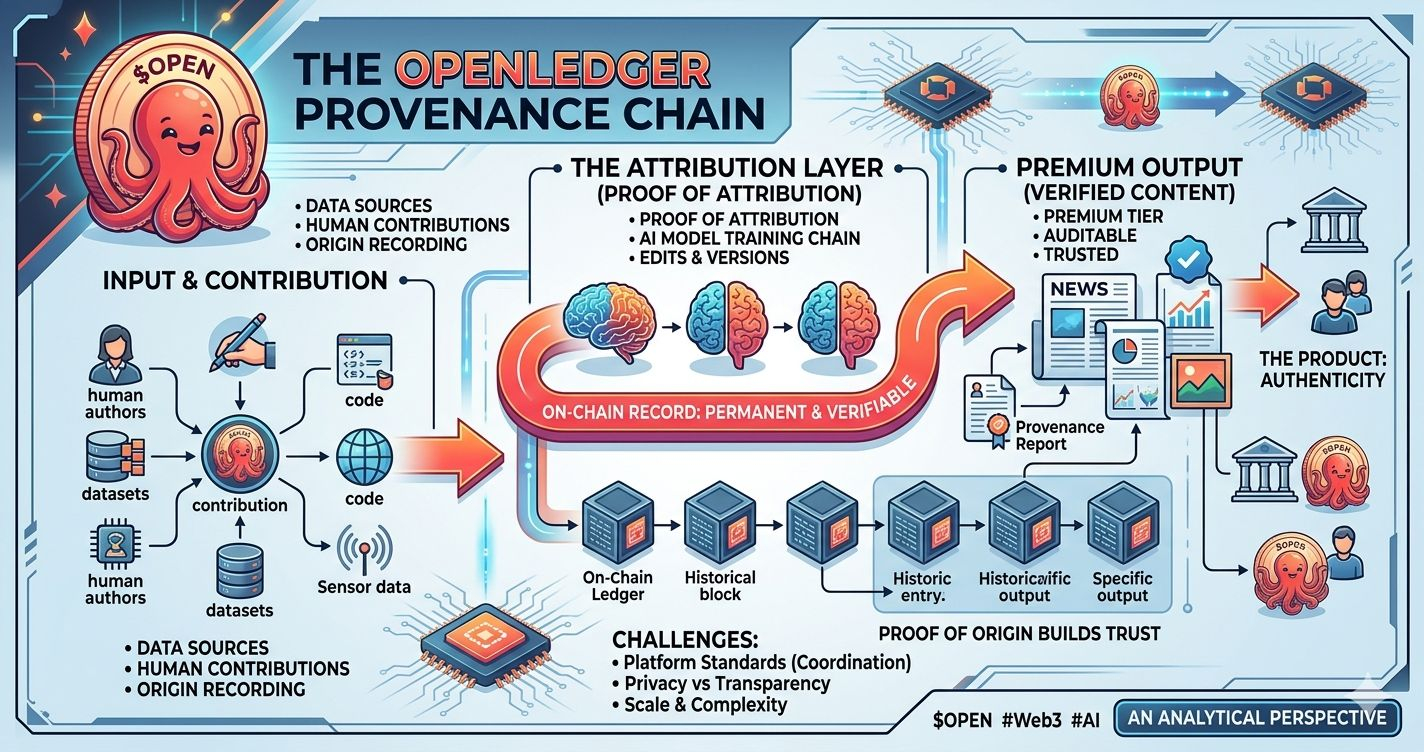
When everyone can generate content in seconds, the question changes
It's no longer "can you make this." It's "where did this actually come from."
This isn't a new pattern. Verified art sells for multiples over unverified art with the same brushstrokes. Luxury brands obsess over their supply chain because the story behind the product is part of the product. Courts and financial systems run entirely on audit trails.
Digital content is heading the same place. Infinite supply means authenticity becomes the scarce thing. Scarce things hold value.
This is why @OpenLedger caught my attention
Every AI project right now is racing on performance. Bigger. Faster. Cheaper. That competition is real but it's not the only thing that matters.
OpenLedger is working on something most projects ignore — keeping the connection between a data contribution and its outcome actually intact. Who contributed what. Which sources trained which outputs. The full chain, recorded on-chain, permanent, verifiable.
Proof of Attribution is what they call it.
Think about a simple example. An AI-assisted news article. A real provenance record shows the authors, the sources, the model version, the edits. Readers can check it. Regulators can audit it. If something goes wrong, you trace back through the chain and find the problem.
That's not a crypto gimmick. That's how trust actually gets built.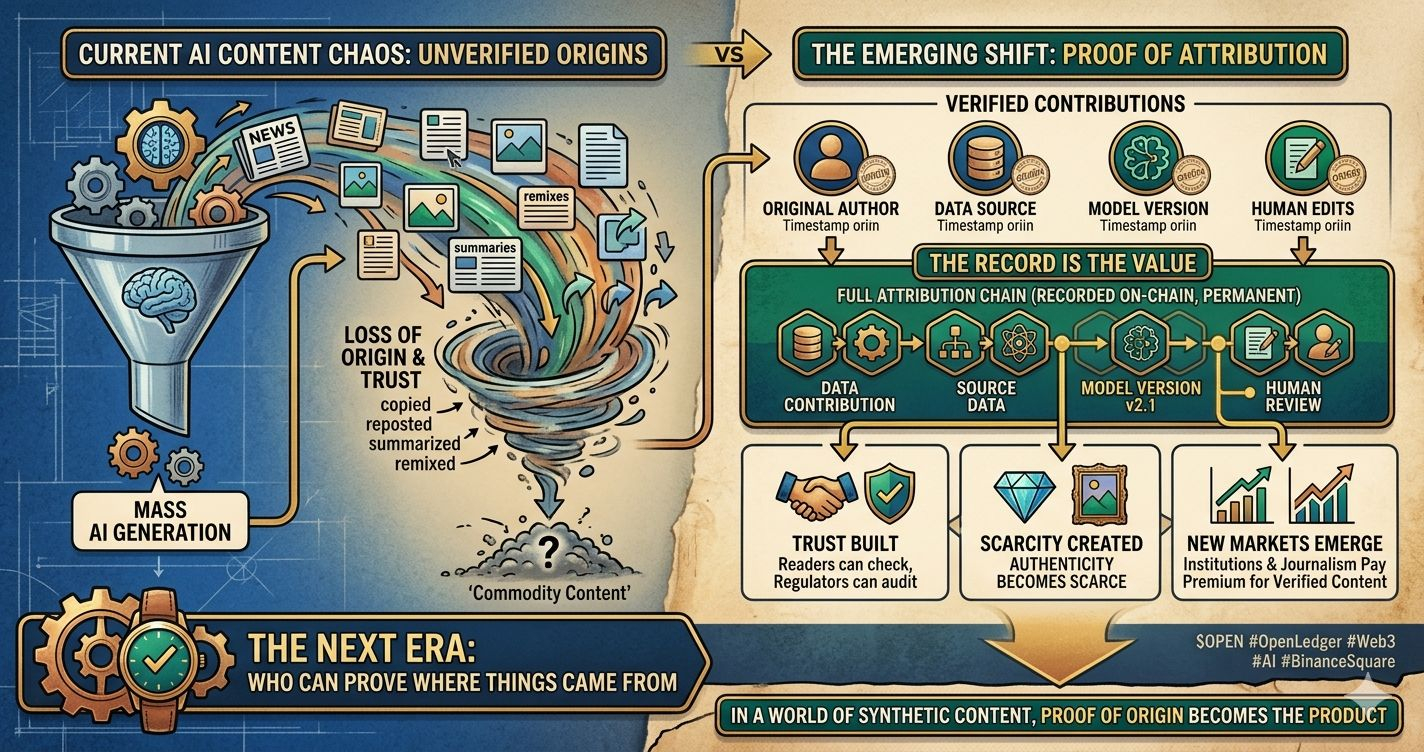
The problems are real though — nobody should pretend otherwise
Provenance only works if platforms agree on standards. Right now they don't.
Privacy pulls directly against transparency. Those two things don't resolve easily.
Recording all of this at scale costs money and complexity. People only adopt it if the benefit is obvious and the process isn't painful.
These are hard problems. Most projects either ignore them or bury them in the whitepaper. Worth knowing they exist before getting too excited.
Where this actually goes
Two markets develop. They already are developing.
One is mass-scale AI content — fast, cheap, everywhere, functional. Commoditized.
The other is verified content — traceable, authenticated, with a clear record of origin and rights attached. The premium tier. Institutions, legal systems, journalism, anything where stakes are high — they'll pay for that second category because they have to.
In a world where synthetic content is everywhere, proof of where something came from stops being a nice-to-have.
It becomes the product itself.
The next era of the internet probably won't be defined by how fast we can create things.
It'll be defined by who can actually prove where things came from.