
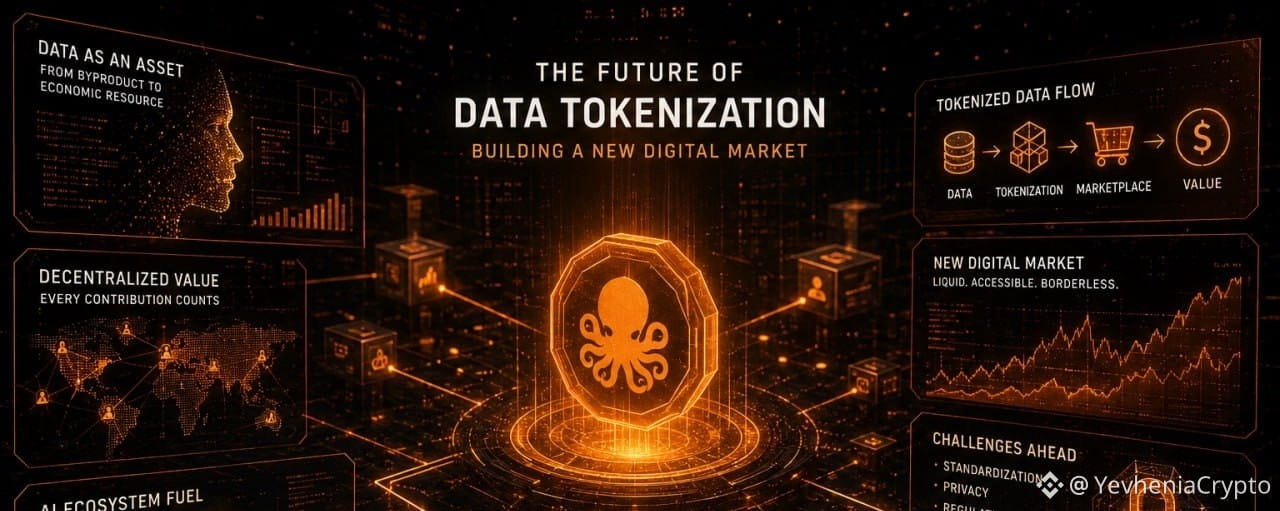
👛 Data tokenization is gradually transforming from an experimental concept into one of the key directions for the development of the digital economy. Its essence lies in converting data — from user analytics to datasets for AI training — into digital assets that can be accounted for, transferred, and monetized. This changes the very nature of data: from a byproduct of digital services, it becomes a full-fledged economic resource.
In the traditional model, large platforms hoard and utilize data in a centralized manner, reaping the main benefits from its value. Tokenization, on the other hand, offers a different approach—a distributed model where every contribution to the data can be recorded and valued. This creates the groundwork for new markets where data becomes a liquid asset rather than a closed corporate resource.💹
✅A crucial role in this process is played by the development of AI ecosystems. Training models requires not only computational power but also constant access to high-quality, structured data. Tokenization allows for the formalization of data provenance, quality, and the contributions of participants, potentially reducing information asymmetry between large companies and independent developers.
‼️In this context, projects like OpenLedger offer a vision where data, models, and computational resources are integrated into a single transparent economic system. The idea is to create an infrastructure where every element of the AI chain—from datasets to computations—can be tokenized and integrated into an open market.
In the long run, data tokenization could become the backbone of a new digital economy, where value is distributed among all participants in the ecosystem. This paves the way for fairer monetization models in AI, but also raises complex questions about standardization, privacy, and regulation. The balance between transparency and control will dictate how quickly this model goes mainstream.⏳
🫰If the current stage of AI development can be called the 'model economy', the next one will likely be the economy of tokenized data—where information ceases to be just a resource and becomes a fully-fledged financial asset of the new generation.