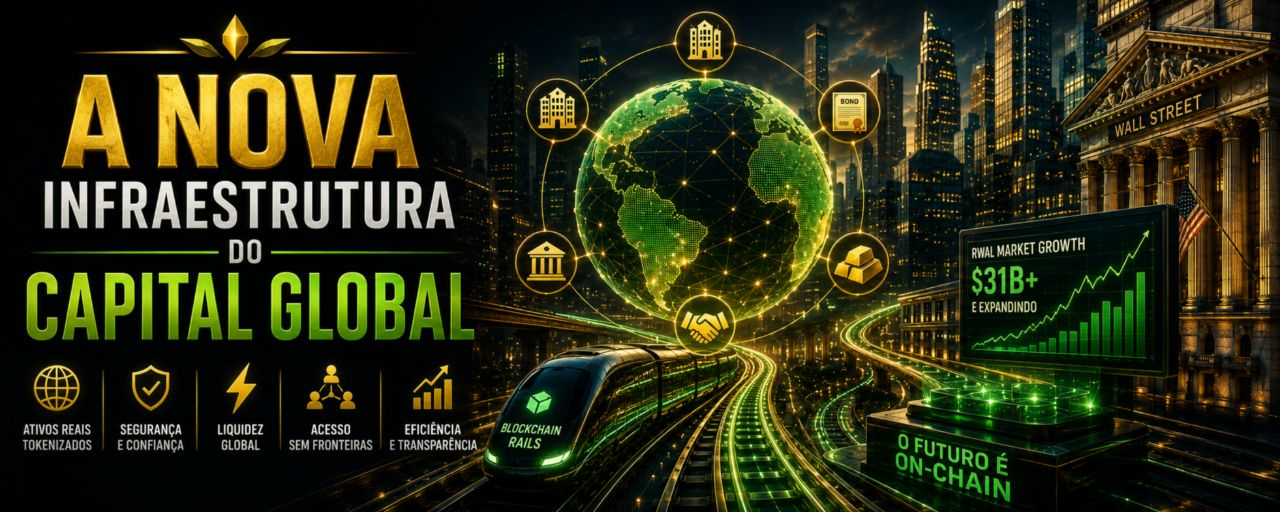
Forget about the short-lived speculation. The institutional market has chosen RWAs (Real World Assets) to rebuild the financial rails of the world. Discover who will win the war for wealth distribution.
The Death of Empty Narratives
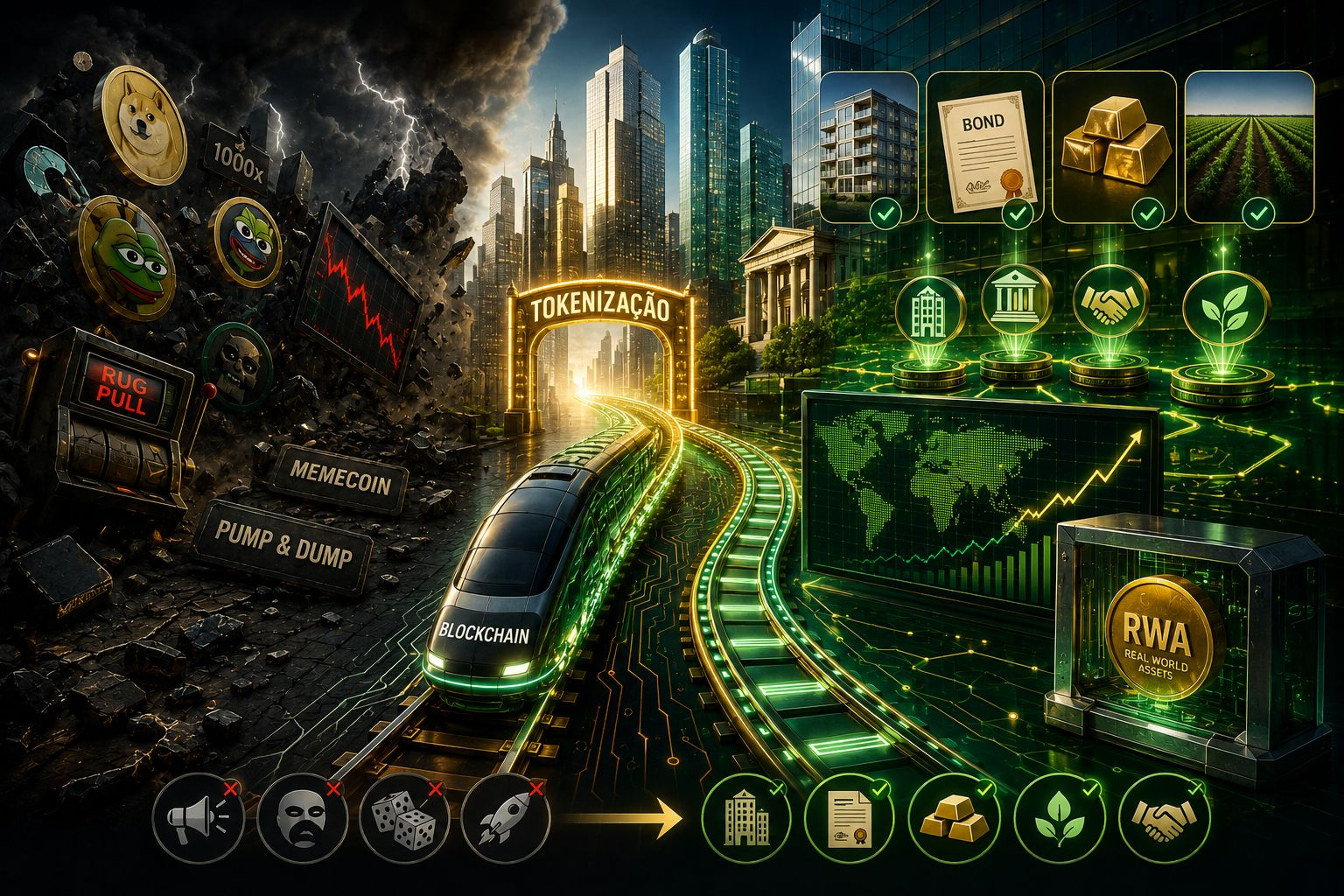
For years, the crypto market has been driven by cycles of pure speculation. Memecoins and fleeting hypes have captured global attention. However, a much deeper and quieter transformation is happening behind the scenes.
It goes by the name of RWA (Real World Assets).
The tokenization of real assets represents the final convergence between the traditional financial system (TradFi) and blockchain infrastructure. Real estate, government bonds, private credit, and commodities are not just 'flirting' with technology; they are migrating to it. The most important question is not whether tokenization will grow — after all, the RWA market has already surpassed the historic mark of $31 billion and continues to accelerate.
The real question is: who will control the new infrastructure?
The Real Value Lies in Tracks and Distribution
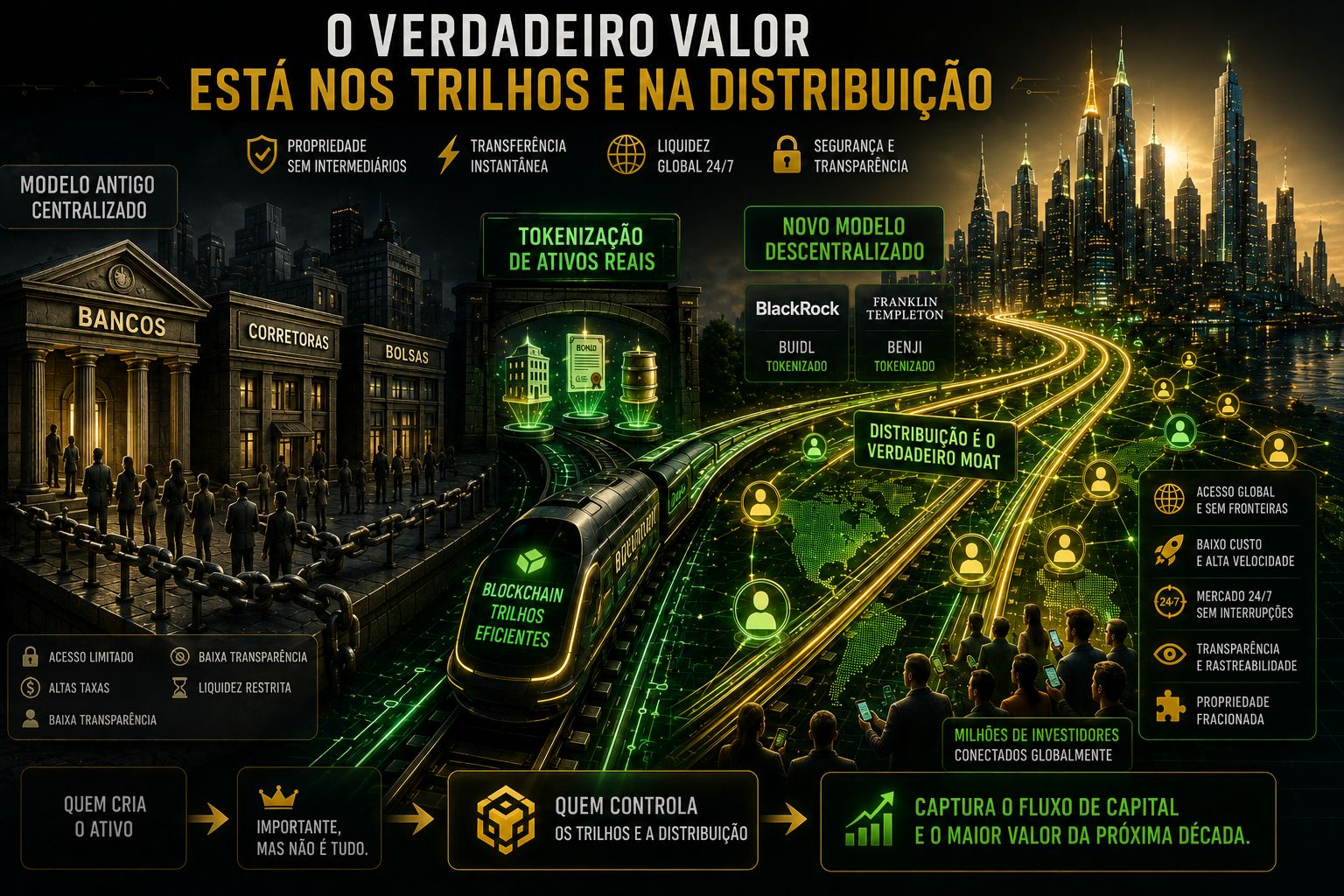
Historically, banks, brokers, and exchanges have acted as the sole intermediaries of ownership. Tokenization redefines this model by allowing assets to be issued, transferred, and settled directly on digital networks.
But there's a detail often overlooked by everyday investors: Creating tokenized assets isn't enough. The real value lies in distribution.
Large global asset managers like BlackRock and Franklin Templeton have already created their tokenized products. However, in any financial revolution, those who control user flow and possess the most efficient tracks to connect these assets to the end investor are those who capture the largest share of the generated value.
Thus, the next decade will not be defined by who simply 'creates' the token, but by who controls the highways through which global capital will flow.
.
Strategic Vision: Where to Position Capital for the Long Term?
For those with a future vision looking to ride this structural transition, the focus should be on projects that lead in both network infrastructure and cutting-edge financial products.
Two major theses are standing out in the market today:
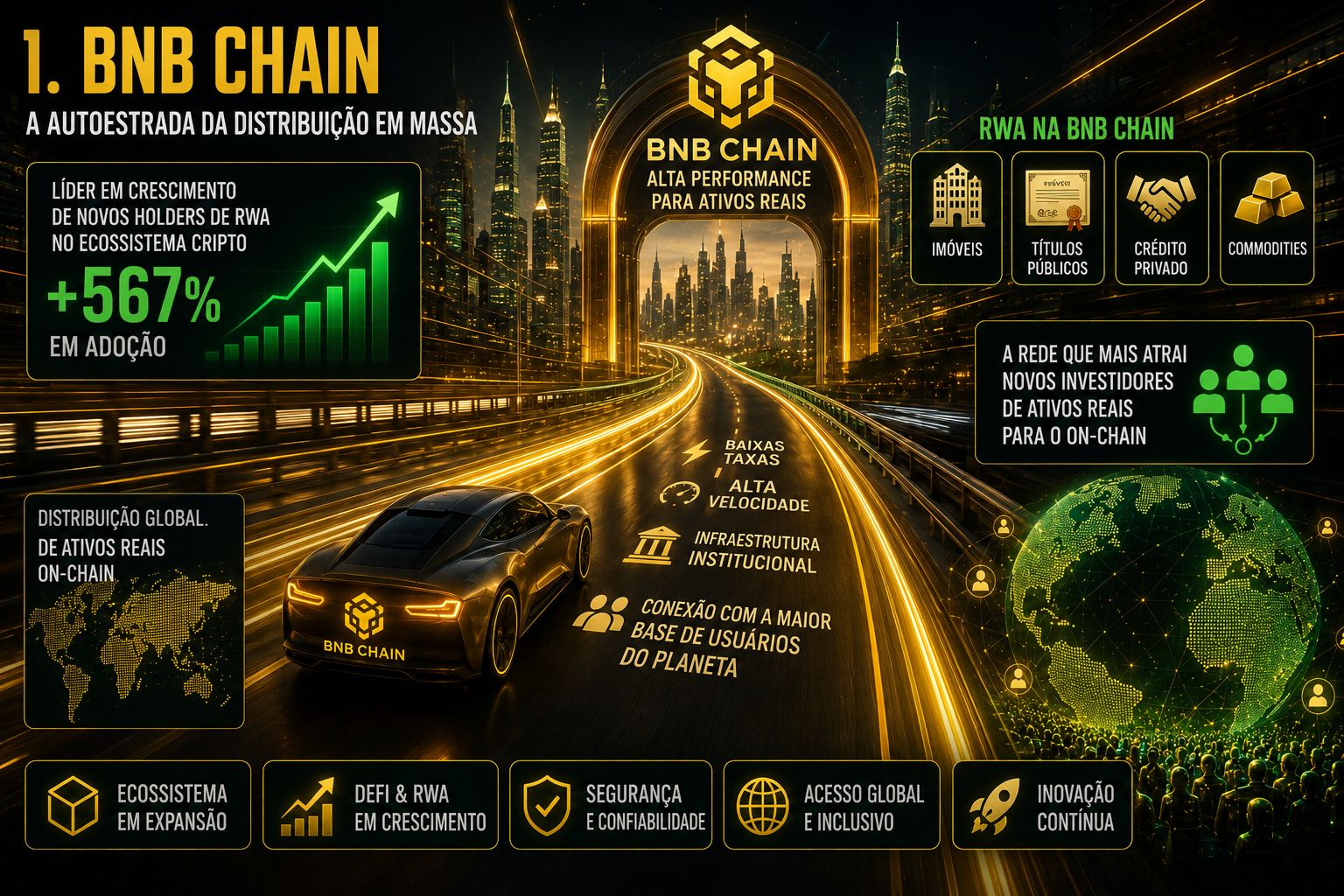
1. BNB Chain: The Highway for Mass Distribution
If the keyword for success is distribution, the BNB Chain ecosystem has proven to be an unstoppable force. Recent data shows that the network led the growth of new RWA holders in the crypto ecosystem, recording an impressive surge of +567% in adoption.
The Advantage: The BNB Chain offers ultra-low fees, institutional processing speed, and direct connection to the largest retail user base on the planet. Betting on the growth of this ecosystem is positioning yourself in the network that attracts new real asset investors to the on-chain environment.
2. ONDO Finance (ONDO): The Gold Standard for Institutional Assets
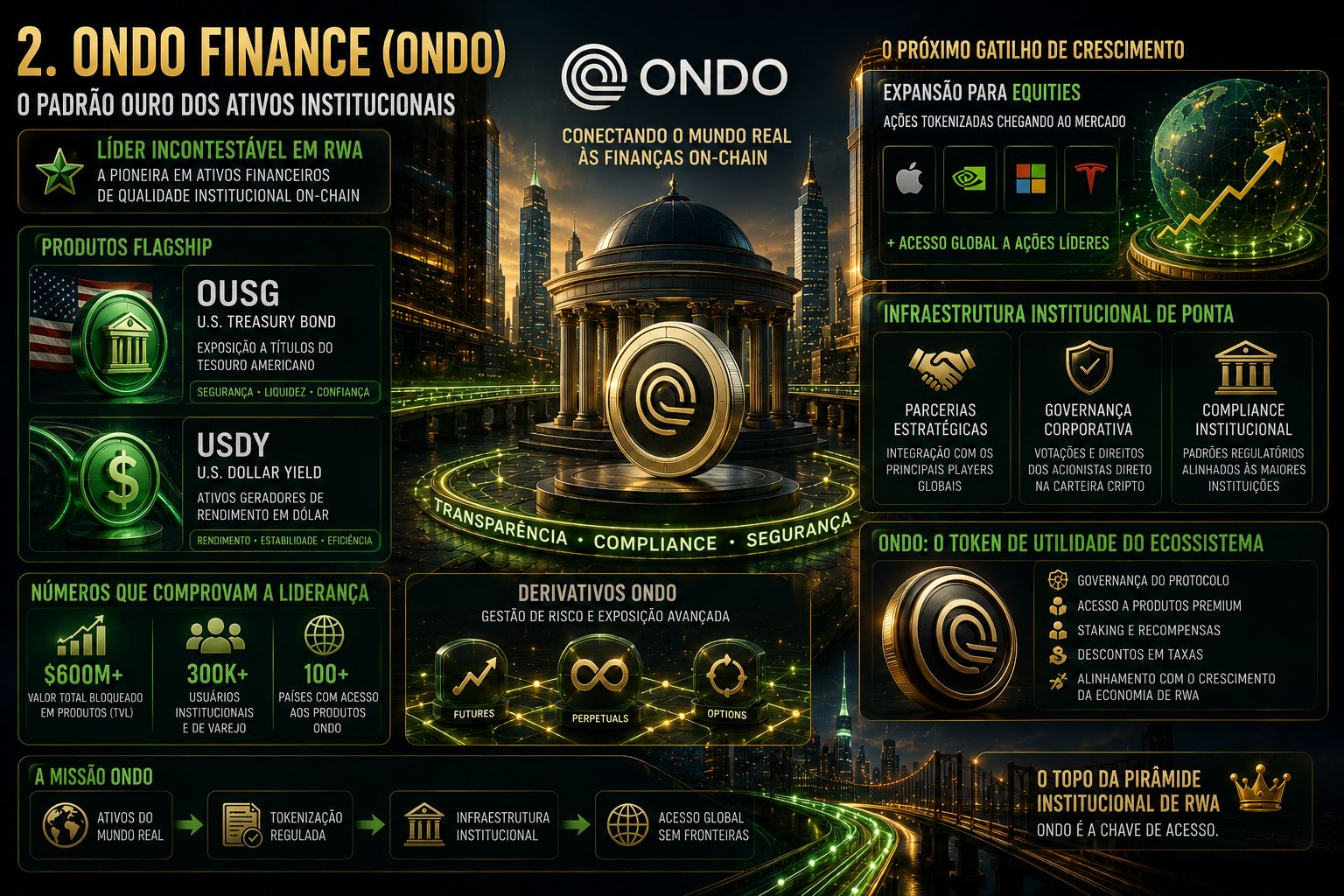
If your focus is purely on institutional financial products, Ondo Finance is the undeniable leader in the sector. They were pioneers in bringing U.S. Treasury securities (like OUSG) and dollar-yielding assets (USDY) to the decentralized financial ecosystem.
The Next Trigger: Ondo is breaking through the barriers of government bonds and forcefully entering the equities market (tokenized stocks). With the recent launch of derivatives platforms and heavyweight partnerships for corporate governance directly in crypto wallets, the ONDO token is solidifying as the primary utility asset for those wanting direct exposure to the top of the institutional RWA pyramid.
Here are the top tokens in this segment to keep a close eye on:
For those eyeing the long-term in the RWA (Real World Assets) segment, the market has divided into very clear categories: network infrastructure giants, institutional credit/treasury issuers, and niche protocols (private credit and real estate).
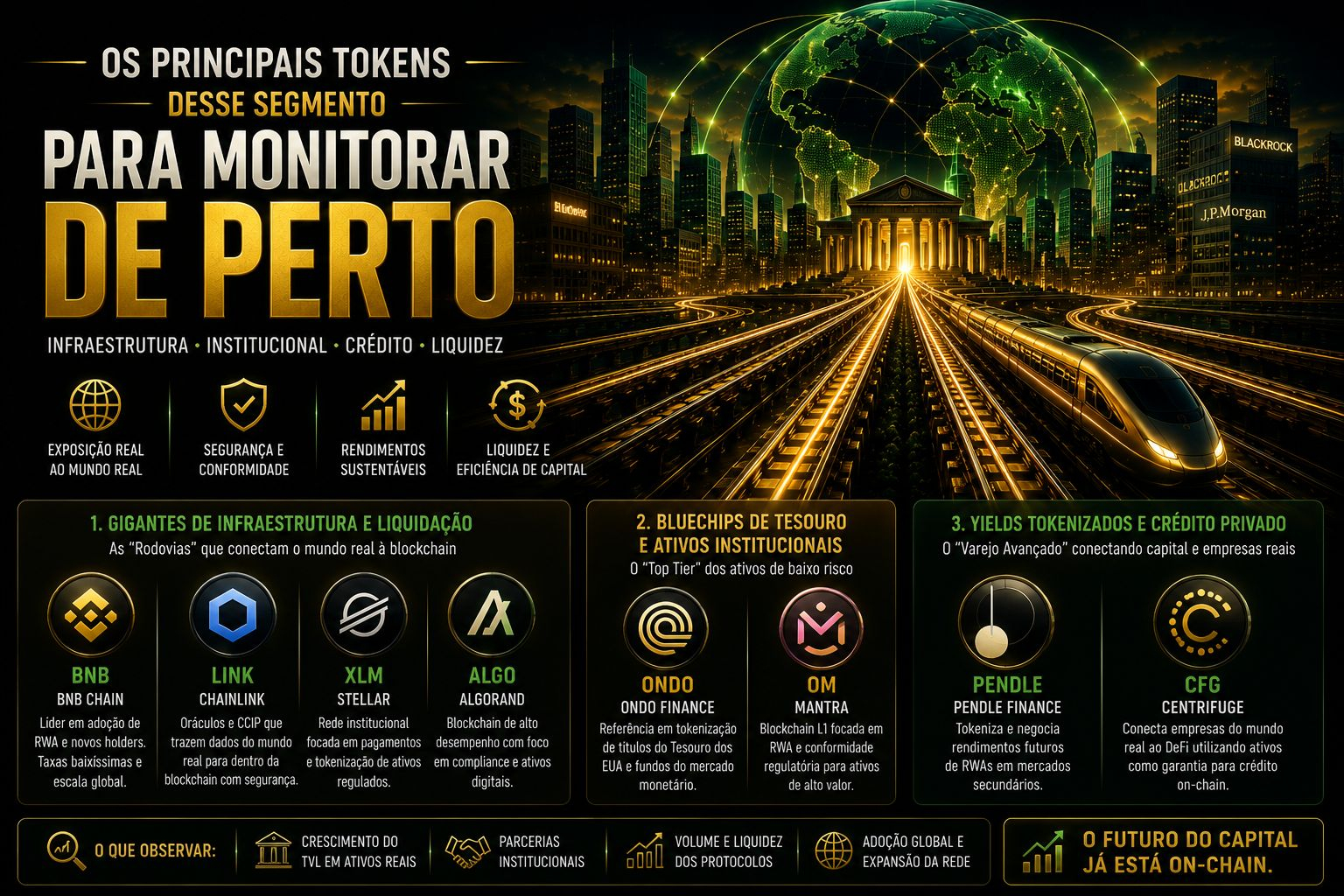
The Infrastructure and Settlement Giants ('The Highways') These tokens do not issue real assets directly, but provide the network, data, or tracks through which institutional investors navigate.
$BNB (BNB Chain): As you mentioned in your article, it has become one of the largest retail forces in the sector, attracting an explosion of new tokenized asset holders due to ease, nearly zero network fees, and global compatibility.
$LINK (Chainlink): Essential for the ecosystem. Chainlink acts as the 'oracle' that brings real-world data (gold prices, real estate values, U.S. Fed rates) securely into the blockchain through CCIP (cross-chain interoperability protocol used by major banks).
Stellar (XLM) & Algorand (ALGO): Two institutional networks historically built with a focus on compliance and issuing digital assets, widely utilized by governments and fintechs for stablecoins or regulated securities.
The Bluechip Treasury and Institutional Assets ('The Top Tier') These are projects focused purely on capturing institutional money seeking predictable yields from low-risk assets (like U.S. government bonds or stocks).
ONDO (Ondo Finance): Considered the gold standard for institutional assets at the moment. It leads the tokenization of U.S. Treasury bonds and money market funds, expanding the ecosystem with liquidity support from major firms (like BlackRock).
MANTRA (OM): A Layer 1 blockchain specifically focused on regulatory compliance for RWAs. It attracts attention for being able to structure and fractionalize high-value assets legally, like real estate and commodities.
Tokenized Yields and Private Credit ('Advanced Retail') These protocols focus on connecting crypto investors to real-world companies that need financing, sharing profits in the form of programmable yields.
PENDLE (Pendle Finance): Although classified as DeFi, it allows users to tokenize and trade the future yield of RWAs in secondary markets. It's very strong for traders looking to speculate on fluctuations in interest rates of tokenized assets.
$CFG (Centrifuge): A pioneer in the sector. It allows traditional companies to borrow directly on the blockchain using invoices, loans, or real-world receivables as collateral, connecting the traditional market directly to P2P (peer-to-peer).
What to watch: When analyzing these assets, long-term investors should always track the TVL (Total Value Locked) in real assets and the institutional partnerships of the projects, as the success of an RWA token is directly tied to the amount of traditional capital it can 'bring into the tracks.'
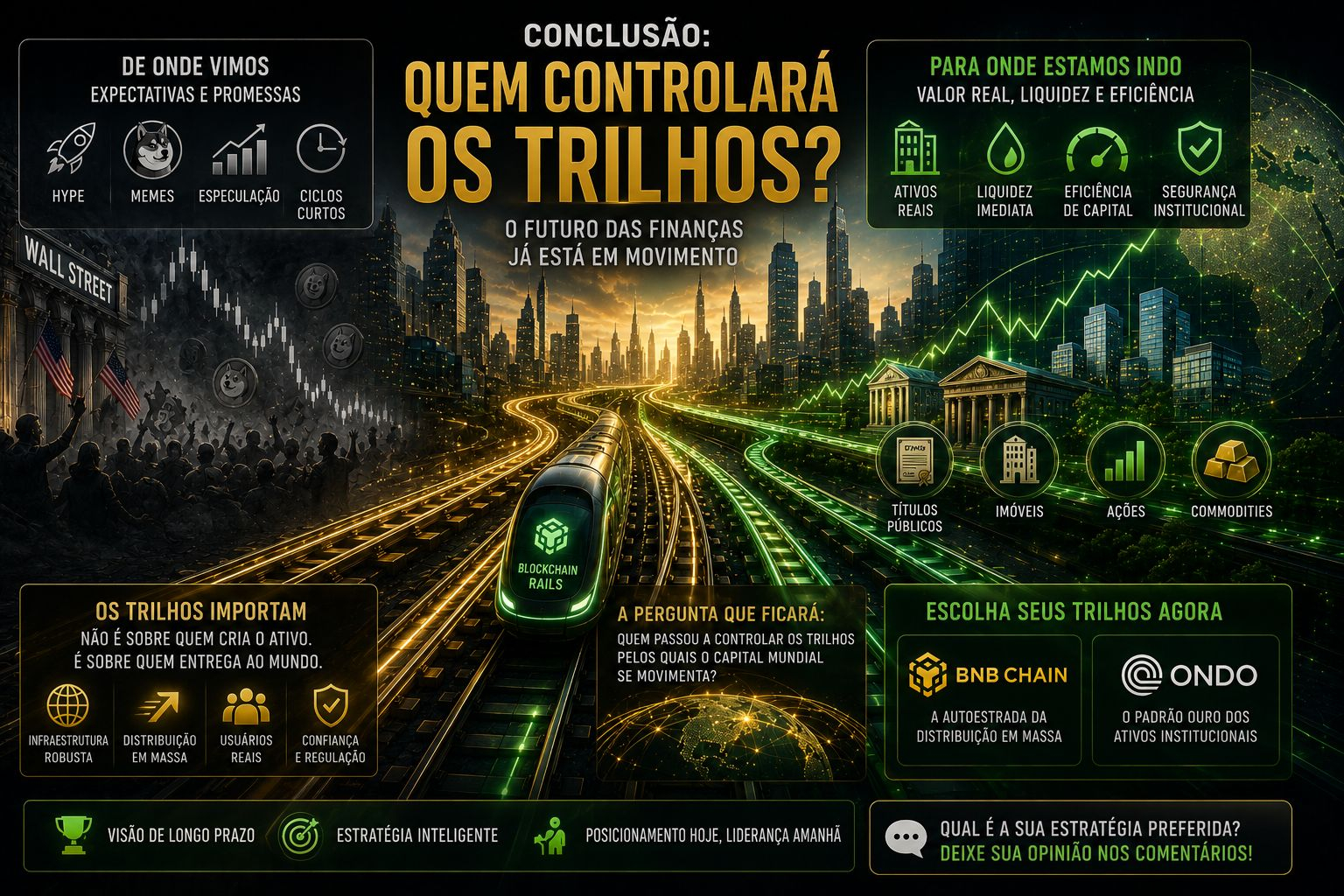
Conclusion: Who Will Control the Tracks?
Previous crypto market cycles were built on expectations and future promises. The current cycle and the coming years are being consolidated on real value, immediate liquidity, and capital efficiency.
When the dust of speculation settles, the most important question in Binance Square and on Wall Street trading floors won't be which meme appreciated the most in the short term.
There will be only one: Who started controlling the tracks through which global capital moves?