
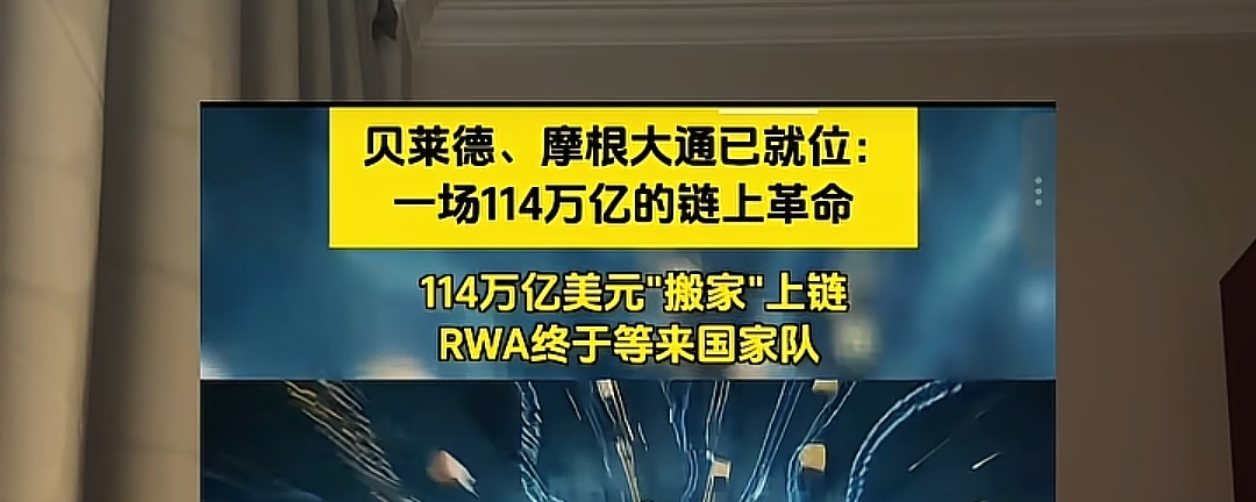
This is a real milestone event: The U.S. DTCC (Depository Trust & Clearing Corporation) announced plans to launch a $114 trillion traditional asset tokenization service in July 2026, with over 50 giants like JPMorgan and BlackRock participating in the build-out. What does this mean for the crypto market?
1. Bullish logic for BTC: Compliance status significantly strengthened
BTC is one of the biggest indirect beneficiaries of the current DTCC tokenization wave.
In March 2026, the SEC and CFTC jointly released formal interpretive guidance, officially classifying mainstream cryptocurrencies like BTC, ETH, and Solana as 'digital commodities', exempting them from being classified as securities. This means regulated institutional funds can legally hold and trade BTC as a compliant asset without worrying about securities law constraints.
At the same time, DTCC's tokenization platform will bring traditional assets like government bonds and stocks on-chain, replacing the T+2 settlement cycle with 24/7 real-time clearing. This "institutional trust endorsement" will reduce market uncertainty and indirectly enhance BTC's value positioning as "digital gold"—BTC is no longer just a speculative product but is accepted as a legitimate digital commodity by traditional financial infrastructure.
Two, opportunities and challenges for Binance and BNB
Binance CEO Richard Teng publicly stated in May 2026 that tokenization is nearing a "major inflection point," and the next 12 to 18 months will determine the direction of tokenized finance.
From the opportunity perspective, the current tokenized RWA value of BNB Chain has reached $3.6 billion, with a quarterly increase of 60%, becoming the second-largest public chain RWA ecosystem after Ethereum (approximately $16.6 billion). The collaboration between DTCC and public chains like Stellar indicates that institutional tokenized assets are coming to fruition, bringing significant incremental market demand to ecosystems like BNB Chain that already have RWA foundations.
From the challenges, the risks are equally hard to ignore:
· Regulatory pressure is mounting: Tokenized securities are still bound by existing securities laws, and BNB, as the native token of the BNB Chain, has yet to receive a clear classification from U.S. regulators.
· Competitive landscape restructuring: DTCC has prioritized the choice of Stellar’s public chain, which has built-in compliance architecture (reasons include scalability, compliance capability, and low transaction costs), over general smart contract platforms. This means that blockchains with native compliance capabilities may receive more favor in the institutional-level RWA track, and BNB Chain needs to accelerate the construction of its compliance infrastructure.
Three, comprehensive assessment: What does DTCC's entry mean?
DTCC's tokenization plan is essentially a proactive embrace of blockchain by traditional financial core infrastructure. For the crypto market, this signifies that RWA is no longer a fringe asset but has officially embedded itself in the core of global financial infrastructure.
In this process, BTC gains a catalyst for value reassessment due to clearer regulations and institutional trust; BNB Chain, with its established RWA ecosystem, is in a favorable competitive position, but regulatory pressure is not to be overlooked; while Binance, as a trading platform, benefits from increased liquidity brought by institutional fund inflows, it also faces rising compliance costs due to tightening regulatory policies.
True structural opportunities belong to those crypto assets and platforms that can first comply and lead technologically in the process of regulatory clarification.#BTC走势分析 #BNB走势