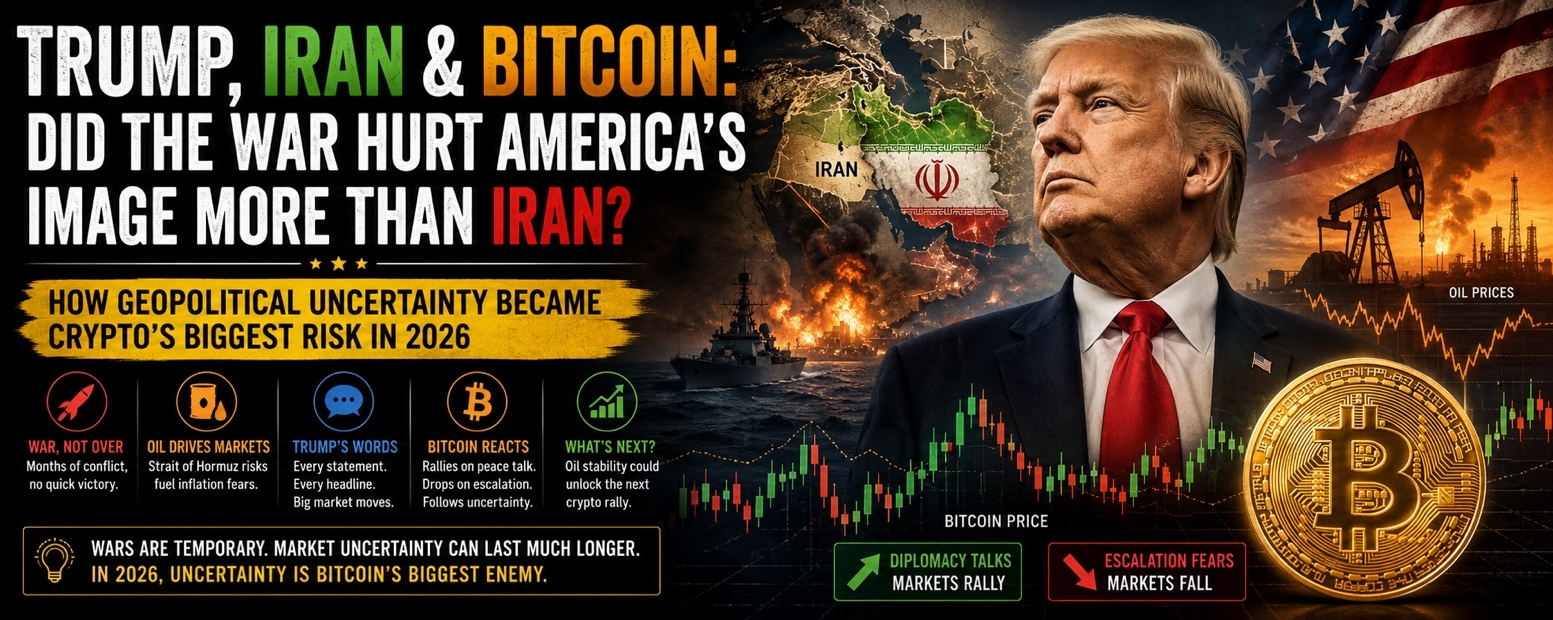
When the conflict with Iran began, many investors expected a quick military operation followed by a return to normal market conditions. Instead, months later, the world is still dealing with oil market disruptions, uncertainty around the Strait of Hormuz, and constant volatility across stocks, commodities, and cryptocurrencies. The biggest surprise may not be what happened on the battlefield, but what happened to market confidence. Recent economic assessments suggest that the war created lasting disruptions to energy markets and global trade while leaving investors increasingly dependent on political headlines.
Trump entered the conflict with a strong message: restore deterrence, pressure Iran, and achieve results quickly. However, markets soon realized that the situation was far more complicated. Oil prices repeatedly surged whenever tensions escalated and fell whenever new negotiations were announced. Traders found themselves reacting less to military developments and more to presidential statements. In many cases, a single comment about talks, ceasefires, or future actions moved billions of dollars across global markets within hours.
This has created a debate among analysts. Did the war weaken America's image as a superpower? Militarily, the United States remains unmatched. But power is not measured only by military capability. Predictability, credibility, and strategic consistency also matter. Critics argue that changing narratives—from escalation to negotiation and back again—made investors, allies, and even adversaries less certain about Washington's long-term direction. Supporters argue that the U.S. still demonstrated overwhelming force and maintained its central role in global security. The reality may lie somewhere in between.
For crypto investors, the consequences were immediate.
Many Bitcoin supporters expected BTC to behave like digital gold during a geopolitical crisis. Instead, Bitcoin initially traded like a risk asset. As tensions rose, investors reduced exposure to riskier investments and moved toward cash, bonds, and traditional safe havens. Bitcoin experienced significant volatility as markets attempted to price in the possibility of a wider regional conflict. Reports during the early stages of the war showed sharp Bitcoin declines following military escalation and aggressive political rhetoric.
The key connection between the Iran conflict and crypto was never Iran itself.
It was oil.
Every threat to the Strait of Hormuz raised concerns about global energy supplies. Higher oil prices increased inflation fears, reduced expectations for interest rate cuts, and tightened financial conditions. Historically, these are conditions that tend to pressure cryptocurrencies. Analysts repeatedly noted that any major impact on Bitcoin would likely come through energy markets rather than direct military developments.
The result was a new market pattern.
When headlines suggested diplomacy, Bitcoin rallied.
When headlines suggested escalation, Bitcoin weakened.
When oil surged, crypto struggled.
When oil cooled, crypto recovered.
In other words, Bitcoin became a real-time indicator of geopolitical confidence.
Ironically, the longer the conflict continued, the less investors focused on military victories and the more they focused on uncertainty. Markets can often absorb bad news. What they dislike most is not knowing what comes next.
Looking ahead, the future direction of crypto may depend less on who "wins" the conflict and more on whether energy markets stabilize. If oil prices normalize and shipping routes fully recover, risk assets such as Bitcoin could benefit from improving market confidence. If disruptions persist, inflation concerns may continue weighing on cryptocurrencies and other growth-oriented assets.
The lesson for crypto investors is simple:
Wars are temporary.
Market uncertainty can last much longer.
And in 2026, uncertainty has become Bitcoin's biggest enemy.