
For the past few years, the narrative surrounding the risks of Artificial Intelligence has been largely philosophical. Tech executives testified before Congress about existential threats, while creatives worried about copyright infringement and job displacement.
But a striking new Gallup poll has revealed that the real-world resistance to the AI revolution is far more grounded, local, and physically real.
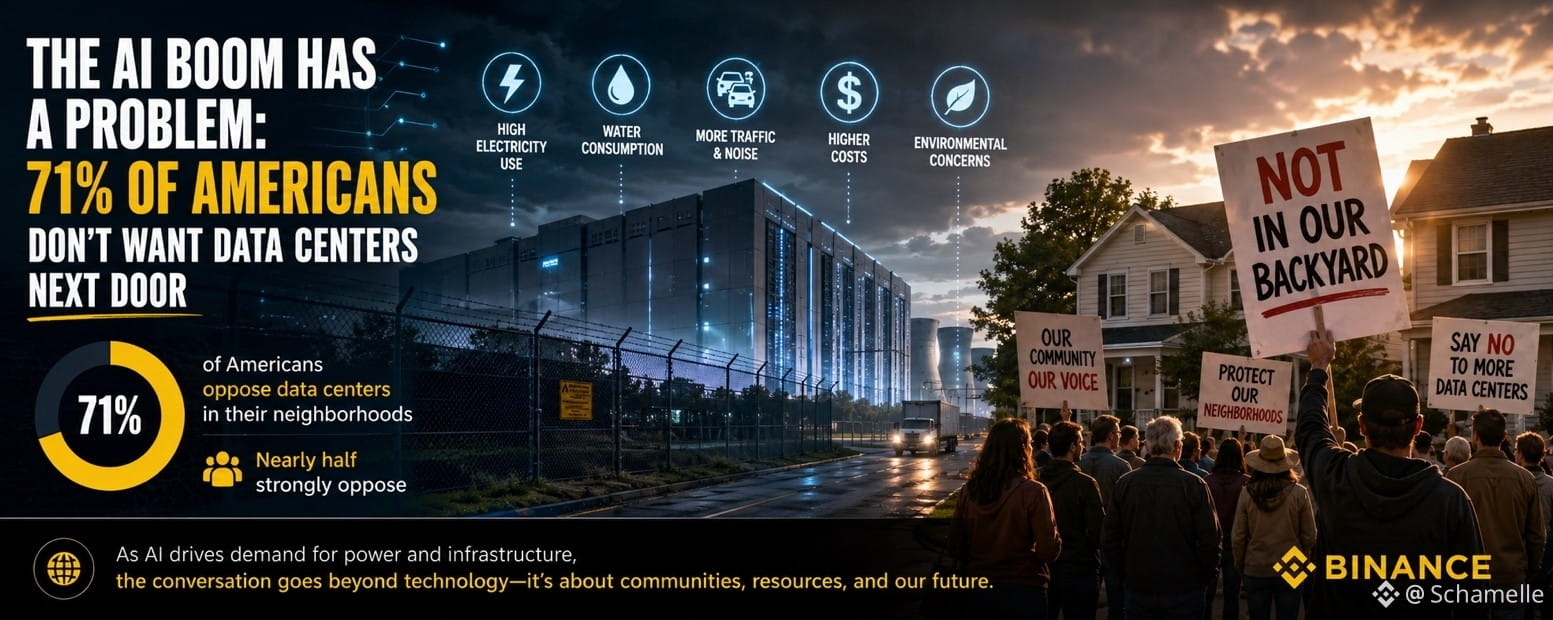
According to the survey, an overwhelming 71% of Americans oppose the construction of AI data centers in their local communities, with nearly half (48%) stating they are strongly opposed. To put that in perspective, AI data centers are now officially less popular than nuclear power plants, which sit at a lower 53% opposition rate.
This isn't vague technophobia. It is a calculated pushback against the massive, resource-heavy physical footprint required to keep the digital cloud running.
The Real-World Cost of Pixels
As tech giants like Amazon, Microsoft, Meta, and Alphabet pour a projected $725 billion into expanding infrastructure, they are running headfirst into the limits of local grids. Hyperscale data centers are no longer just warehouses filled with flashing servers; they are industrial behemoths.
The public’s resistance stems from measurable, local quality-of-life impacts:
The Energy Drain: Data centers are projected to consume up to 8% of total U.S. electricity by 2030. When local grids strain to accommodate these facilities, the cost of grid upgrades is frequently passed down to local ratepayers, driving up household utility bills.
The Water Crisis: A single hyperscale data center can consume millions of gallons of water per day for cooling—equivalent to the consumption of a small city. In areas already facing drought, diverting this water to cool AI chips is becoming a political non-starter.
Industrial Blight: Operating 24/7, these facilities generate a continuous low-frequency industrial hum from massive cooling fans, alongside increased local traffic and the consumption of thousands of acres of agricultural or suburban land.
A Cross-Partisan Backlash
What makes this a structural nightmare for tech developers is that the resistance completely bypasses traditional political divides. Majorities across all demographic and political spectrums—Republicans, Democrats, and Independents alike—agree they don't want these facilities nearby.
While Democrats express stronger intensity driven by environmental concerns, the highest overall opposition rates (reaching 75-76%) are currently concentrated in the U.S. Midwest and South. These are the exact regions tech companies have aggressively targeted due to historically cheaper land and accessible power.
We are already seeing the political dominoes fall. Dozens of data center projects representing billions in potential investment have been delayed or quietly shelved this year due to local zoning battles. Just last week, New York lawmakers moved a bill to place a moratorium on certain high-megawatt data center permits, and cities in California are passing permanent local bans.
The Bottom Line
Silicon Valley is treating the race for artificial general intelligence as a sprint, but they forgot that code requires concrete.
The economic trade-off offered by tech giants—promising localized job creation—is losing its teeth. While Gallup noted that 55% of the small minority who support data centers point to job creation, the reality is that while construction creates temporary roles, an operational data center requires very few permanent, on-site employees. Communities are looking at the math and realizing they bear all the resource risks while the corporate entities take all the profits.
If tech giants cannot find a way to drastically reduce the resource intensity of their hardware—or offer transparent, visible infrastructure benefits directly to the communities they occupy—the great AI build-out may stall not from a lack of chips or capital, but from the refusal of local communities to hand over their water and power.


