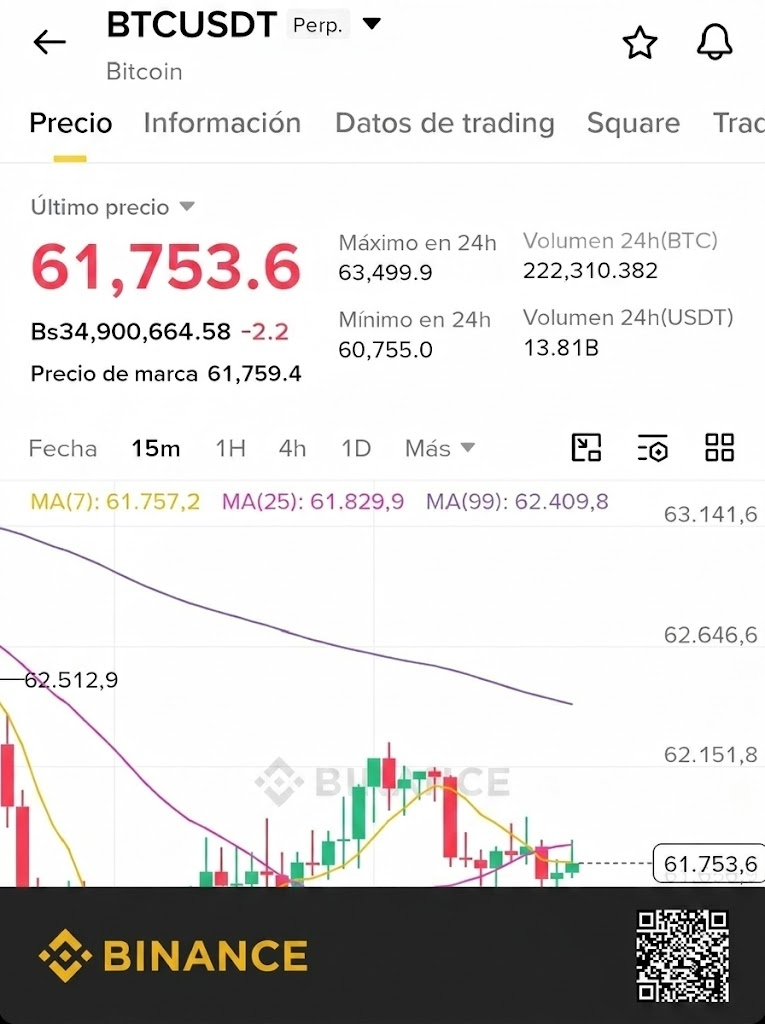
Bitcoin suffered its worst week since November 2022, plummeting 19% to hit an annual low of $59,100. The market faced a confluence of macro and technical factors that led to liquidations of $1.75 billion and the largest weekly outflow in spot ETF history.
The collapse began with Bitcoin trading around $73,000 at the start of the month, plummeting to $59,100 on June 5th, its lowest level since October 2024, representing a 50% drop from its all-time high of $126,200 reached in October 2025.
Unlike past drops caused by exchange collapses or stablecoin failures, this correction is purely macroeconomic. The growing geopolitical tensions between the US and Iran, persistent inflation, a strengthened dollar, and the market's increasing expectation that the Federal Reserve will keep rates steady without cuts until 2026 (with a 69% probability) created a high-pressure cocktail that destroyed appetite for risk assets.
The technical trigger for the crash was the chain liquidation of leveraged positions. Coinglass reported that on June 5th, in just 24 hours, over $1.75 billion in positions were liquidated, impacting more than 351,000 traders. Of this amount, approximately 83% corresponded to long positions — bullish bets that turned out to be fatally wrong.
The most alarming symptom for analysts was the behavior of spot Bitcoin ETFs. These products recorded net outflows for 13 consecutive days until June 3rd, accumulating a capital leak of $43 billion (equivalent to about 59,000 BTC). Just in the first week of June, outflows reached $17.2 billion, the highest weekly figure since February 2025.
The psychological factor that added fuel to the fire was the decision by Strategy (formerly MicroStrategy), the company that holds the most Bitcoin on its balance sheet. At the end of May, the firm sold 32 BTC. Although this amount is negligible, it broke its symbolic commitment of 'never selling,' acting as a bearish signal that accelerated the market's decoupling.
The earthquake rippled through the entire ecosystem: Ethereum crashed 9% in a single day to $1,609, Solana fell 6.2%, and XRP 5.2%, while the total market cap dropped to $2.3 trillion.
Interestingly, while Bitcoin was bleeding out, the S&P 500 saw an 8% rise year-to-date, evidencing a massive capital rotation from cryptocurrencies to traditional assets and tech stocks linked to AI.
MARKET IMPACT
This event has deep implications. Firstly, the break of the $60,000 support has tested the 200-week moving average, a threshold that historically marks cycle lows. QCP Capital warns that 'the path of least resistance remains downward' until clearer signals emerge in monetary policy, geopolitics, or institutional demand.
The big question is whether we have seen the peak of ETF outflows. The 13-day streak of capital leaks ended on June 5th with a modest inflow of $300 million, which some interpret as a possible exhaustion of institutional selling pressure. However, BlackRock had to face million-dollar redemptions in its IBIT, indicating that traditional investors are reacting nervously.
Paradoxically, the market has entered 'Extreme Fear' according to the Crypto Fear & Greed Index, which fell to 12 points on June 6th, one of the lowest levels of the year. Those following contrarian investment theses point out that similar setups in the past (sentiment at lows + negative funding rates) have been precursors to violent rebounds.
Do you think this crash marks a market bottom similar to that of 2022 before the 2023 rally, or will the current macro context (sustained high rates, strong dollar) prevent a quick recovery this time? Are you averaging down or holding liquidity in stablecoins?
#MarketAnalysis #BitcoinETFs #cryptocrash