
In a recent statement, Mike Novogratz, CEO of Galaxy Digital, confirmed that the fate of the CLARITY Act, which regulates the crypto sector in the United States, is now tied to resolving a few key outstanding issues, noting that the next few weeks will be critical for the future of the legislation.
The American billionaire mentioned that he personally headed to Washington for a series of intensive meetings with Congress members and decision-makers, trying to push the law to the final stages before the summer break for Congress.
Optimism despite declining market confidence
Despite expressing some optimism about the chances of passing the bill, Novogratz's comments came at a time when market expectations for the legislation's success have waned.
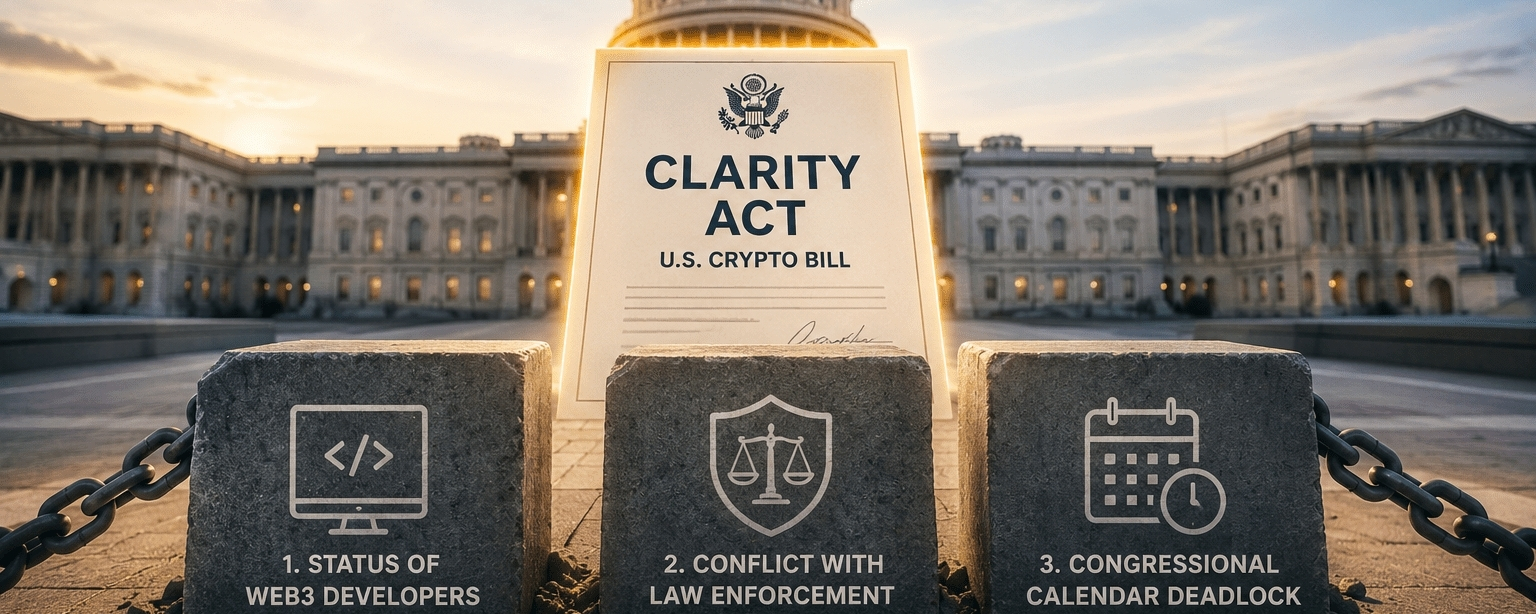
The odds of the bill passing by 2026 on the Polymarket platform have dropped from 62% to 48%, amid growing concerns about the political and regulatory hurdles that still obstruct consensus. Here are the three main obstacles we discussed in the title:
1- Status of Web 3 developers:
One of the main sticking points is how to handle open-source software developers and those working on Web 3 projects.
Over 60 industry leaders are calling for the protection of developers and independent operators under the Blockchain Regulatory Certainty Act (BRCA), emphasizing that they should not be treated the same way as trading platforms or financial intermediaries.
Proponents of this approach believe that imposing similar regulatory burdens on developers could stifle innovation and limit the growth of the industry in the U.S.
2- Clash with law enforcement:
On the flip side, these demands face strong opposition from various security and regulatory entities.
Law enforcement agencies fear that exempting developers from certain regulatory requirements may complicate efforts to combat money laundering and fund illicit activities.
According to Novogratz, reaching a compromise between the sector and regulators is a prerequisite for the bill to move to the final voting stage in the Senate.
3- Time crunch and political division:
The third hurdle relates to the time factor.
Novogratz warned that Congress has a window of just about four weeks to pass the bill before the summer recess begins.
#USCPISurgesToThreeYearHighOf4.2%
#USMayCoreInflationBelowForecast