
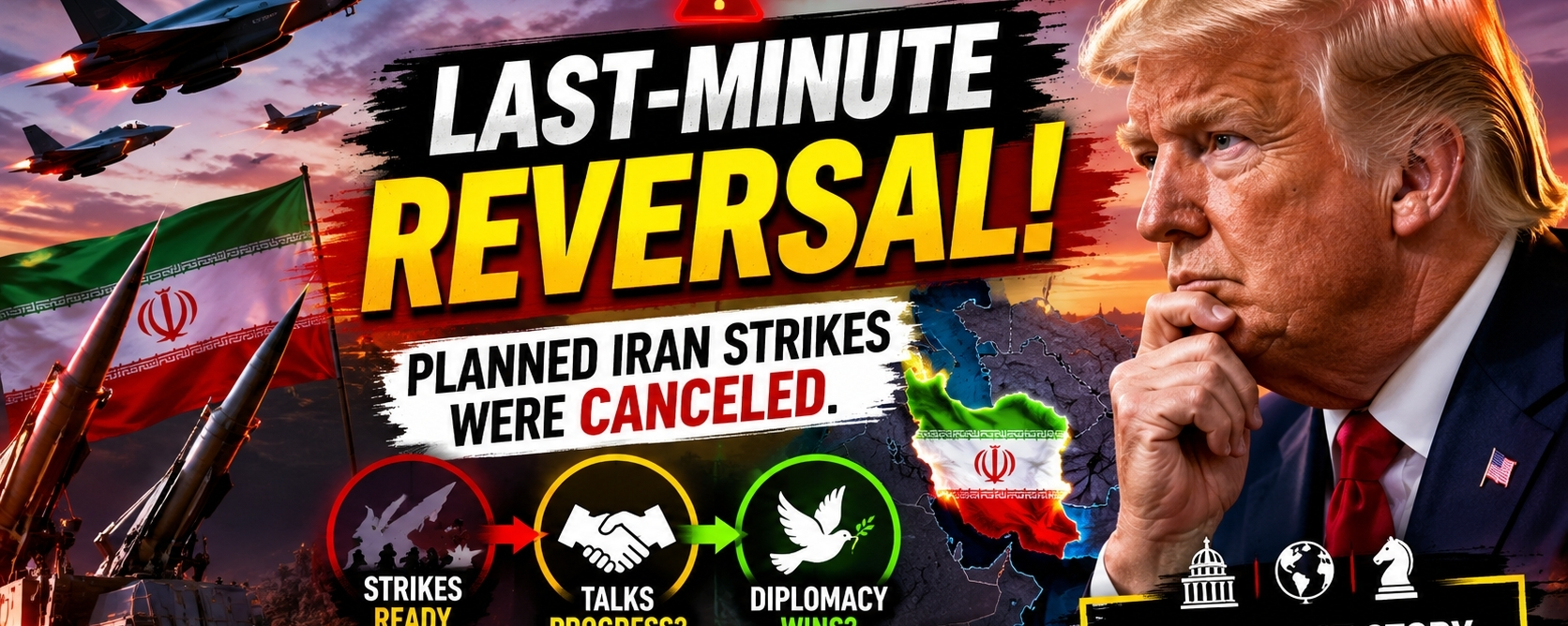

Sometimes the most important event isn't the strike that happens.
It's the strike that doesn't.
Over the past few hours, I've been watching a development that feels far more interesting than another round of military escalation. President Trump has reportedly canceled the airstrikes and bombings that were scheduled against Iran this evening.
And that immediately raises a fascinating question:
Why cancel an operation after getting this close?
Military strikes of this scale aren't planned in a few minutes. They require intelligence gathering, target selection, operational planning, aircraft deployment, and political approval. By the time a strike reaches the final stage, enormous resources have already been committed.
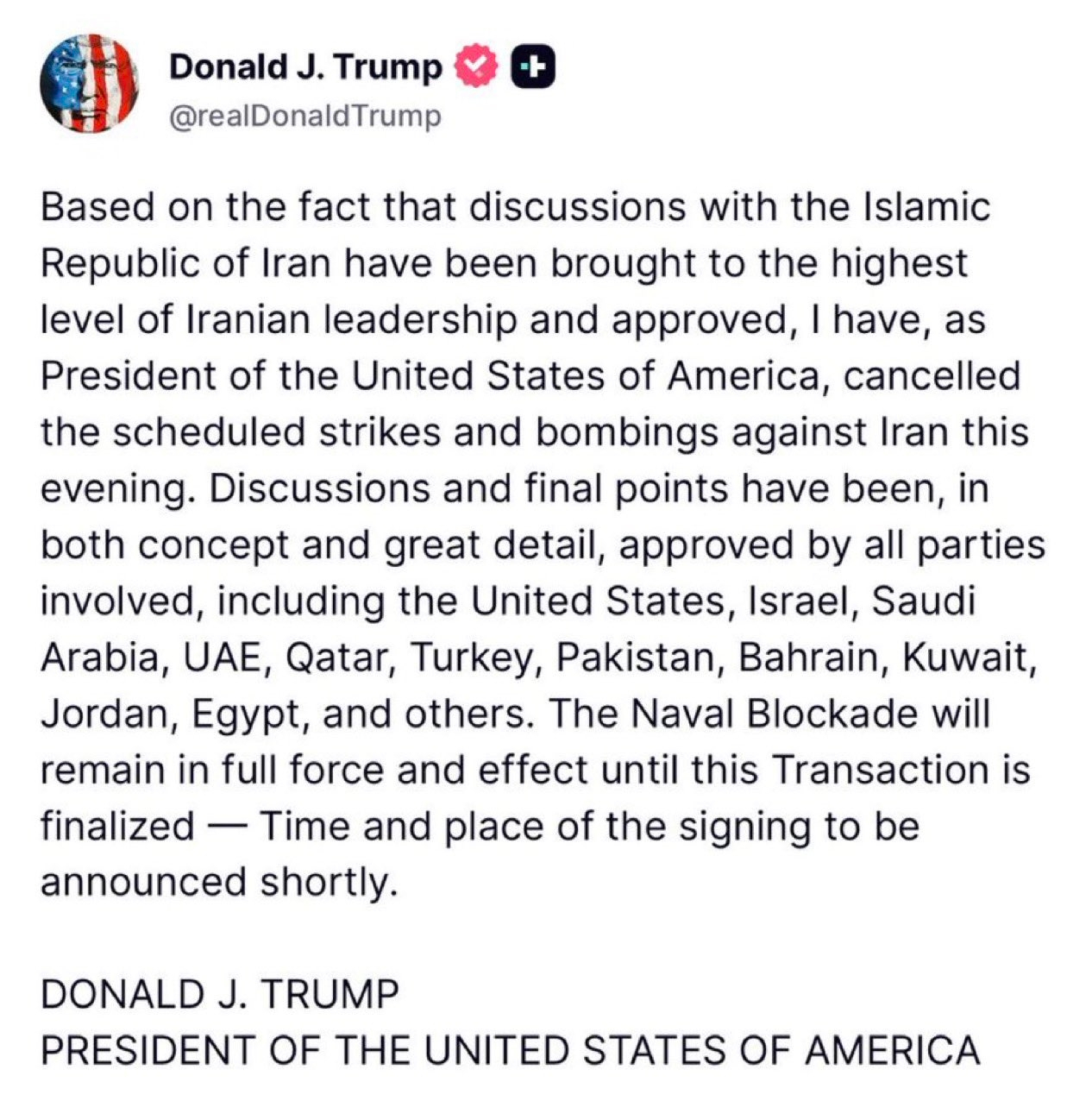
Which means something significant may have changed behind the scenes.
From my perspective, this isn't simply about avoiding conflict. It may be about achieving an objective without having to pull the trigger.
What stands out to me is the timing. Reports suggesting progress in negotiations have been surfacing at exactly the same moment military pressure was reaching its peak. That creates an interesting possibility: the threat of force may have achieved more leverage than the force itself.
In geopolitics, power isn't always measured by what you do.
Sometimes it's measured by what you're capable of doing.
And sometimes the strongest move is convincing your opponent that you are willing to act without actually having to act.
Another thing I'm noticing is how quickly the narrative has shifted. Just days ago, markets were pricing in escalation, oil shocks, and the possibility of a wider regional conflict. Now the discussion is suddenly revolving around diplomacy, agreements, and potential breakthroughs.
That's a remarkable transition.
But here's where things get even more interesting.
Canceling strikes doesn't mean tensions have disappeared.
It means a window has opened.
Whether that window leads to a lasting agreement or closes again depends on what happens next.
From where I'm standing, this moment feels less like the end of a crisis and more like a crossroads.
One path leads toward negotiations and stability.
The other leads back toward confrontation.
For me, the biggest takeaway is simple:
The story isn't that the strikes were canceled.
The story is that someone, somewhere, believed diplomacy suddenly had a better chance of success than military action.
And when governments choose negotiation over missiles at the very last moment, it usually means something important is happening behind closed doors that the public hasn't fully seen yet. :::
