
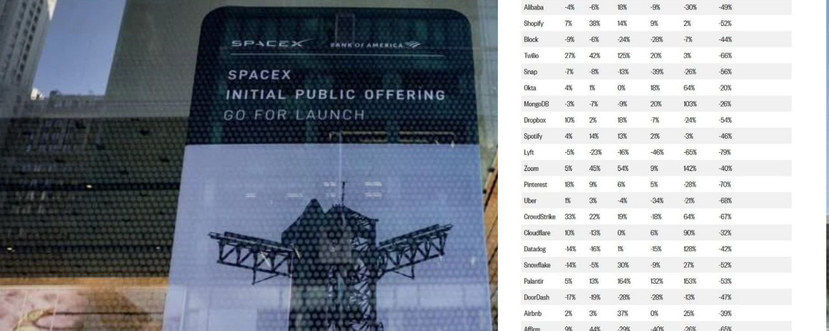
Today, June 12, #SpaceX is hitting #Nasdaq under the ticker $SPCX. $135 per share, valuation at $1.75 trillion, aiming to raise $75 billion — three times more than the record set by #SaudiAramco in 2019. Formally — the largest IPO in financial history.
But let's get to the numbers.
Ownership structure:
Insiders hold 95% of all shares — that's ~$1.66 trillion in private hands, just waiting for the exit door to swing open. The lock-up is unusually soft: the first unlock happens right after the June report if the price shoots above the IPO. Then there'll be waves on the 70th, 90th, 105th, 120th, and 135th day. After Q3 — another big block.
This isn't a random setup. It's an exit conveyor built with surgical precision.
Valuation vs reality:
$1.75 trillion with an annual revenue of around $20 billion — that’s a multiplier of ~87x. For comparison, Nvidia with actual profits is trading cheaper. SpaceX's valuation has already baked in a settled Mars, Starship as a regular flight, and orbital data centers.
None of this exists at a commercial scale yet.
Historical context:
Loud tech IPOs typically drop about -55% on average a year after launch. That's stats, not pessimism.
SpaceX is a real company with real achievements. Starlink is operational, Falcon 9 flies like clockwork, and Starship is making progress. But there's a massive gap between 'great company' and 'fair valuation at IPO'.
Retail investor is buying in today at $135. Insiders will start cashing out in a few weeks. The math doesn't look good.
#SpaceX #IPO #Investing #NASDAQ
Subscribe — I crunch the numbers before the crowd piles in 🔔