
TON’s Next Growth Phase: How NFTs, DeFi, and Telegram-Native Applications Are Building a Diversified Digital Economy
For much of its early growth cycle, discussions around The Open Network (TON) focused heavily on decentralized finance. Liquidity pools, token swaps, staking products, and on-chain trading activity became the primary indicators used to measure ecosystem expansion.
Today, however, the TON ecosystem is entering a new phase.
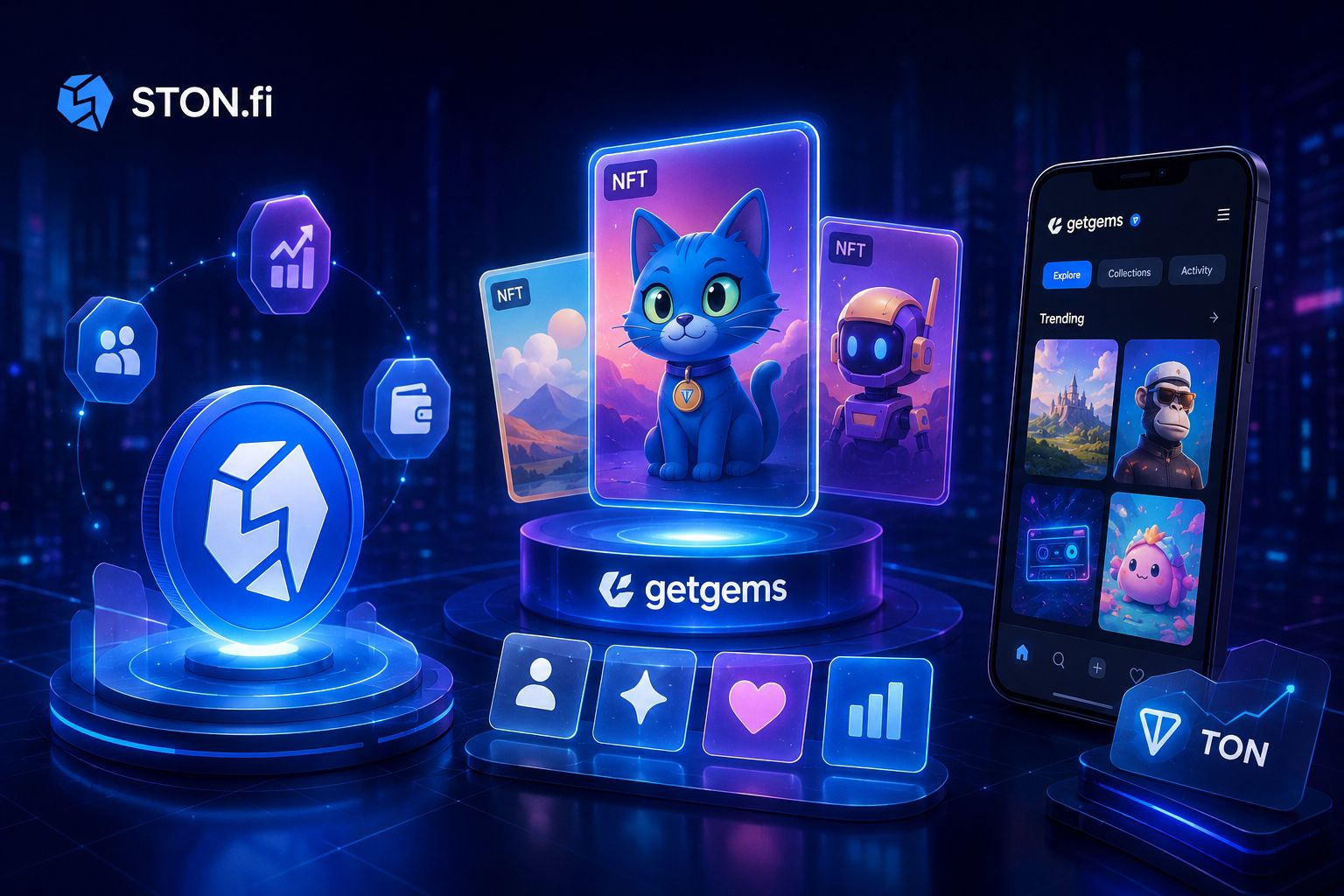
Growth is no longer being driven by DeFi alone. Instead, multiple sectors are expanding simultaneously, creating a more diversified and sustainable blockchain economy. Among the clearest examples of this shift is the continued rise of GetGems, TON’s leading NFT marketplace, which has become a major gateway for creators, collectors, gamers, and everyday users entering the network.
The Rise of NFTs Within TON
NFTs are becoming an increasingly important component of TON’s broader ecosystem development.
As user participation across TON continues to grow through Telegram integrations, mini-apps, digital collectibles, gaming experiences, and creator-driven communities, platforms like GetGems are seeing increased activity from both creators and collectors. The marketplace enables users to mint, trade, and discover NFTs while benefiting from TON’s low transaction costs and fast settlement speeds.
The significance of this growth extends beyond NFT trading itself.
Every NFT transaction creates additional wallet activity, generates on-chain transactions, and introduces new users to the broader TON ecosystem. As digital ownership becomes more integrated into social and entertainment experiences, NFTs are evolving from speculative assets into infrastructure that supports communities, identities, gaming assets, usernames, digital gifts, and creator economies.
Recent ecosystem reports have highlighted strong NFT participation across TON, demonstrating that digital collectibles are becoming a meaningful contributor to overall network activity. TON has recorded significant NFT trading volumes and growing participation from both creators and collectors, reflecting the increasing maturity of this sector.
Why NFT Growth Matters for DeFi
One of the most important dynamics within blockchain ecosystems is the relationship between user activity and liquidity.
As NFT adoption increases, so does the number of active wallets interacting with the network. Those users eventually require infrastructure to move assets, exchange tokens, access liquidity, and participate in other on-chain opportunities.
This is where decentralized finance becomes essential.
Rather than operating as isolated sectors, NFTs and DeFi reinforce one another. NFT marketplaces drive user acquisition and engagement, while DeFi protocols provide the liquidity layer that allows value to move efficiently throughout the ecosystem.
The stronger NFT participation becomes, the greater the demand for the financial infrastructure supporting that activity.
STON.fi’s Position Within TON’s Expanding Economy
As TON evolves into a more complete consumer-focused blockchain, STON.fi continues to play a critical role in facilitating liquidity and token movement across the network.
STON.fi operates as one of TON’s leading decentralized exchanges, enabling users to swap assets, provide liquidity, and interact with the growing number of tokens and applications being built within the ecosystem. The platform has become one of TON’s primary liquidity hubs and remains deeply integrated into the network’s expanding DeFi infrastructure.
This position becomes increasingly valuable as more users enter TON through non-financial entry points.
Many new participants first encounter the ecosystem through Telegram-native applications, NFT collections, gaming experiences, digital gifts, or creator communities. As these users become more active, they naturally require access to liquidity and asset exchange services, creating additional demand for decentralized trading infrastructure.
In this environment, the growth of NFTs, gaming, and consumer applications indirectly strengthens the importance of liquidity providers and decentralized exchanges.
The Emergence of a Diversified TON Ecosystem
Perhaps the strongest signal of TON’s maturity is the diversification now visible across the network.
Several sectors are advancing simultaneously:
• DeFi protocols continue expanding liquidity and trading opportunities.
• NFT marketplaces are attracting creators, collectors, and digital communities.
• Gaming ecosystems are introducing new forms of user engagement and digital ownership.
• Telegram-native applications are onboarding mainstream users through familiar interfaces and social experiences.
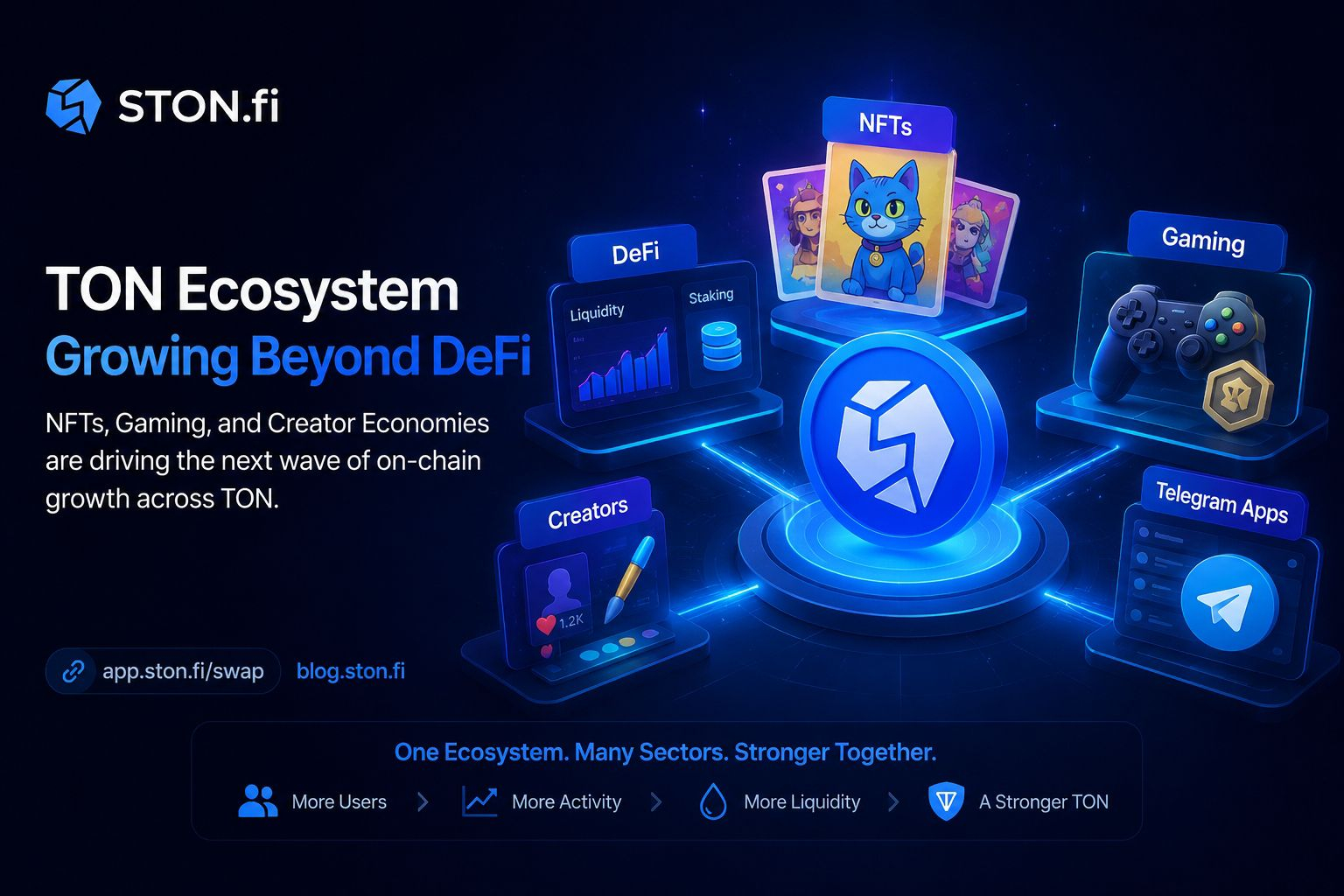
Unlike ecosystems that depend heavily on a single narrative, TON is increasingly supported by multiple growth engines operating within the same infrastructure layer.
This creates stronger network effects. New users entering through one sector often discover opportunities in others, increasing retention, transaction activity, and ecosystem participation.
Looking Ahead
The long-term success of blockchain ecosystems depends on their ability to support more than financial speculation alone.
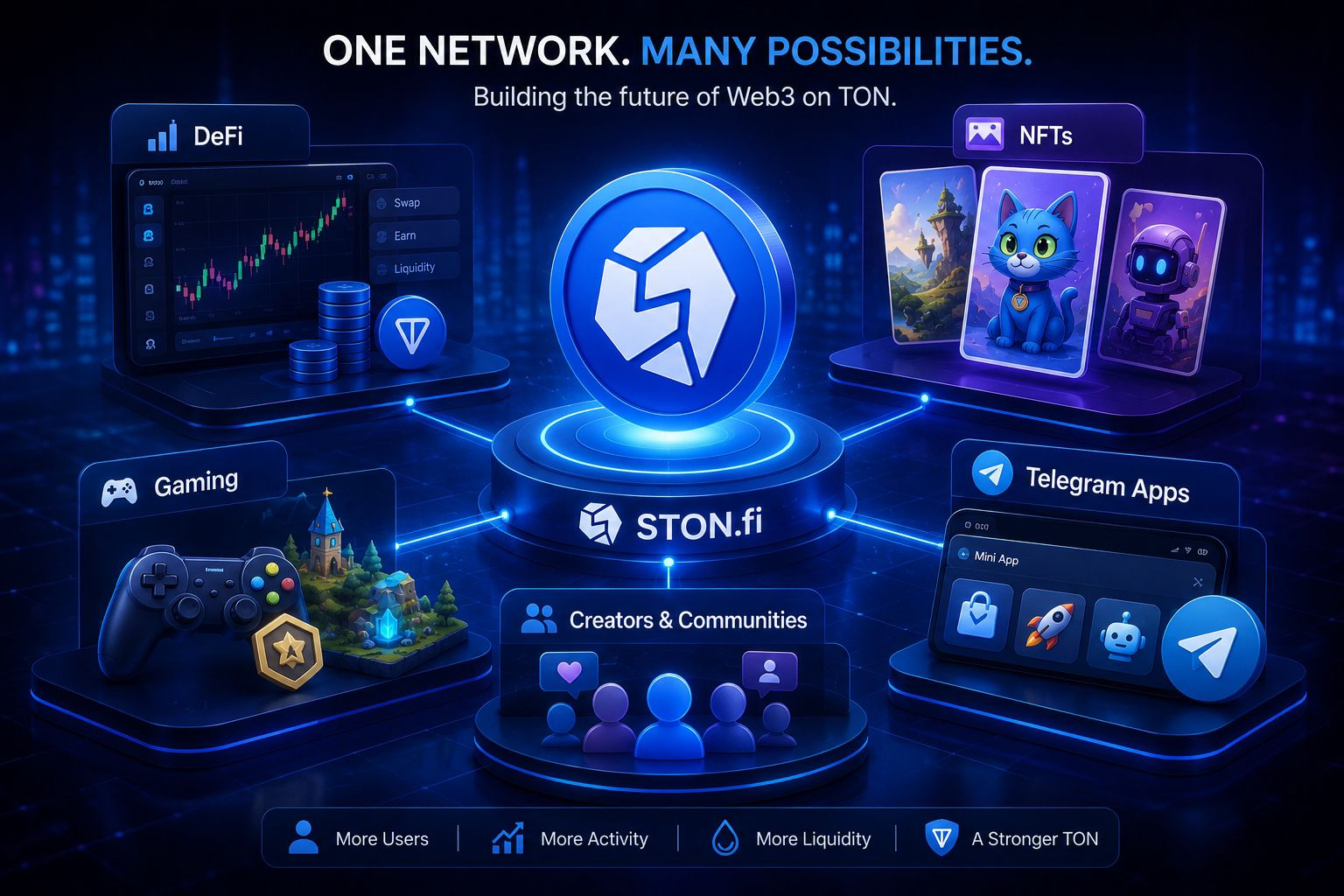
TON’s recent development trajectory suggests that it is steadily progressing toward a broader digital economy where payments, DeFi, NFTs, gaming, creator monetization, and Telegram-native applications coexist within a single network.
The continued growth of GetGems highlights how NFT adoption is contributing to this transformation, while platforms such as STON.fi provide the liquidity infrastructure that enables value to flow across the ecosystem.
For users tracking where liquidity, trading activity, user adoption, and ecosystem participation are building across TON, STON.fi remains one of the clearest windows into the network’s ongoing expansion.
As TON continues to evolve, the story is no longer solely about DeFi growth. It is increasingly about the convergence of multiple sectors working together to create a more complete and sustainable on-chain economy.
For further exploration: STON.fi | blog.ston.fi | Getgems.io | Ton.org