Action strategy
Negative funding + increasing OI: Downtrend → short with the momentum, but if price holds steady → watch for a long squeeze.
Negative funding + declining OI: Take profit on shorts → weak momentum → try longing when price hits a bottom.
Positive funding + increasing OI: Uptrend → long with the momentum, but if funding is too high → watch for a potential short reversal.
Positive funding + declining OI: Exit long positions → weak momentum → short when price breaks support.
Market sentiment: Negative funding indicates shorts are in control, positive funding shows longs are gaining strength.
Derivative money flow: An increase in OI means new positions are opening, while a decrease indicates money is being pulled out, reducing momentum.
Reversal signals: When funding and OI are both extreme, that’s a prime squeeze point — an opportunity for trades in the opposite direction.
Currently
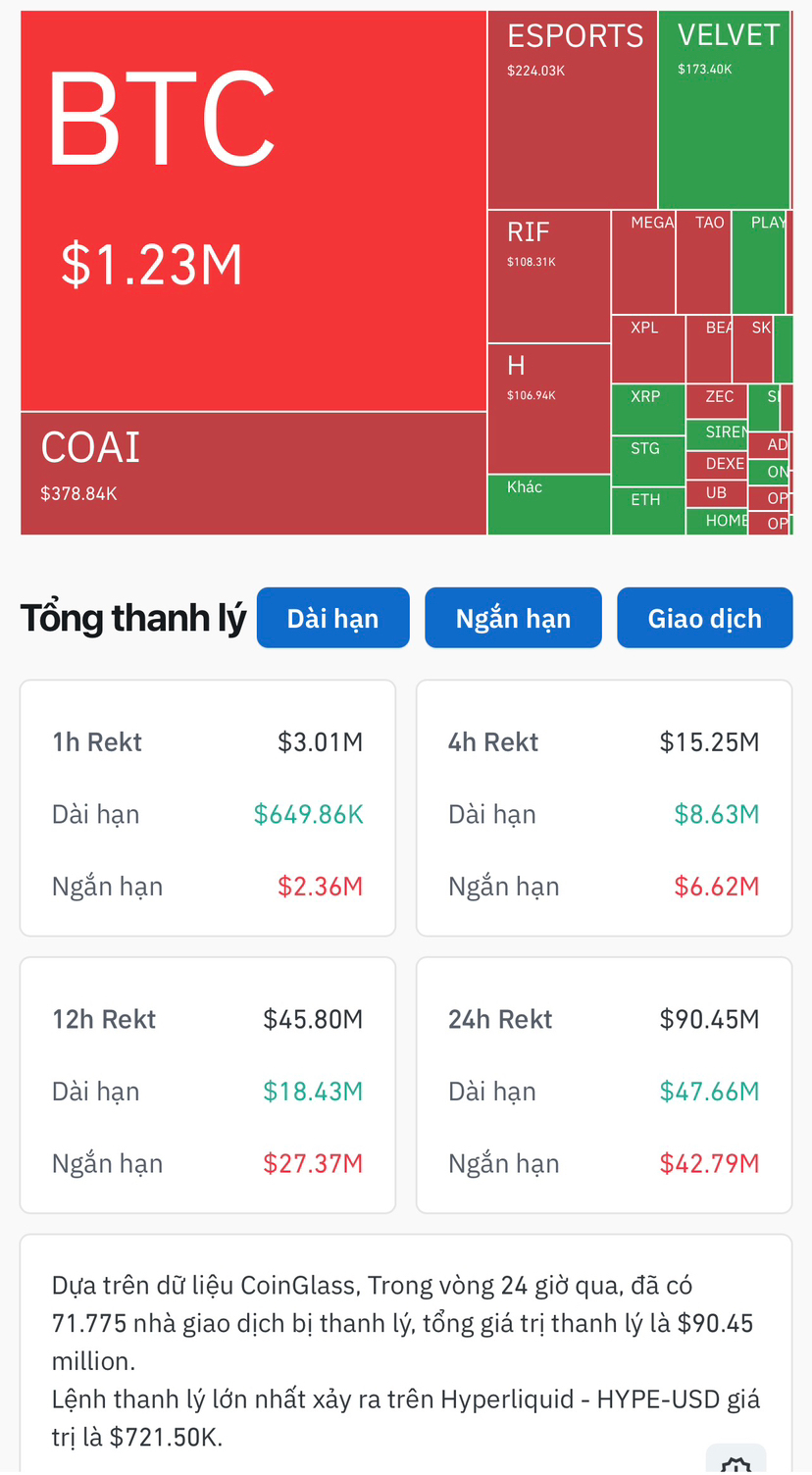
Market direction: Shorts are dominant, with negative funding and increasing OI indicating decreasing momentum but potential for a reversal.
Position allocation: Shorts are crowded; the market is leaning towards a short squeeze.
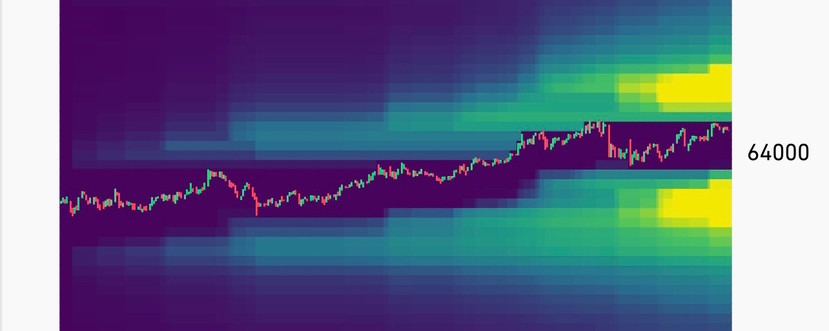
Liquidity: Sitting above; if the price pushes past 65k, it will trigger a series of short covers.
Conclusion: Be cautious with late shorts, prioritize looking for long opportunities as long as the price holds above 63k and funding remains negative.
Price breaking 63,000 puts heavy selling pressure => fear sentiment spreads.
short 63,000
SL 64,200 TP 61,000
Price breaking 65,000 triggers FOMO sentiment.
Long 65,000 SL 64,200 TP 67,500
Btc: 61,800-(62,000-62,900-(64,000)-64,200-65,500-65,800)-67,500
1. Short based on the breakout signal, and close on the open price (known as a continuation short, yielding minimal %). Must keep SL tight because it’s in support territory or can spike back.
2. Short at resistance with a distant SL. If it hits resistance, it often pulls back, allowing for a thicker stack, and if it breaks resistance, still DCA to average from breakeven to profit when the price retests.
The opposite applies for long as well.
1. Long in the buy dip zone, set a distant SL; if the price drops, DCA to average down. The price often spikes, so grab more.
2. Long when breaking resistance for a continuation long but can get rejected and pull back, so set a tight SL. In this case, the positive order must have the SL moved up to lock in necessary profits.