
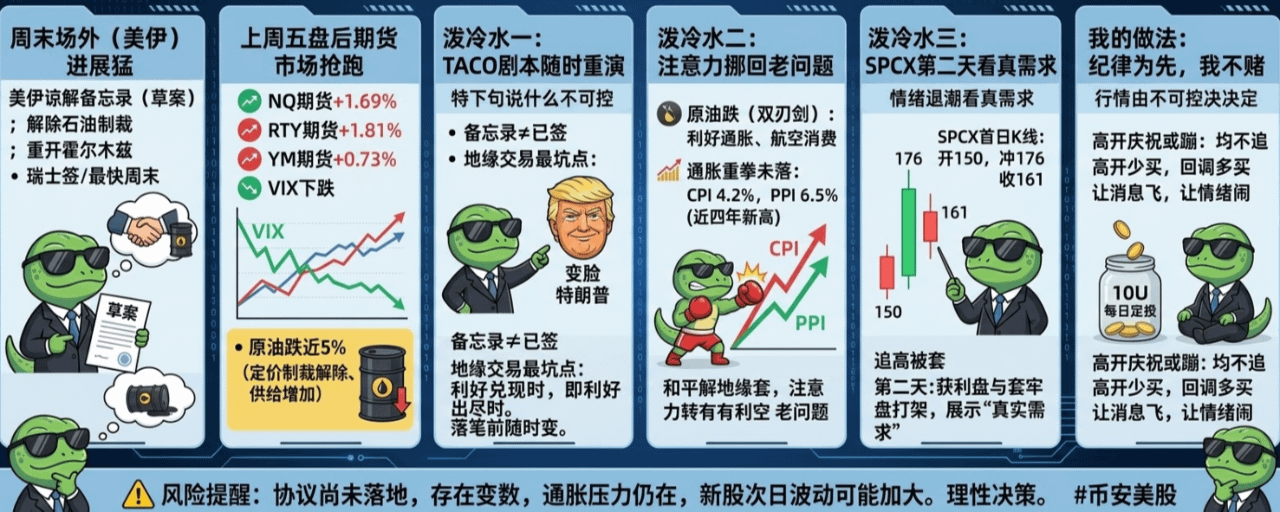
The market is closed over the weekend, but the OTC scene hasn’t been idle — the US-Iran peace deal has made significant progress these past couple of days.
Trump said he canceled the attack on Iran, and both sides have reached a "strong memorandum of understanding." The draft released by Iran is more specific: lifting oil sanctions, reopening the Strait of Hormuz, and the signing location could be in Switzerland, possibly as soon as this weekend. If it goes through, you’ll likely see a wave of sentiment when the market opens tonight.
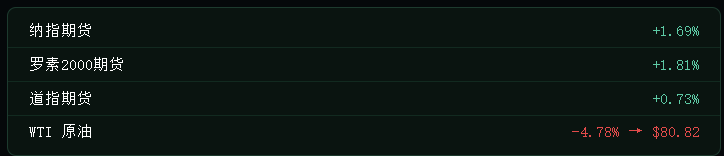
Futures have already jumped the gun. Last Friday after hours, Nasdaq futures rose 1.69%, Russell 2000 futures increased by 1.81%, and Dow futures were up 0.73%, while the VIX continued to drop. The most telling signal is crude oil — it fell nearly 5%, dipping just above $80, which indicates the market is pricing in "lifting sanctions, reopening Hormuz, and increased oil supply" ahead of time.
Sounds like all good news, right? But I’m about to pour some cold water on that.
[Why I’m more cautious about this wave of "peace trading" rather than excited]
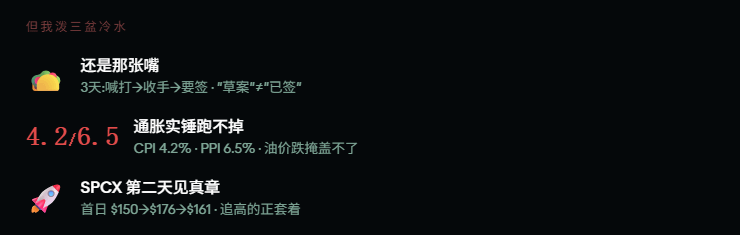
First, it’s still the same guy. Three days ago, he called for a sell-off, and the market plummeted; last Friday, he called it off, and the market surged; now he wants to sign, and futures are already running. The same person has flipped the market three times in a week. "Memo", "draft", "signing as soon as this weekend"—none of these mean "it’s already signed". Until the ink is dry, the TACO script can always play out again. The trickiest part of geopolitical trading is this: the moment good news is realized, it often means the good news is already priced in.
Second, falling oil prices are a double-edged sword. The market is currently cheering the drop in oil prices (good for inflation, good for airline consumption), but don’t forget last week’s two serious inflation blows—CPI at 4.2% and PPI at 6.5%, both hitting near four-year highs. A short-term drop in oil prices won’t ease the inflation already baked into the data. Once the geopolitical negative is lifted, the market’s focus may very well shift back to the old unresolved issues of "inflation remains, and the Fed still struggles to cut rates". In other words, the peace deal may just move the spotlight from one negative to another.
Third, don’t forget tonight is also the second day for SPCX. Last Friday, it opened at 150, spiked to 176, and closed at 161. How do you think those who chased the highs are feeling now? The second day for new stocks often sees a tide of emotions, profit-taking, and trapped positions clashing, so its performance will really show the "true demand".
[My approach]
So tonight at the opening, whether it’s a high open celebrating peace or SPCX continuing to jump, I won’t chase it.
The reason is still that old saying: when the market is determined by things I can’t control or predict, like "Is the agreement signed?" "What will Trump say next?" "Has the new stock sentiment faded?", chasing in is just gambling. I only do what I can control—every day, I invest. I buy less on high opens and more on pullbacks; I don’t need to gamble on whether this memo will turn into a formal agreement.
A word for the brothers still practicing: this week is a textbook example of a "news market"—one negative (geopolitical) looks set to be lifted, while another negative (inflation) still firmly holds ground, and in the middle, we have the largest IPO in history causing a stir. In this environment, the worst thing to do is to chase every headline, buying high and selling low. Let the news fly, let the emotions play out; you stick to your own rhythm.
See you at the opening tonight, don’t forget the World Cup.
⚠️ Risk Reminder: Investing carries risks. The peace agreement hasn’t officially materialized and there are variables; inflation pressures remain, and second-day fluctuations in new stocks may increase. The above is purely personal observation and my own approach, not constituting any investment advice. Please make rational decisions based on your own risk tolerance. #美股超话