

Filecoin's performance in government projects has been impressive, moving from early proof-of-concept phases to substantial implementation.
Multiple countries and local governments are adopting it as a crucial part of digital public infrastructure.
Let's break it down from a few key angles:
1. Major Government Collaboration Cases
1. New York City Government: Pioneering Pilot Project
New York City is one of the earliest and most notable partnerships for Filecoin in the government sector. At the end of 2021, NYC's CTO John Paul Farmer announced a collaboration with the Filecoin Foundation and Protocol Labs to store the city's public datasets on the Filecoin network for a period of five years.
The pilot dataset includes three categories of high-value public data: air quality monitoring data, demographic data segmented by postal code, and City Record Online (CROL)—a database containing public hearing notices, meeting minutes, auction announcements, and sales notifications.
Collaboration Background: New York City Mayor Eric Adams is a well-known Bitcoin and blockchain enthusiast, and NYC is widely regarded as the next blockchain technology hub. This political backdrop provides a favorable policy environment for collaboration.
Practical Effect: The NYC CTO pointed out that the cost of storage on Filecoin is only 0.02% of Amazon S3, while also providing lower latency, higher resilience, and censorship resistance. This cost advantage is one of the core factors attracting government agencies.
II. Bermuda Government: National-Level Data Infrastructure
In January 2026, the Bermuda government, in collaboration with the Filecoin Foundation and the Internet Archive, will upload public datasets to the Filecoin network. This marks a significant breakthrough for Filecoin at the sovereign state level.
Collaboration Details: This project is part of the 'Democracy's Library' initiative, aimed at enhancing the resilience, transparency, and verifiability of public information through decentralized storage.
Data Scale: Over 1PB (equivalent to millions of photos or hundreds of thousands of HD movies) of government materials have already been stored on the Filecoin network, including the U.S. government's 'End of Term Presidential Records' and the 'Aruba Collection.'
High-Level Statements: Bermuda Prime Minister E. David Burt stated that this move strengthens the resilience of public records by ensuring that citizens and people globally can verify the integrity of the data.
3. Other Government-Related Projects
Internet Archive: Filecoin has collaborated with the Internet Archive multiple times to preserve government documents, research reports, and publications globally through the 'Democracy's Library' project.
Lessons from Maine: The Maine government lost over 15 years of public documents, permanently losing valuable insights into policymaking and implementation. This case serves as an important warning for promoting decentralized storage.
II. Core Advantages of Government Adoption of Filecoin
1. Significant Cost Efficiency
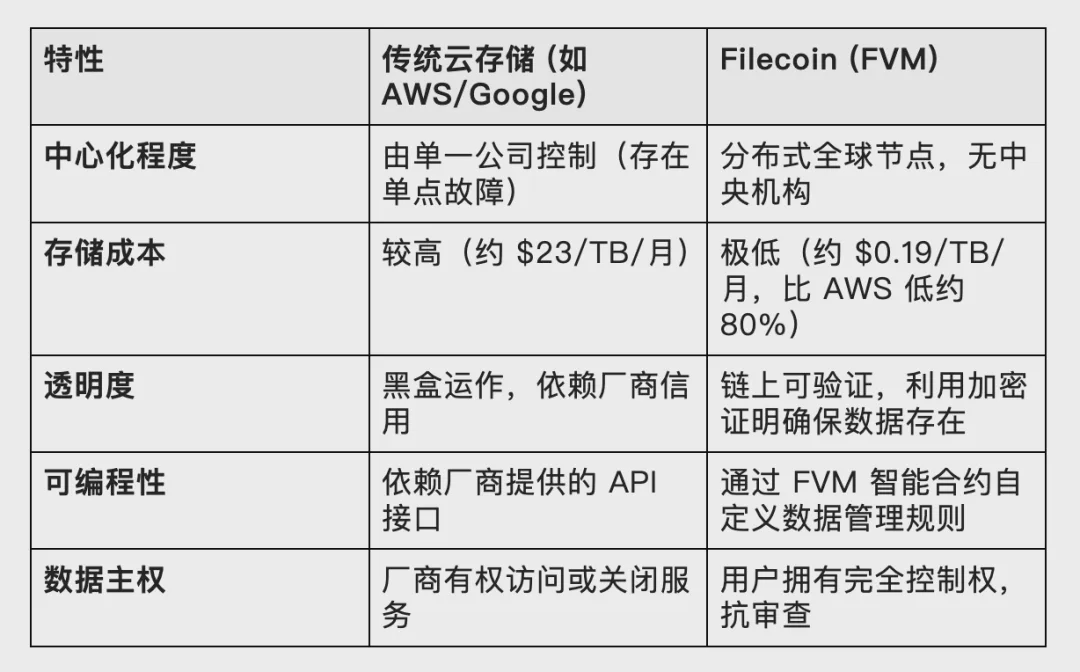
The storage costs on the Filecoin network are extremely low—when storing the same data, the cost is only 0.02% of Amazon S3. The NYC government CTO clearly stated that the government usually has a legal obligation to translate many documents and services into multiple languages, but due to the high costs, they are unable to fulfill this obligation. Filecoin provides a viable solution.
2. Reliability and Resilience Improvement
In traditional centralized networks, the vast majority of data is stored by three big companies (Amazon, Microsoft, Google), making information vulnerable to outages or single points of failure. For example, the 2021 Facebook outage left over 3.5 billion users unable to access the network. However, on a decentralized network, even if certain nodes fail, the site continues to operate normally, and information availability is not reliant on any single server or company.
3. Data Security and Integrity Assurance
Public datasets are crucial for informing future policy and government planning. Decentralized networks achieve tamper-proofing through cryptographic content identifiers—if a document is altered, the identifier changes, making tampering detectable. This verifiability ensures the long-term credibility of government data.
4. Data Sovereignty Assurance
Filecoin's storage model ensures that 'no individual, company, or nation should be responsible for preserving our collective history.' This decentralized architecture technically enables the sovereignty of data return, preventing a single entity from controlling public data.

III. Far-reaching Significance of Government Projects
1. From Proof of Concept to National Strategy
From a pilot project in New York City to a national rollout by the Bermuda government, Filecoin's application in the government sector is transitioning from an 'experimental' phase to an 'infrastructure' phase. The Bermuda government has explicitly positioned this move as 'digital public infrastructure.'
2. Promoting Regulatory and Compliance Frameworks
In adopting Filecoin, governments are also driving the establishment of regulatory and compliance frameworks around decentralized storage. Filecoin's 2026 strategy clearly identifies sectors with high compliance and security requirements, such as finance, healthcare, and government, as core battlegrounds.
3. Global Demonstration Effect
The New York City pilot has captured the attention of other governments worldwide. The NYC CTO indicated in an interview that they will collaborate with other governments globally to launch similar pilot projects in early 2022. This demonstration effect is accelerating Filecoin's adoption in the global government sector.
IV. Conclusion
Filecoin's performance in government projects has exceeded mere technical experimentation and entered the phase of actual deployment. Its cost advantage (only 0.02% of AWS), resilience and censorship resistance due to decentralization, and cryptographic guarantees of data integrity make it an ideal choice for storing public government data.
Of course, the adoption of decentralized storage by governments still faces challenges, including technical familiarity, regulatory adaptation, and integration with existing IT systems. However, as demonstrated by New York City and the Bermuda government, Filecoin is steadily advancing in the government sector through a strategy of 'starting with simple high-value datasets and gradually expanding.'
It is foreseeable that as more governments recognize the value of decentralized storage, Filecoin's application in government projects will continue to expand, becoming an important pillar of digital public infrastructure development.
About Filecoin:
The Filecoin Network is an open-source project aimed at creating a distributed, efficient, and powerful foundation for human information. It is not just building a storage network, but transforming cloud storage into a global decentralized storage network that acts as an algorithmic marketplace. Storage providers are incentivized by offering reliable services, while users enjoy secure, verifiable data storage at highly competitive prices.
Source: Official media/network news
Disclaimer: Readers are strictly advised to comply with local laws and regulations; this article does not constitute investment advice.