
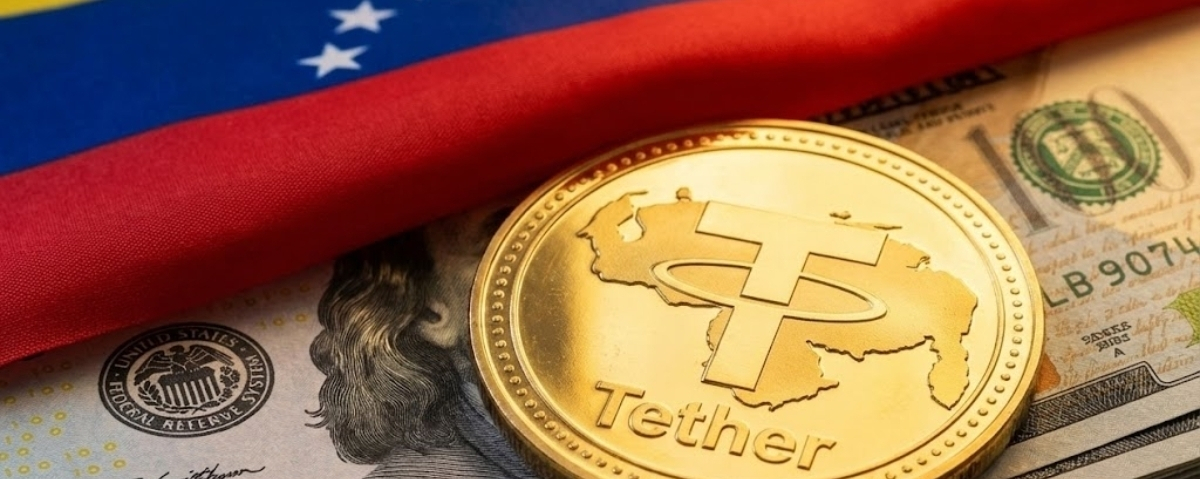
If Venezuela were to move towards a formal dollarization of its economy (where the US dollar becomes the legal currency and the bolívar is minimized or eliminated), the role of **USDT (Tether)** would undergo a significant transformation.
Currently, USDT isn't just a cryptocurrency in the country; it acts like an "enhanced dollar" that tackles cash shortages, lack of change, international transfers, and banking hurdles.
If the greenback becomes the legal tender, here's what would happen to USDT in the national scene:
1. Loss of the "reward" for liquidity (Goodbye to the high gap)
Nowadays, USDT often trades with its own price dynamics on P2P platforms (like Binance), often serving as a bridge or refuge against the gap between the official BCV dollar and the parallel market.
The shift: With the economy banked and legalized directly in dollars, the incentive to pay a premium or desperately seek USDT to protect against devaluation decreases. The price of USDT in the local market would align almost exactly with physical and bank dollars ($1 to $1), eliminating local supply and demand distortions.
2. USDT would maintain its throne in digital micropayments
Even though the dollar is legal, the issue of digital infrastructure persists. The United States is not going to provide Venezuela with a local "Zelle" network or international debit cards for everyone overnight.
The use: USDT would continue to reign over fast digital payments, informal commerce, service payments, and condominiums. It’s much easier to transfer USDT over the TRON network (with cents fees) than to move cash dollars in rural areas (like in Carabobo state or Zulia) or rely on national bank transfers in foreign currency, which tend to be slow or expensive.
3. Less friction for change (The cash headache)
One of the biggest problems of the current de facto dollarization is the lack of low-denomination bills ($1, $5, $10) and the terrible condition of physical cash.
The digital solution: USDT would continue to be massively used for exact change in medium and small businesses. QR codes at cash registers won’t disappear, as the digital economy is much more efficient than dealing with crumpled or torn cash.
4. Redefinition of the P2P market and Remittances
The P2P market in Venezuela is one of the most liquid in the region because it is the escape route from the bolívar.
The shift: If there are no bolívares to shake off, the P2P volume of bolívar to USDT would drop drastically. However, P2P would transform into a market of **"Cash against Digital"**. People would use platforms to exchange their digital dollars (USDT) for cash dollars deposited or handed over physically, and vice versa. Furthermore, for international remittances, USDT would remain the cheapest and fastest route, bypassing costly traditional banking systems.
5. The regulatory factor and the State
If the State formalizes dollarization, the legal framework around crypto assets would need to adapt.
Currently, the use of cryptocurrencies and stablecoins is allowed and runs parallel to the traditional system. In formal dollarization, the use of USDT in businesses and tax declarations (which today are affected by tools like IGTF for payments in foreign currency) would need clarification. USDT would go from being a "financial survival tool" to a purely transactional and corporate treasury asset.
In summary: USDT is not going to disappear if Venezuela formally dollarizes. It would lose its role as a "shield against the devaluation of bolívar", but it would firmly establish itself as the **ultimate digital payment infrastructure**, filling the gaps that cash dollars and traditional sanctioned or limited banking cannot.