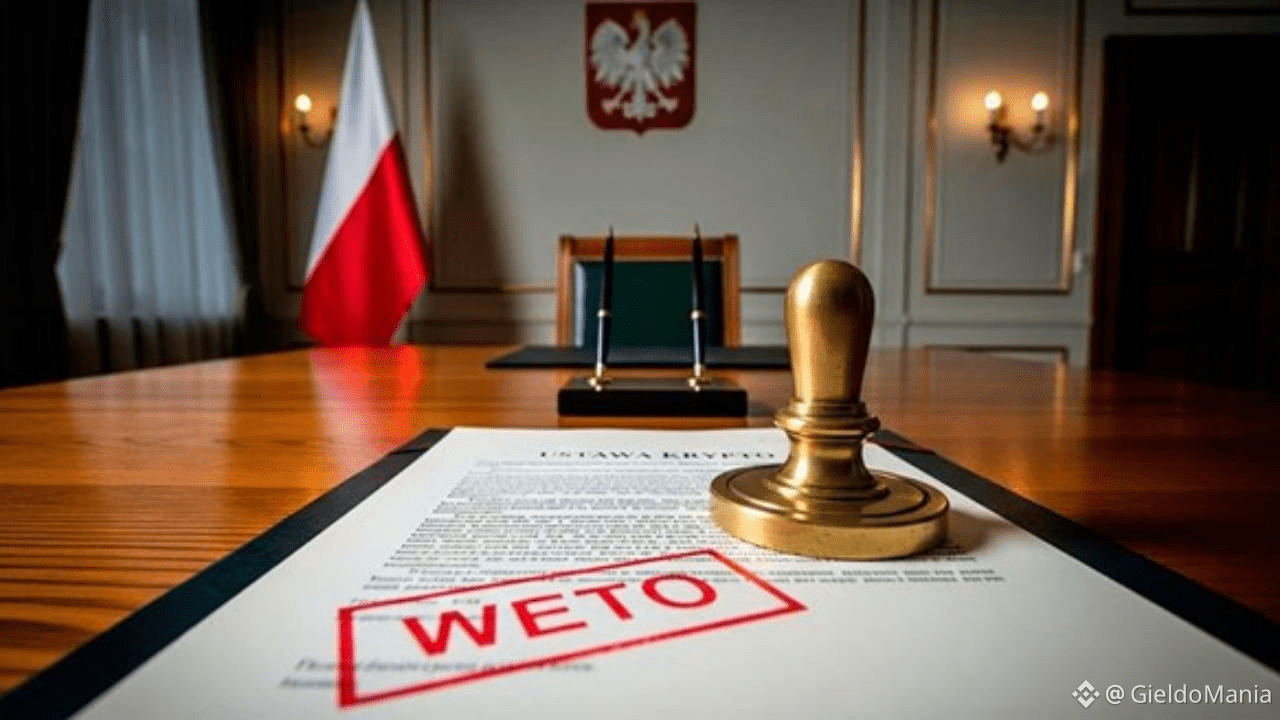
December 1, 2025 President Karol Nawrocki vetoed the cryptocurrency bill. On one hand, rightly so, as it was exceptionally restrictive. On the other hand, the veto caused the Polish crypto market to temporarily operate in a legal vacuum. And the consequences may be painful not for politicians, but for us.
🔥Binance account with a lifetime 20% discount on fees! Check it out!🔥
⚖️ There is no law, yet MiCA is in effect!
Let's start with the basics. The president's veto cannot stop the EU regulation MiCA (Markets in Crypto-Assets). Why?
MiCA is not an EU directive but a regulation. And a regulation is a law that operates directly. As soon as it comes into force in Brussels, it automatically becomes law in Poland as well. It does not require the consent of the Polish Sejm or the president's signature. The Polish law that just ended up in the trash was only supposed to adapt our local law to EU requirements.
The lack of a Polish law does not stop the operation of MiCA. However, it can destroy the Polish crypto business. Why?
A foreign exchange will obtain a MiCA license in Ireland or France, where the laws have already been adopted. Such a license is valid throughout the Union, including Poland. As a result, foreign entities will operate legally in our country. Polish companies, on the other hand, will not be able to obtain a license, because without the law, the KNF has its hands tied.
If so, then why didn't the president sign this law?! Well, he had at least two important reasons.
✋ Why did the president veto it?
If we set aside possible political reasons, the main reason for the veto was the powerful powers granted to KNF officials. The law equipped the Commission with the power to block crypto companies' accounts for 96 hours. The decision could be made based solely on suspicion of irregularities, without the consent of the court.
The mechanism also included a loophole for extending the ban. At the request of the prosecutor, it could last up to 6 months. In practice, a civil servant's decision could therefore paralyze the activities of an exchange or a currency exchange office for half a year, leading the company to bankruptcy. This is exactly how many Polish companies were destroyed, and no one was held accountable for it.
It is worth emphasizing that MiCA did not require such drastic measures. EU regulations focus on licensing and transparency, not on giving regulators excessive powers. Polish lawmakers tried to be 'holier than the Pope' by giving the administration tools to remove companies from the market.
The second reason for rejecting the law was the harshness and ambiguity of the criminal provisions. The law introduced penalties of up to 5 years in prison for operating without a license. Combined with the lack of clear procedures, this put Polish companies at a disadvantage compared to foreign ones.
The veto was intended to prevent a situation in which local entrepreneurs - before they could meet the MiCA requirements - would be exposed to criminal liability.
❓ What does the lack of a law mean?
The Sejm passed the law, the president vetoed it, and the prime minister announced that it will be passed again. It is unknown what will happen, and in the meantime, the victims of this ping-pong are Polish crypto companies. The law provided for a simplified path for entities already registered in the register of virtual currency operators. This was supposed to be their ticket to legal operation in the MiCA era, which has so far been taken away from them.
If a new version of the law does not appear quickly, Polish companies will face a difficult choice. They will either be able to operate as before and risk problems or - relocate their headquarters. Lithuania, Malta, or France already have ready laws, open doors, and are rolling out the red carpet. The paradox is that the president, wanting to protect Polish companies, may inadvertently push them abroad.
⚔️ Golden freedom or anarchy
The veto creates a gap in the security system, but does not turn off the entire system. On one hand, the KNF loses the ability to react quickly - without the law, it cannot block the site of a foreign scam that defrauds Poles. It can only warn, which is often ineffective.
On the other hand, contrary to the government's opinion, it does not mean anarchy. The anti-money laundering (AML) system operates independently of this law. Every regulated exchange still has the obligation to identify customers (KYC) and report suspicious transactions to GIIF.
This means that your legal transactions are still being scrutinized, but the side of the scammer who wants to rob you remains active. Hmm, that's not quite what was intended.
🔮 What next?
For now, we have a stalemate. The government promises to quickly send another project, but without a majority allowing them to reject another veto, they should seek compromise.
The most likely scenario is the trimming of the law. If the government had removed the controversial provisions and left the minimum required by MiCA, the president would probably have signed it. It would have been a victory of reason and an elegant way out of the situation. Unfortunately, in politics, reason can be a scarce commodity.
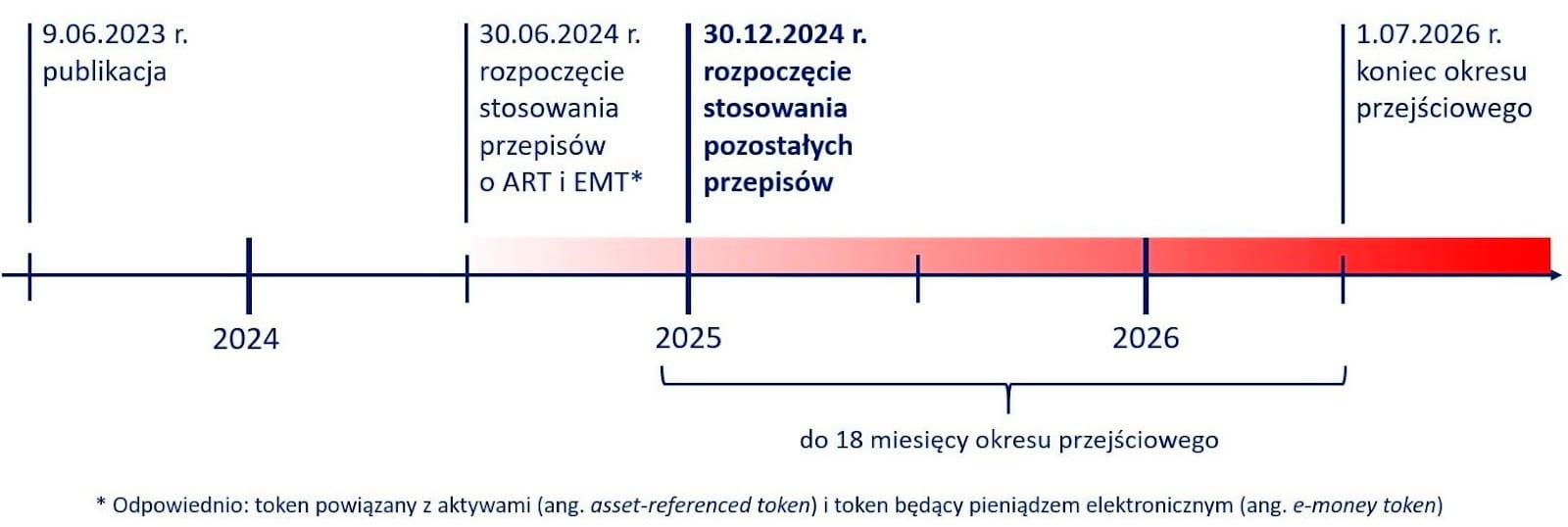
If the conflict continues, we may wake up on July 1, 2026, without regulations. Then banks, seeing the lack of clear supervision over cryptocurrencies, may consider servicing crypto companies to be risky. In this situation, the entire industry will have a problem.
Crypto in Poland is a hostage of politics. Instead of stable and friendly laws, we get an ideological dispute and potential problems. The year 2026 promises to be very interesting, though not necessarily pleasant.