
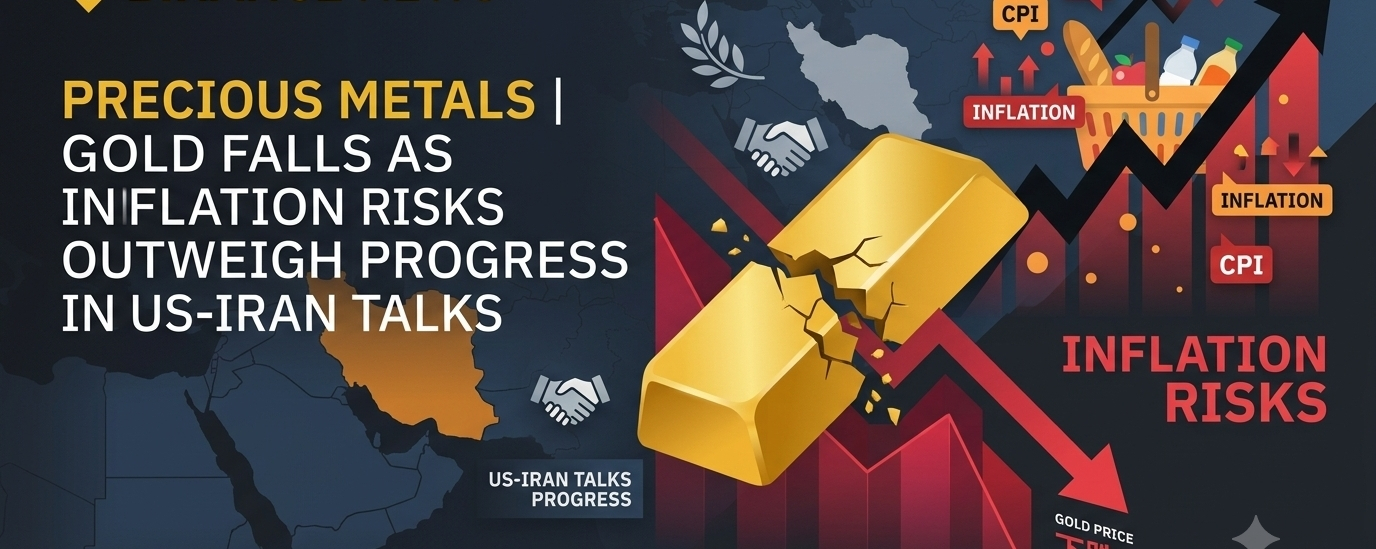
For months $BTC , precious metals rode a wave of safe-haven demand due to conflicts in the Middle East. However, the market dynamics have fundamentally changed as the economic side effects of the conflict catch up to global markets.
1. Progress in US-Iran Negotiations
Recent reports indicate that the US and Iran have established a 60-day roadmap aimed at securing a final peace agreement. Under this interim progress, the US Treasury authorized a temporary license for the delivery and sale of Iranian oil, prompting crude prices to ease toward the $78 per barrel range. While a cooling conflict typically lowers geopolitical risk premiums, it has a dual effect on safe-haven assets like bullion.
2. The Inflation Monster Takes Center Stage
Despite the diplomatic progress, nearly four months of intense regional conflict have already left a heavy mark on global supply chains and consumer prices. Investors are waking up to the reality that a peace deal won't instantly erase the inflationary pressures built into the system.
🦅 Central Banks Strike a Hawkish Tone
Because gold is a non-yielding asset (meaning it pays no interest to hold it), its biggest enemies are high interest rates and a strong fiat currency. Recent developments have reinforced both:
The Fed's Warning: Federal Reserve Bank of Chicago President Austan Goolsbee voiced heavy concerns, noting that the central bank is dealing with an inflation problem that is well above target and moving in the wrong direction.
The "Warsh" Effect: The hawkish stance adopted by new Fed Chair Kevin Warsh has jolted markets. Investors are increasingly pricing in tighter monetary policy and potential rate hikes to combat lingering energy-driven inflation.
A Surging Greenback: Driven by expectations of higher-for-longer interest rates, the Bloomberg Dollar Spot Index has climbed over 1% since the last Fed meeting. A stronger US Dollar automatically makes greenback-priced gold more expensive for international buyers, compounding the sell-off.
What’s Next for Traders?
Macro analysts point out that gold is currently caught in a tight fundamental vice. Easing oil prices could eventually weaken the dollar and help gold regain its structural upside momentum, but near-term monetary tightening remains an aggressive headwind.
All eyes now turn to the upcoming US Personal Consumption Expenditures (PCE) price index data. Traders are expecting the data to show an acceleration in consumer prices. If the PCE numbers come in hot, it will likely validate the Fed's hawkish bias, keeping precious metals pinned to their current $4,000 to $4,300 range for the foreseeable future.
Disclaimer: This article is for informational purposes only and does not constitute financial, investment, or trading advice. Digital and commodity assets involve significant risk.