
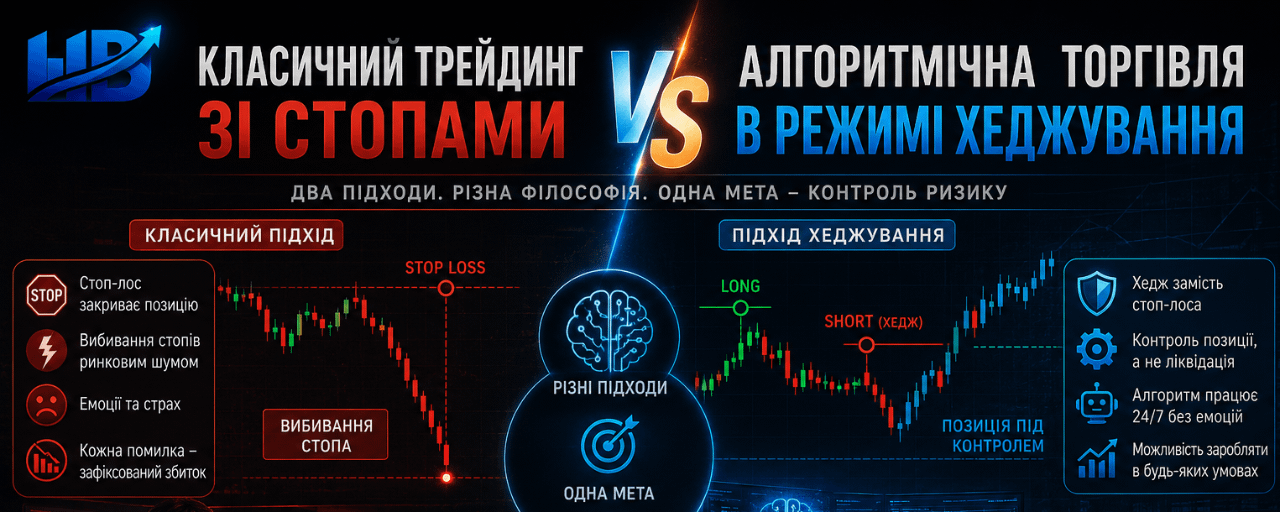
1. Classic trading with stops
This approach is familiar to most traders.
📌 The logic is simple:
opened a position
set a Stop Loss
either made a profit or took a loss
Pros
✔️ Simplicity ✔️ Clear risk control ✔️ Doesn't require complex infrastructure
Cons
❌ Frequent stop hunts (especially in a volatile market) ❌ The market 'collects liquidity' before a move ❌ Psychological pressure (fear of loss, revenge trading) ❌ Every mistake = realized loss
📉 Ultimately, the trader constantly:
enters
exits
re-enters
And often loses more on noise than on the actual idea.
2. Algorithmic trading in hedge mode
This is a different level of thinking.
📌 Logic: 👉 don’t close a losing position, but manage it through the opposite
How it works
Instead of Stop Loss:
opens Long
price goes down
opens Short (hedge)
👉 As a result:
loss is recorded 'in the system', but not closed
the position becomes manageable
What the algorithm adds
Algorithmic system:
automatically opens/closes hedges
balances positions
optimizes order sizes
works 24/7 without emotions
Pros
✔️ No classic stop losses ✔️ Less impact from market noise ✔️ Position control instead of liquidation ✔️ Ability to profit even in sideways markets ✔️ Process automation
Cons
❌ Complexity of logic ❌ Need for proper risk management ❌ Possible 'capital freeze' in positions ❌ Fees and funding can accumulate
Key difference
👉 Classic trading:
messed up → closed the position → took a loss
👉 Hedging:
messed up → opened the opposite → started managing the situation
Psychology: the main turning point
This is where the boundary between approaches lies.
🔻 In classic trading:
the trader fights the market
fears stops
depends on each trade
🔺 In hedging:
the trader manages the position
thinks systematically
works with a portfolio, not a single entry point
When each approach works better
Stops are effective when:
there is a clear trend
entry point has a high probability
the trader works short-term
Hedging is effective when:
the market is unstable or sideways
stability is key, not just 'guessing right/wrong'
uses an algorithm
Conclusion
Both approaches have their place.
But:
👉 stops are a reaction to the market 👉 hedging is market management
And algorithmic hedging opens the next level:
💡 don't try to guess the movement but build a system that works in any scenario
📌 The real transition to a professional level happens not when the trader starts earning more.
And only when he:
stops depending on a single trade
starts managing risk as a system
and transforms trading from emotion into process