
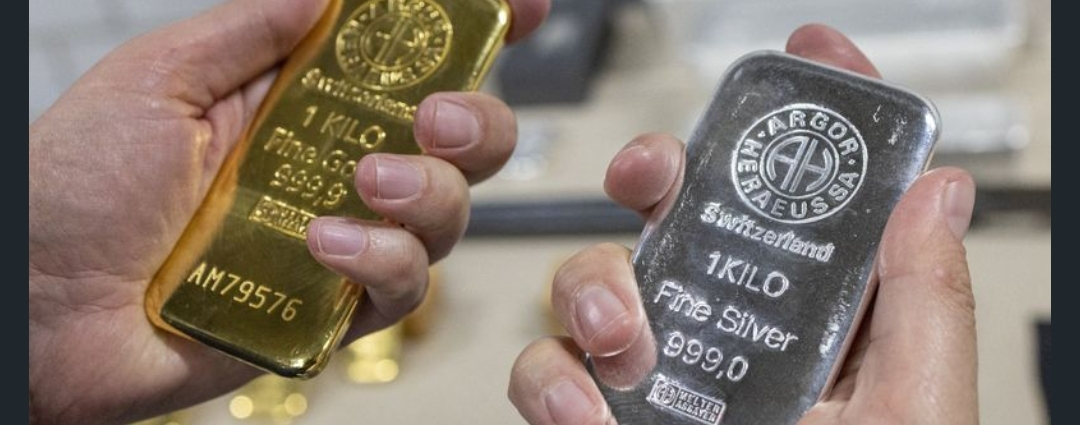
Gold and silver prices remained near critical technical levels, as global central banks’ tightening and inflation concerns continued to weigh on sentiment. This limited metal prices’ ability to regain their upward momentum, while market watchers believe that the chances of a strong rebound in the near term remain limited. During Thursday’s trading, spot gold held steady around 12:50 p.m. Riyadh time at $3,990.17 per ounce, after falling in the previous session below $4,000 for the first time in several months. Although the yellow metal managed to temporarily return above the $4,000 barrier during Thursday’s trading, it soon gave back its gains and slipped below that level later. Meanwhile, U.S. gold futures for the nearest delivery edged down slightly to $4,006.60 per ounce, bringing gold’s losses since the start of the year to about 7.5%.
New Fed leadership could alter the course of gold Macquarie analysts said the first meeting of the new Federal Reserve chairman, Kevin Warsh, was marked by a hawkish tone, adding that the policy he is likely to follow over the coming period could have a major impact on the direction of gold prices. They noted that the expected slowdown in global economic growth during the third quarter due to the fallout from the war in the Middle East may be followed by a gradual recovery, alongside the start of a future monetary easing cycle. As economic growth improves, analysts expect investors to shift part of their funds from precious metals to higher-risk assets, which could weigh on gold prices. They added that investors have already started taking profits and moving toward stock markets, which currently limits demand for gold. Does gold need a new shock? Macquarie analysts believe that a strong return of investors to gold would require a major economic or geopolitical development that revives demand for safe-haven assets. Although the bank expects the average spot gold price to reach $4,641 per ounce in 2026, it expects prices to fall to about $4,200 in 2027, then continue a gradual decline through 2030. The bank also lowered its year-end forecast for gold to $4,300 per ounce compared with a previous estimate of $4,400. This revision reflects a growing conviction that gold’s exceptional upcycle has moved into a calmer phase. Silver is more exposed to a correction Macquarie analysts said profit-taking strongly pressured silver prices over the past month, stressing that price movement is now more tightly linked to developments in the broader economy. They added that expectations of higher U.S. interest rates limit the chances that silver’s rise will continue in the period ahead. The bank expects silver prices to trade within a sideways range until the end of this year, before beginning a gradual downward path during 2027. It explained that rising inflation and bond yields increase pressure on precious metals, while silver’s outperformance relative to gold over the past few years makes the white metal more vulnerable to price corrections. It also noted that historically, silver experiences sharp pullbacks after strong rally waves. Macquarie expects silver prices to reach $70 per ounce in the last quarter of this year, before retreating to around $65 by the end of 2027. Despite the pressure... some still bet on gold Jay Adami, co-founder of Risk Reversal Media, said gold still retains opportunities despite the string of pressures it is facing. He explained that early in the war, markets traded news that some central banks might sell part of their gold reserves, but he said there is no evidence confirming the veracity of this information. He added that the huge jump in Micron shares—adding about $130 billion to its market value after it announced results—prompted many investors to question the rationale for holding gold right now compared with investing in equities. Nevertheless, Adami still believes that inflation will remain a problem and that interest rates may keep rising, but he thinks the equation will eventually flip and bring gold back into investors’ focus. Central banks keep supporting gold... but Wall Street cuts expectations Adami said that despite gold falling by about 24% from its all-time highs, he does not see a justification to talk about a new upswing wave at this time. However, he emphasized that central banks will continue increasing their gold reserves over the coming period, which will keep the precious metal present in investors’ portfolios until the end of the year. This view is supported by the results of the World Gold Council’s latest survey, which showed that about 90% of participating central banks expect to increase global gold reserves over the next 12 months, as an effective way to hedge against inflation and geopolitical risks. In contrast, several Wall Street investment banks have cut their targets for gold prices over the past few weeks amid rising expectations that interest rates will remain high. Breaking the $4,000 level increases technical pressure OCBC analysts said gold still faces strong pressure after breaking the $4,000 per ounce level, noting that price action has become more linked to increases in real yields on U.S. Treasuries. They added that while positive factors supporting gold remain in place over the medium term, the hawkish tone from the Federal Reserve and the rise in real interest rates require more caution right now. They explained that any attempts to push gold higher will remain vulnerable to pullbacks unless real yields start falling, or outflows from gold-backed exchange-traded funds slow down, or the Federal Reserve backs away from its hawkish tone. Silver faces increasing pressure after a historic rally Silver has not been immune to the pressures weighing on precious metals. The spot silver price rose by only 0.1% to $57.49 per ounce after recouping part of earlier losses during the session. Meanwhile, July silver futures fell by 1.2% to $57.41 per ounce. Since the start of the year, silver has lost about 20% of its value, a clear reflection of investors’ appetite shifting away from precious metals. Despite this drop, both metals still retain a large portion of the huge gains they achieved over the past year. After record highs... momentum fades In 2025, gold and silver delivered one of the strongest rally waves in their histories. Gold rose by 66%, while silver jumped by about 135% during the year. These gains continued into early 2026 before prices entered a phase of sharp volatility. In late January, silver saw its biggest single-day loss since the 1980s, while gold’s status as a safe haven faced a real test after the war between the United States and Iran broke out in February. The shift in the economic and financial environment reduced demand for the metals as investors’ attention turned toward yield-bearing assets. Inflation and monetary policy are at the center of the picture Macquarie analysts said in a memo issued Wednesday that market focus is currently on the inflation trajectory and on how willing central banks, led by the Federal Reserve, are to continue tightening monetary policy to control prices. They noted that easing tensions in the Middle East, along with the Federal Reserve taking on a more hawkish stance, pushed gold prices lower as demand for safe havens declined. They added that expectations of rising interest rates and the strength of the U.S. dollar have reduced the appeal of gold—especially after markets fully priced in the possibility of a rate hike during the fourth quarter. According to the U.S. interest-rate tracking tool available on Investing Saudi Arabia, markets now expect U.S. interest-rate hikes by September, while both the European Central Bank and the Bank of Japan raised interest rates during the current month in response to an energy-shock fallout from the war.
#Silver #OilFuturesFallAbout4% #GOLD ##BTC走势分析 #TNASSIMT


$