Valuing Early Stage DeFi Protocols: Assessing VOOI with a Market Capitalization Below 20 Million USD
1. Introduction
Decentralized Finance (DeFi) has evolved from experimental smart contracts into a multi-billion dollar financial ecosystem, reshaping traditional financial services. As the field matures, valuing early-stage protocols has become one of the most important and challenging areas for investors, researchers, and developers. Unlike traditional stocks, DeFi protocols often lack standardized cash flows, mature governance structures, and predictable revenue histories.
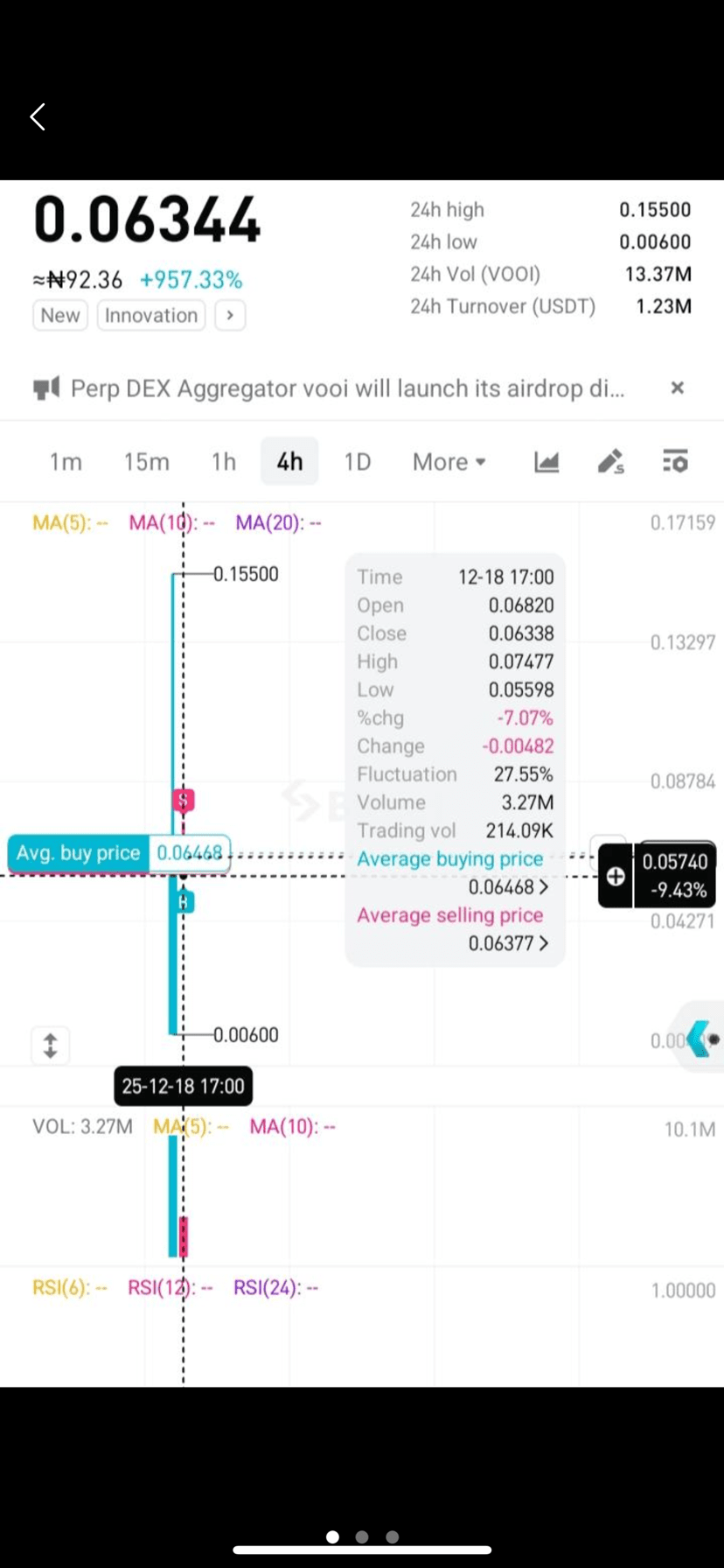
In this context, VOOI, with a market capitalization below 20 million USD, is an interesting case study in early-stage DeFi valuation. Such a low valuation places the protocol at the intersection of high uncertainty and significant growth potential, requiring evaluation not only of price but also of fundamental factors, adoption trends, token economics, and strategic positioning.
This article explores how to assess the valuation of VOOI from a comprehensive perspective on DeFi, focusing on economic design, market context, growth drivers, risks, and comparative benchmarks.
2. Understanding Early-stage DeFi Valuation Frameworks
2.1 Why Traditional Valuation Models are Inapplicable
Traditional valuation methods—such as discounted cash flow (DCF), price-to-earnings (P/E) ratio, or balance sheet analysis—are often unsuitable for early-stage DeFi protocols. Most emerging protocols:
Are not yet profitable or have just started generating revenue
Reinvesting profits into growth
Relying on token incentives rather than dividends
Operating in a rapidly changing regulatory environment
Thus, valuation in early-stage DeFi is based on the narrative but still requires data as a foundation, necessitating a blended approach between qualitative and quantitative factors.
2.2 DeFi-specific Valuation Metrics
For protocols like VOOI, evaluating valuation often includes:
Market capitalization compared to Fully Diluted Valuation (FDV)
Token utility and demand drivers
Revenue or fees generated by the protocol
Total Value Locked (TVL) or volume metrics
User growth and activity
Development activity and ecosystem expansion
Maturity of governance and decentralization
Understanding VOOI's performance on these aspects is fundamental to assessing whether a valuation below 20 million USD is reasonable or undervalued.
3. Market Capitalization Context: The Real Implications of Below 20 Million USD
3.1 Position in the DeFi Market Cycle
Market capitalization below 20 million USD places VOOI in the micro-cap DeFi group, often associated with:
New products starting to fit the market
Limited market awareness
High volatility
Asymmetric risk-reward potential
History shows that many of today's leading DeFi protocols—like Uniswap, Aave, and Synthetix—spent considerable time with a market cap below 50 million USD before network effects drove rapid adoption.
3.2 Implications for Investors and Stakeholders
At this valuation:
Small capital flows can significantly impact price
The growth narrative plays a significant role
Execution risks remain high
Long-term success depends on real adoption, not speculation
Therefore, the valuation of VOOI should be understood not as a reflection of the current position but as the price of future options.
4. Core Value of VOOI
4.1 Protocol Utility and Relevance of Use Case
A central question in valuation is: What real problem does VOOI solve?
Early-stage DeFi protocols that maintain growth often address one or more of the following issues:
Inefficient liquidity
Fragmented capital across chains
High transaction costs
Poor user experience
Limited composability between DeFi components
If VOOI significantly improves capital efficiency, liquidity access, or execution quality, valuation should be considered based on the addressable market size, not just current usage levels.
4.2 Competitive Differentiation
In crowded DeFi spaces, differentiation matters more than novelty. Valuing VOOI needs to consider:
Technical advantages over current competitors
Barriers to replication
Strategic integrations or partnerships
Increasing network effects
A protocol with modest adoption but strong differentiation may justify the current low valuation but high future potential.
5. Token Economics and Supply Dynamics
5.1 Circulating Supply vs. Long-term Dilution
One of the often-overlooked aspects of early-stage valuation is the token supply structure. Important factors include:
Circulating token rate
Vesting schedule for team and investors
Issuance rate and incentive program
Token burn or buyback mechanisms
Capitalization below 20 million USD may be attractive, but if many tokens are about to unlock, the actual valuation risk will increase.
5.2 Token Utility and Demand Creation
The ultimate value of a token is driven by utility demand, not just speculation. Strong valuation signals include:
Charging fees or sharing revenue
Governance rights with real influence
Staking requirements for using the protocol
Incentives aligned with long-term participation
If VOOI's token is built into the operational structure of the protocol, valuation may increase with the growth of usage.
6. Growth Metrics and Adoption Signals
6.1 Initial Attractive Metrics
At low capitalizations, valuation depends more on trends than on scale. Key metrics include:
Increasing trading volume
Increasing active user count
Stable TVL growth
Contributions and upgrades from the developer
Even modest but consistent growth can justify reevaluation as it accumulates over time.
6.2 Network Effects and Composability
Protocols deeply integrated into the DeFi ecosystem benefit from composability, where other applications build on top of them. This creates:
Sustainable demand
Reduced churn rate
Attracting natural users
If VOOI positions itself as infrastructure rather than a standalone product, valuation should reflect its long-term importance in the ecosystem.
7. Risk Assessment at Early-stage Valuation
7.1 Execution and Technical Risks
Protocols below 20 million USD face higher risks, including:
Smart contract vulnerabilities
Incomplete feature set
Scalability limitations
Delays in executing the roadmap
These risks partially explain the discounted valuation and need to be weighed alongside growth potential.
7.2 Market and Legal Risks
Macroeconomic conditions, regulatory changes, and market cycles strongly influence the valuation of early-stage DeFi. Low capitalization may reflect:
Bear market sentiment
Liquidity constraints
Reduced risk appetite
However, these factors can reverse quickly in a favorable environment.
8. Comparative Valuation Analysis
8.1 Comparison with Peer Protocols
Valuation of VOOI also includes comparisons with similar protocols at equivalent stages of development. Comparative metrics include:
Market cap to TVL ratio
Market cap to revenue multiple
User growth rate
Feature maturity level
If peers with similar or weaker fundamentals trade at higher valuations, VOOI may be undervalued.
8.2 Options and Growth Scenarios
Early-stage DeFi valuation is fundamentally about options—the protocol's ability to succeed far exceeds current expectations. A market cap below 20 million USD limits risk to invested capital while maintaining exponential growth potential if adoption accelerates.
9. Conclusion
Evaluating VOOI with a market capitalization below 20 million USD requires going beyond surface price analysis and delving into a multidimensional assessment of fundamental factors, token economics, adoption trends, and strategic positioning.
This valuation indicates that the market currently views VOOI as a high-risk early-stage protocol, but this position also offers significant growth potential if the protocol executes effectively, achieves product-market fit, and captures a substantial market share in its target DeFi segment.
In early-stage DeFi, valuation is not about what the protocol has today but about what it can become. For VOOI, the key question is not the current small market capitalization but whether the fundamental factors are sufficient to allow it to grow much larger over time.