
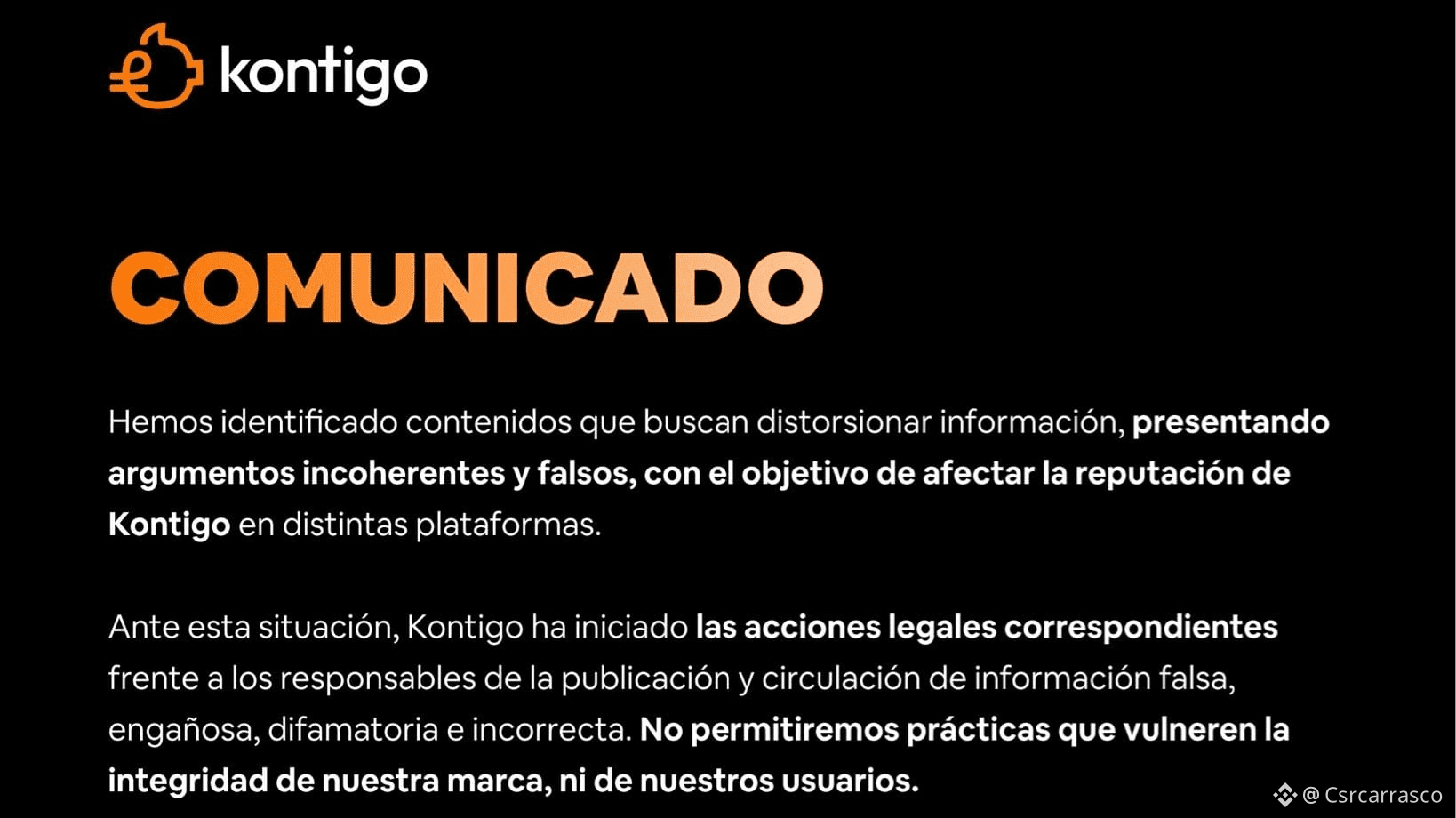
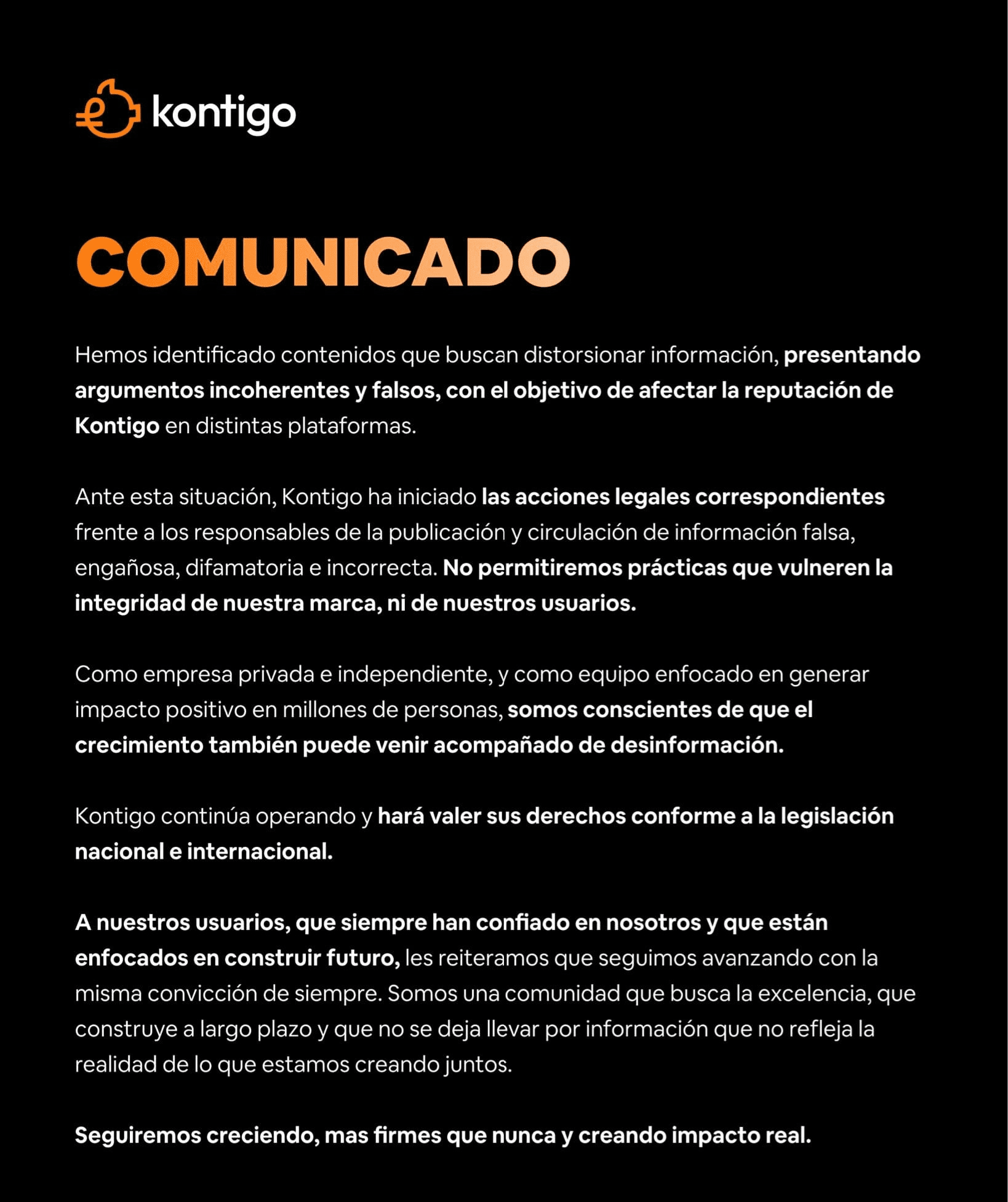
In modern financial markets, credibility is not dictated through press releases; it is validated through data openness. Following the recent manifesto from Kontigo, which announces legal measures against "misinformation", a necessary debate arises about the corporate narrative in the fintech sector.
A preventive analysis allows us to identify three areas of concern:
🔍 From legal threat to technical verification
While traditional companies often take refuge in civil law to protect their image, next-generation financial protocols tend to opt for empirical evidence. Replacing fund audits or operational traceability with litigation warnings creates a trust gap. In finance, a data point kills any rumor; a lawsuit sometimes only amplifies it.
🛡️ Corporate secrecy regarding asset custody
The insistence on the "private" nature of the firm raises an ethical collision. When an entity manages external capital, the right to confidentiality ends where the user's right to financial certainty begins. Without a clear exposure of the mechanisms that generate the return on investment, the business model remains in a "black box" difficult to audit for the average saver.
📉 Success narrative vs. Public scrutiny
It is common to justify criticism as a byproduct of market positioning. However, in high-risk ecosystems, scrutiny is not an attack, but a market defense mechanism. The strength of a brand is not measured by its ability to silence dissenting voices, but by its resilience to the most rigorous questions from its participants.
💡 Final Reflection
The Kontigo case underscores a maxim of the 21st century: Opacity is a market risk. Before committing liquidity, each investor must weigh whether a legal statement provides the technical security that their assets require. Due diligence remains our best protection tool.
#FinancialGrowth #StrategyBTCPurchase #GestiónDeRiesgo #mercados