
In the fast evolving world of Web3, data is becoming just as valuable as tokens and blockchains. Every decentralized application depends on reliable, secure, and permanent access to information. This is exactly where @Walrus 🦭/acc is stepping in with a powerful new vision for decentralized storage and data integrity. Walrus is not just another infrastructure project. It is building the foundation that allows Web3 to grow safely and efficiently.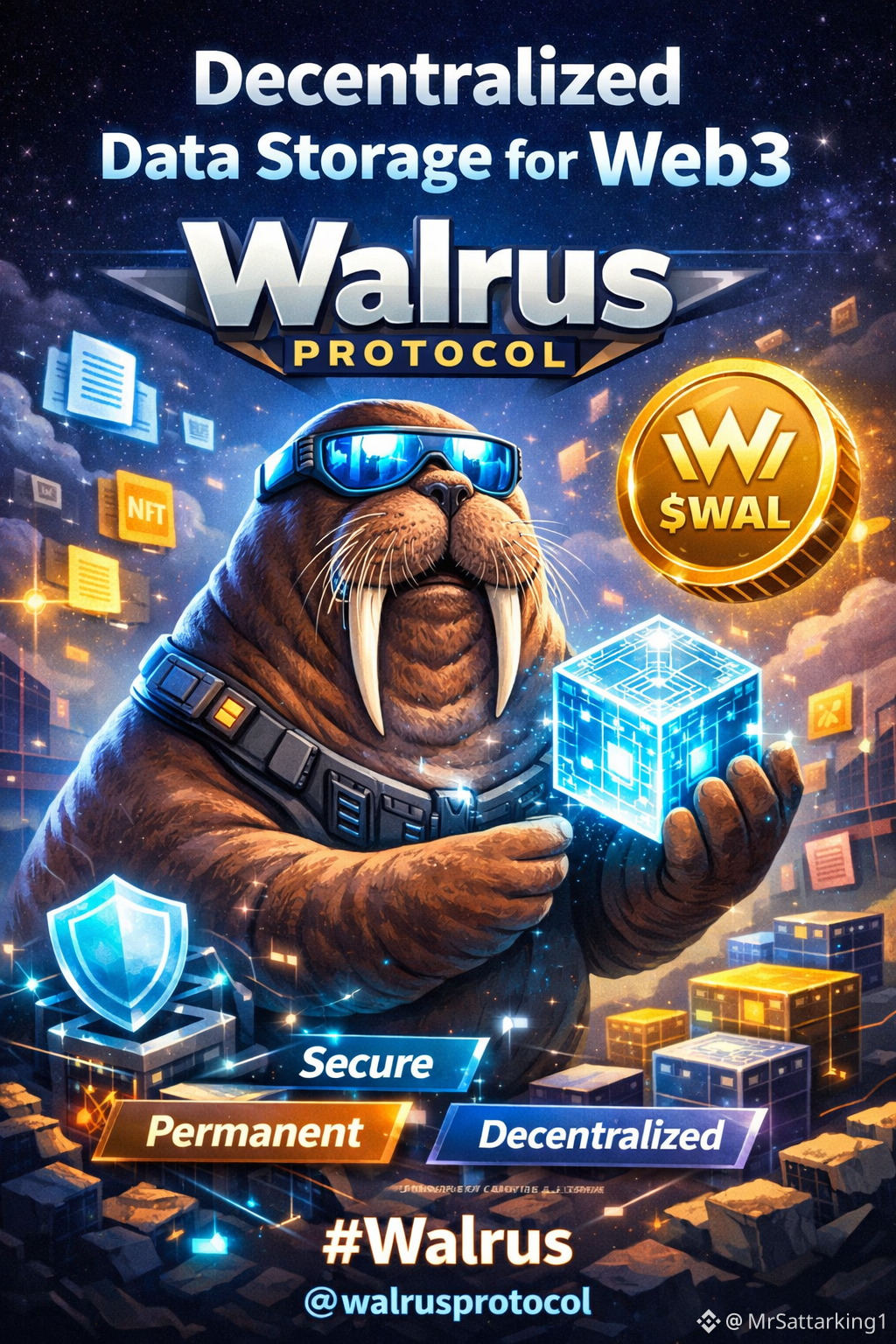
Traditional cloud storage systems were designed for Web2. They rely on centralized servers, single points of failure, and companies that can control or even delete user data. Web3 needs something very different. It needs data that is trustless, censorship resistant, and available forever. Walrus solves this problem by creating a decentralized data storage layer that works seamlessly with modern blockchains, especially the Sui ecosystem.
What makes Walrus special is how it handles data. Instead of storing files on a single server, Walrus splits and distributes data across many independent nodes. This means no single party can control, modify, or remove it. Whether it is NFTs, game assets, DeFi records, or social content, everything stored through Walrus becomes verifiable and tamper resistant. That is a huge step forward for digital ownership.
The $WAL token plays an important role inside this ecosystem. It is used to pay for storage, reward node operators, and secure the network through economic incentives. This creates a balanced system where users get reliable storage and providers are motivated to keep data available and secure. As more applications adopt Walrus, the demand for storage and network activity grows, which directly supports the utility of $WAL.
One of the most exciting parts about Walrus is how it fits into the future of Web3 apps. Gaming platforms need massive storage for player data and in game assets. NFT projects need permanent hosting for images and metadata. DeFi platforms need historical records that cannot be changed. Social networks need decentralized content hosting. Walrus is designed to support all of these use cases in one powerful system.
Because Walrus is built with scalability in mind, it can handle large volumes of data without slowing down. This is especially important as Web3 moves toward mainstream adoption. Millions of users will generate massive amounts of information, and projects like Walrus will be the backbone that keeps everything running smoothly.
Another key advantage of Walrus is privacy. Users and developers can store data without worrying about centralized companies tracking or exploiting it. In a world where digital privacy is becoming more important every day, this is a major benefit.
With strong technology, real world use cases, and a growing community, @Walrus 🦭/acc is positioning itself as a core infrastructure layer for the decentralized internet. As Web3 expands, the need for secure and permanent data will only increase. Walrus is already building the future that blockchain needs.
This is why $WAL and the #Walrus ecosystem are gaining attention from builders and users alike. It is not just about storage. It is about owning your data, protecting your digital life, and powering the next generation of decentralized applications.