
Hello everyone! As a cryptocurrency enthusiast, I have been following the trends in the stablecoin sector. Today, I want to share my in-depth analysis of the Plasma project with you. This Layer 1 blockchain, focused on stablecoin payments, saw its TVL soar to over $2 billion after its mainnet beta launch in 2025, but it also experienced dramatic fluctuations with the price of token XPL crashing from $1.67 to $0.20. As we enter 2026, will Plasma be the next big bull project? Or just another flash in the pan hype? Below, I will analyze from all angles: technology, market, advantages, risks, and my personal opinion to help you clarify your thoughts. Feel free to interact in the comment section of Binance Square to discuss #Plasma #XPL #Stablecoin together!
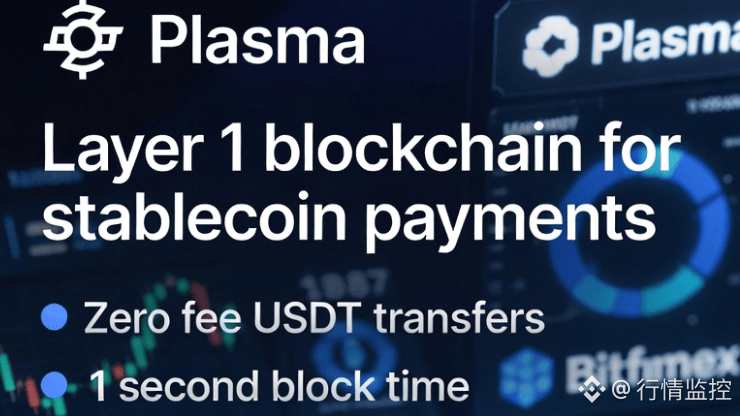
First of all, the core positioning of Plasma is as a “Layer 1 blockchain for stablecoin infrastructure.” Unlike general-purpose chains like Solana or TON, Plasma specializes in stablecoin payment scenarios. It employs the PlasmaBFT consensus mechanism (based on HotStuff optimization), achieving <2 seconds block time, over 1000 TPS, and zero-fee USDT transfers. This means you can use USDT for global instant payments like sending WeChat red envelopes, without worrying about high gas fees or delays. EVM compatibility allows developers to easily migrate applications, and it has a built-in Bitcoin bridge that supports BTC directly into the EVM ecosystem. The recently launched Plasma One neobank is ambitious: covering over 150 countries, providing stablecoin deposit services with an annualized yield of 10%, targeting emerging markets like Southeast Asia and Latin America. Backed by Bitfinex, Tether (with profits exceeding $15 billion), and Peter Thiel's Founders Fund, Plasma has raised $373 million, injecting $2 billion in stablecoin liquidity at the launch of its mainnet. This is not just talk—it directly challenges Visa/Mastercard's 65,000 TPS but achieves “internet speed money” in a crypto-native way.
In terms of market performance, the XPL token had an initial supply of 10 billion, and after the TGE in September 2025, its market cap once exceeded $2 billion, but then it plummeted by 90%, with the current price around $0.258 and a market cap of $465 million. Why the crash? Mainly due to high FDV (fully diluted valuation) at launch, early unlocking pressure, and an overall market correction. But don't rush to conclusions; predictions for 2026 are bright: CoinMarketCap analysts believe it may drop to $0.052 in Q1 but could rise to $0.55 in Q4, with an ROI exceeding 313%. A more optimistic prediction from Chainplay suggests an average price of $1.25 in 2026 and $2.60 by 2028. Why is there great rebound potential? The stablecoin market has surpassed $220 billion, with an annual settlement volume of $15 trillion, outpacing Visa. Plasma has integrated top protocols like Aave, Pendle, and Ethena, with stablecoins accounting for the highest proportion in TVL (over 78% USDT). The Binance Earn and CreatorPad activities (such as 3.5 million XPL token rewards) further boost exposure. Although the 25% supply unlock in July 2026 poses a risk, if the ecosystem grows robustly (like more stablecoin support and privacy transactions launching), demand for XPL will explode from staking and gas payments.
The advantages are obvious: Plasma is not hype, but pragmatism. The zero-fee model is achieved through the foundation prepaying gas and rate limits to prevent Sybil attacks; multi-stablecoin support and cross-border payment bridging perfectly match the global demand for a digital dollar. Compared to competitors like Tempo or Stable, Plasma's Tether endorsement and Bitcoin-backed security model are its trump cards. It does not seek to be all-encompassing but aims to dominate the stablecoin track—this is a wise strategy in fragmented payment networks (like Swift and Zelle coexisting). In terms of ecology, LocalPay has already connected millions of merchants in Southeast Asia, and Cobo supports institutional payments. In the future, with trillions of dollars flowing on-chain, Plasma could become a bridge between DeFi and real finance, driving emerging market users from banks to crypto.
Of course, the risks cannot be ignored. As a nascent project, Plasma faces fierce competition from Solana and TON; while TPS is high, it is not unlimited, and peak load testing is yet to be validated. Regulatory uncertainty is the biggest concern—the tightening of stablecoin policies may impact USDT's dominance. The initial inflation rate of XPL is 5% (gradually decreasing to 3%), coupled with large unlocks in 2026, leading to significant short-term volatility. Some community voices call it a “scam” due to the price crash and the strict KYC of public sales (though it attracted over $273 million in oversubscription, but US users need to lock up until December). If the team remains silent or development lags, a trust crisis may amplify.
My view: Plasma is the dark horse of the stablecoin narrative in 2026! It does not rely on points speculation like Blast, but rather builds infrastructure in a solid way. In the short term, the price may oscillate between $0.18 and $0.30, but once the ecosystem explodes (like Plasma One's global expansion), XPL has tenfold potential. Why am I optimistic? Because stablecoins are not speculation, but a necessity—the global remittance market exceeds $800 billion, and Plasma's zero-fee + instant settlement can capture market share. As a crypto player in Mumbai, I pay special attention to its impact on emerging markets like India. Recommendation: Position with a small allocation, and keep an eye on TVL and unlocking events. This is not investment advice; DYOR! If you are a heavy user of stablecoins, this project is worth tracking.
What do you all think? Will Plasma be the next Solana? Or is the risk too high? Feel free to comment, share, like, and retweet as we rush to gain traction in Binance Square!#Plasma 🚀 $XPL @Plasma @币安广场