

If you only see @undefined as 'just another L1', you are likely to miss its most essential bet:
Plasma is not about increasing TPS, nor is it about exploring DeFi strategies; it is focused on a more fundamental aspect—the 'friction cost' of stablecoin settlements.
In the crypto world, what truly forms a long-term moat is not the narrative, but path dependency:
Exchanges, wallets, merchants, market makers, and cross-border payment companies will ultimately choose the settlement track that is the least costly, the smoothest experience, and the least likely to be bottlenecked.
Why can Tron capture half of USDT's market share? The answer has never been 'more decentralized,' but rather cheaper, more user-friendly, and more like infrastructure.
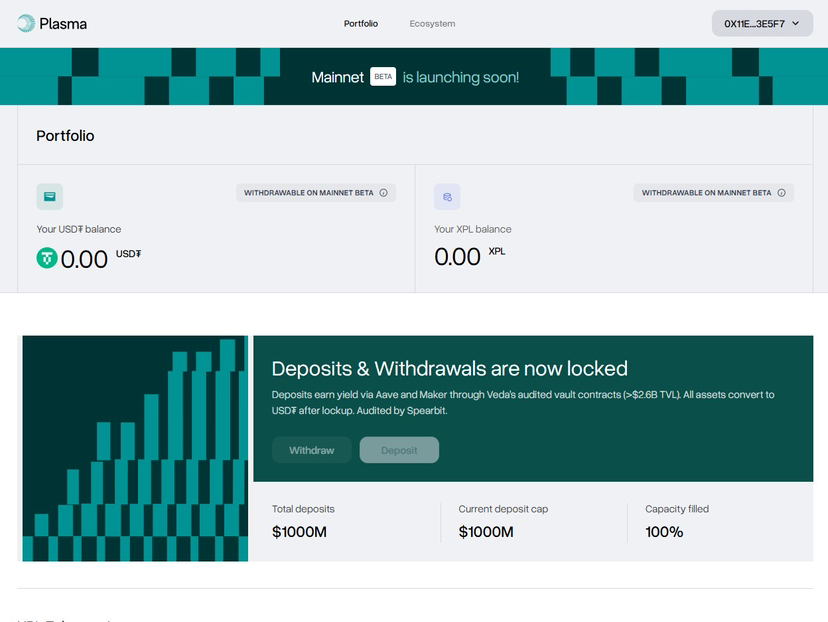
And Plasma's approach this time is simple and brutal:
Directly reduce USDT transfer fees to 0 (or close to 0), and write stablecoins as the network's 'first principle' into the protocol design.
1) The key of Plasma is not 'performance', but 'ledger experience'.
Many chains can claim they are fast, but what truly changes user behavior is 'are you willing to treat it as a default wallet'.
Plasma's thinking is very Web2:
Stablecoin transfers are almost instant: you send it out, it arrives in seconds.
Transaction fees are nearly imperceptible: either 0 or low enough to be ignored.
Stablecoin-priority Gas model: turning 'I only have USDT' into a normal state, rather than an abnormal situation.
This means it is targeting not 'chain circle users', but real payment users: small transfers in emerging markets, cross-border remittances, merchant payments, salary settlements... these scenarios are extremely sensitive to 'every cost'.
Once a habit is formed, the migration cost will be very high—this is the terrifying aspect of the settlement layer.
2) TVL's big ups and downs are not necessarily a bad thing: it tells you who is more genuine about 'incentives' and 'demand'.
Many people see TVL drop from its peak and directly sentence it to death. My understanding is more inclined to 'disassemble components':
Incentive-driven TVL: comes fast, goes fast.
Demand-driven liquidity: not necessarily the highest, but will be more 'sticky'.
So the problem with TVL is not 'how much it has dropped', but what remains on-chain after the drop:
Are stablecoins still circulating on-chain?
Is there real transfer/receiving behavior?
Does lending/DEX form a healthy capital utilization rate?
In one sentence: TVL is inventory, transactions and retention are cash flow.
3) The value capture of $XPL does not rely on 'telling stories', but on 'whether subsidies can turn into network effects'.
The sharpest spear of Plasma, and also the biggest problem: zero fee/low fee.
What does zero fee mean? It means you are using resources to exchange for growth. Whether that growth can become a moat determines whether the subsidy is 'investment' or 'burning money'.
I will look at $XPL with a very realistic framework:
Subsidy → User habits → Merchant access → Transaction retention → Ecosystem income → Security and governance → Further expansion.
As long as there is a break in the chain, subsidies will become 'short-term excitement'.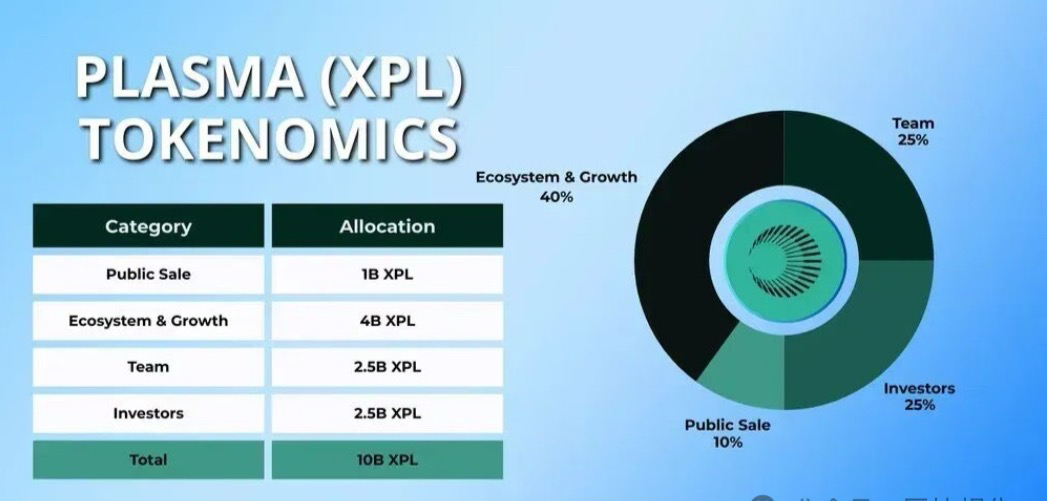
So I won't just focus on price, I'll pay attention to whether the network can still run after the subsidy exits.
4) The 7 'real indicators' I will focus on (I suggest you do too)
If you want to upgrade from 'event trading' to 'settlement layer research', these 7 indicators are worth more than any KOL opinion:
Net inflow of stablecoins (Bridge in - Bridge out)
Is it new money, or moving? Is it custodial migration, or user-driven entry?
Stablecoin turnover rate (Supply remains unchanged but transfer/transactions increase is the way to go)
Simply piling up assets is useless; the key is to 'turn it around'.
Proportion of zero-fee transfers and growth curve
If zero fee is just for brushing volume, then the curve will quickly weaken; real demand will be smoother and more sustained.
Retention of active addresses (D1/D7/D30)
The real moat of the settlement layer = habits. Retention is the hardest answer.
Number of merchant/payment entry points (wallets, acquiring, payment company integration)
As long as merchants get up, users will passively follow.
On-chain fee structure (0 fee subsidy cost vs other transaction income/ecosystem income)
Ultimately need to answer: where does the money come from?
Progress of decentralization in verification nodes and security structure
If the settlement layer is too centralized, institutions and large merchants will hesitate naturally.
5) Competitive perspective: Tron has a strong moat, but it is not invincible.
Tron excels in network effects:
A large amount of USDT stock
Transaction habits/OTC/payment
Low cost, mature paths
For Plasma to win, it must rely on 'experience leap + new market':
Faster confirmation (closer to instant)
Lower friction (0 fee is more aggressive)
Smoother account/payment products (if Plasma One can really open up the fiat entry, that is a key variable)
In simple terms:
Tron is the 'stock king', Plasma bets on the new default option when 'new settlement demand' erupts.
6) I won't sugarcoat the risks: this is a bet with 'high execution risk'.
I believe the biggest risk of Plasma is not in technical slogans, but in real-world implementation:
Zero-fee sustainability: after subsidy tapering, does the experience collapse?
Real payment data is opaque: if only DeFi volume remains at the end, then it goes back to 'another chain' old path.
Decentralized rhythm: the security boundary of the settlement layer must be stricter.
Regulation and channels: payment/account systems are both the ceiling and hell-level difficulty.
 So my attitude has always been:
Can be studied, tracked, and participated in small positions, but don’t use the 'public chain bull market template' to fit it.
Conclusion: Why am I still关注 @Plasma
Because the 'stablecoin settlement layer' once it runs smoothly, will be harder than most narratives.
You may not like $XPL volatility, and you may not agree with its subsidy strategy, but it’s hard to deny a trend:
Stablecoins are becoming the most realistic on-chain currency globally, and the settlement experience will determine who it ultimately belongs to.
I will continue to focus on those 7 indicators.
If you are also looking at @Plasma , we speak with data:
Is it short-term heat, or the embryonic form of the next payment track?