

Friends, the idea for this post came to me after a fruitful discussion in the comments to this post. Mr. @Humberto Atal showed that a significant portion of traders are still trapped in the psychology of low win rates. I will try to help them escape this trap.
So, shall we go?
In trading, there is a dangerous trap: the desire to always be right. Beginners look for the "holy grail" — a strategy with a win rate (percentage of successful trades) of 80–90%. But professionals know: it’s not how often you win that matters, but how much you earn when you are right, and how much you lose when you are wrong.
What is win rate?
Win rate is the ratio of profitable trades to their total number. For example, if out of 10 trades, 3 closed in profit and 7 in loss, your win rate is 30%.
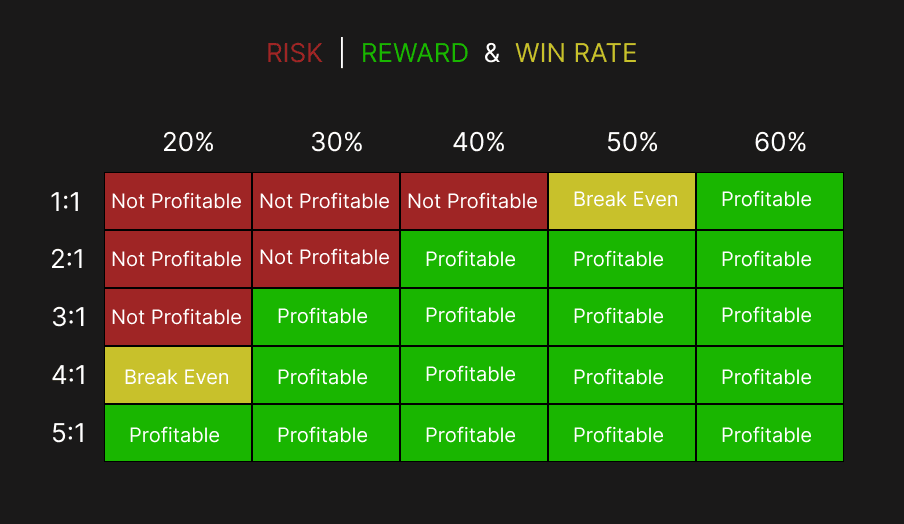
Mathematics vs Emotions
Most people psychologically cannot endure a series of 5-7 consecutive losing trades. The brain perceives this as a defeat, creating a desire to 'get back' or abandon the strategy. However, when adhering to an RR (Risk/Reward) ratio of 1:3, the math looks like this:
7 losing trades: -7% of the deposit (if the risk is 1% per trade).
3 profitable trades: +9% of the deposit.
Result: +2% net profit, despite being wrong in most cases.
Why is it hard to work with a low win rate?
Ego: We find it hard to admit mistakes. A losing trade is subconsciously perceived as a personal failure.
Cycle pressure: During a market phase change (e.g., moving from sideways to trending), market makers may indeed trigger stop losses more frequently. This requires traders to have patience and readiness for temporary drawdowns.
Serial effect: Losses often come in groups. Enduring a week of 'red' trades without breaking your own system is the main challenge of professional trading.
How to work with this?
Treat losses as business expenses: No store operates without expenses for rent or logistics. A stop-loss is your 'rent'.
Keep a journal: Analyze not the result of a single trade, but a series of 50-100 trades.
Backtesting: While past results do not guarantee future profits, testing the strategy on historical data from the last 2-3 years provides confidence that this model works in different phases of the cycle.
Follow me to learn more about how to survive and earn in the world of Web3!


