The beginning of 2026 represents a pivotal turning point in the path of decentralized finance, as the River protocol has emerged as one of the most ambitious solutions to address the issue of liquidity fragmentation across multiple blockchains. Analyzing the trading pair RIVER/USDT involves not just reviewing price numbers, but also requires a deep dive into the technical infrastructure that supports what is known as "Chain Abstraction," a concept aimed at making interaction with different blockchains an invisible and seamless process for the end user. This report is based on accurate data collected up to January 20, 2026, reviewing the structural factors, inflationary pressures, and geopolitical and economic stimuli that will shape price movement in the short, medium, and long term.
The overall landscape and technical innovation in the River protocol
The River protocol is considered a comprehensive system for stablecoins based on chain abstraction, linking assets, liquidity, and yields across diverse ecosystems. The core engine of this system is the stablecoin satUSD, which relies on the "Omni-CDP" mechanism. This technology enables users to collateralize assets on a specific chain, such as Ethereum, and mint satUSD on another chain, such as BNB Chain or Arbitrum, without relying on traditional bridges that are often susceptible to security breaches.
This mechanism called "Asset-Static Liquidity" ensures that assets remain in secure vaults while liquidity flows freely everywhere, enhancing user security and reducing the complexity of cross-chain operations. By the beginning of 2026, the protocol successfully integrated with over 30 major protocols, including Pendle, ListaDAO, and Solv, making satUSD the "global currency" for liquidity across chains.
On-chain banking infrastructure and solutions
The River protocol aims to act as an "On-chain Bank" with billions of dollars, offering advanced features such as SmartVault and PrimeVault. These solutions combine the flexibility of collateral and automated yield strategies that do not require liquidation of positions, allowing users to scale their operations smoothly across multiple networks. These innovations rely on "Real Yield" strategies, which have drawn significant institutional interest, especially from Arthur Hayes' Maelstrom fund, who sees River as a radical solution to the "liquidity islands" problem caused by the explosion of layer one and two solutions.
Market performance analysis and historical price data
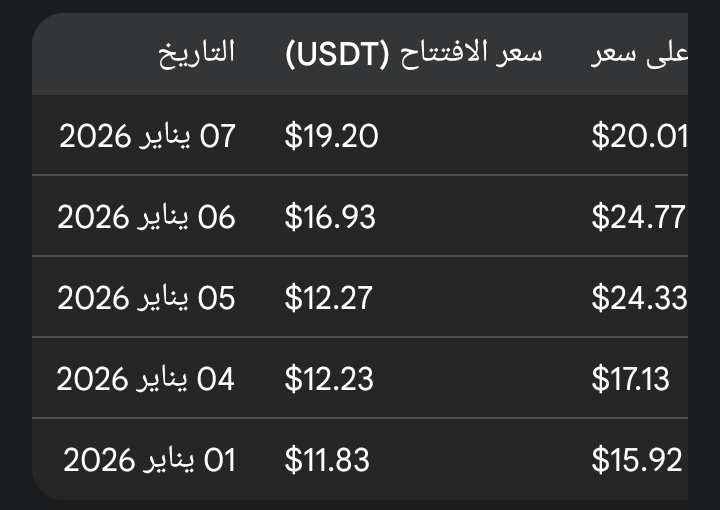
The RIVER/USDT pair has experienced dramatic fluctuations since its launch in September 2025, starting from a historical low of $1.14 to an unprecedented peak of $42.01 on January 14, 2026. This massive surge, exceeding 2100% within a few months, reflects a state of excessive optimism driven by the adoption of new technologies and the influx of Asian liquidity.
Price movement record at the beginning of 2026
Historical data for January 2026 reflects a state of frenetic activity and strong speculation: