
Time Capsules and Digital Immortality: A Deep Dive into How Walrus Becomes the 'Library of Alexandria' of Web3
[Foreword: Against the Entropy of Time]
In the grand narrative of Web3, we often like to talk about 'eternity.' We say that the blockchain is immutable and that Bitcoin will never be issued again. But the physical world is cruel, and the second law of thermodynamics tells us: everything will eventually decay.
Hard drives can lose their magnetism, optical discs can oxidize, servers can lose power, and companies can go bankrupt.
When we saved our first NFT on AWS, did we ever think: will this picture still exist 100 years from now?
If the physical carrier is destined to perish, then what is the purpose of Walrus's existence?
Today, as the finale of the first season of the Blob Life mini-theater, Azure wants to lead everyone on a thought experiment spanning millennia. We will start with the comic in Ep.10 and delve into how Walrus uses the magic of code to combat the entropy increase of the physical world and achieve true **"digital immortality"**.
Chapter 1: Plot Deconstruction – The Absurdity of Physical Backup
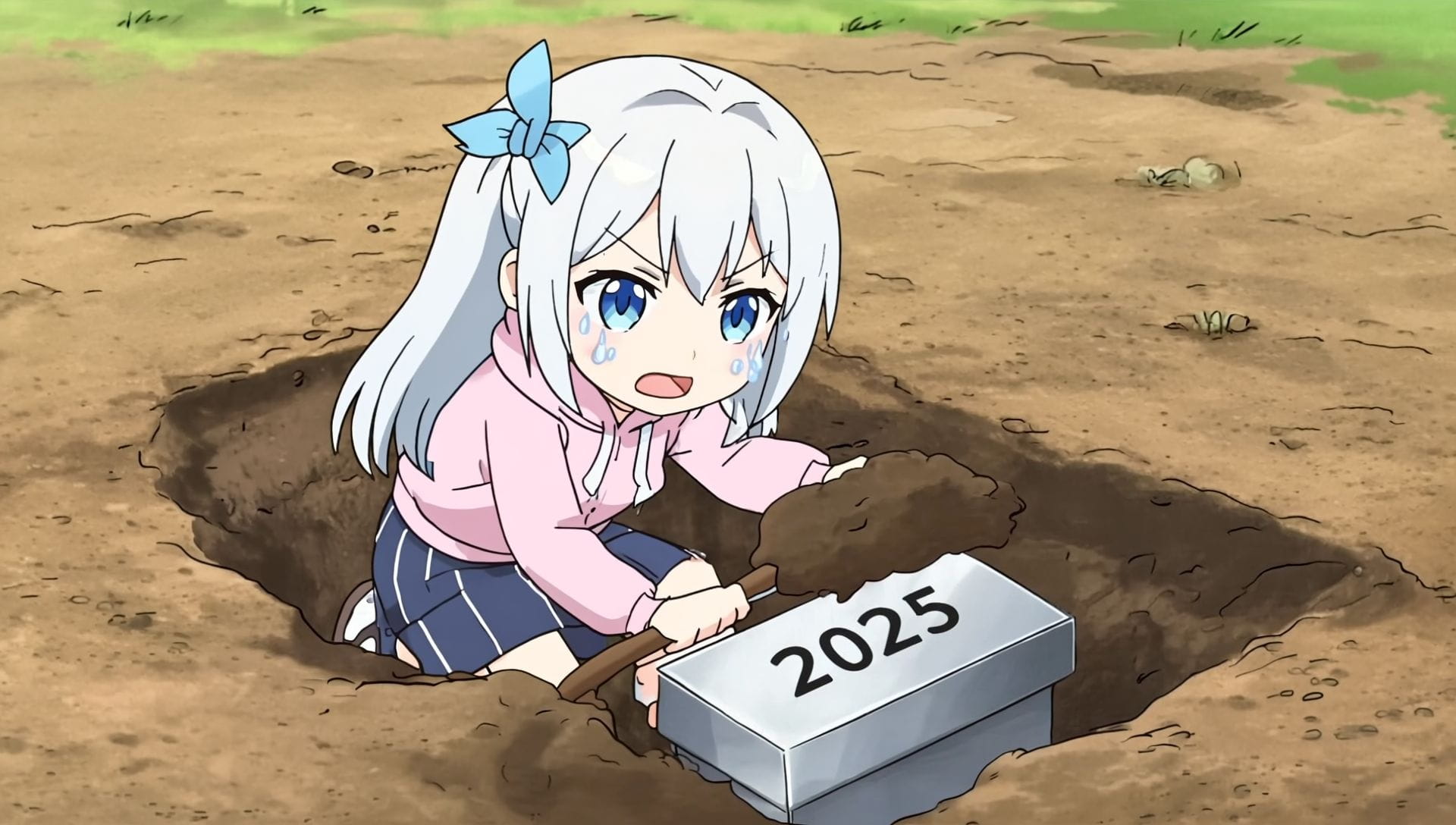
Grid 1: Azure's "clumsy" approach
Azure wanted to preserve a valuable "data of human civilization" (such as the Bitcoin white paper or her private keys to her savings). She chose the most intuitive and traditional physical method: burning the data onto a military-grade hard drive, placing it in a titanium alloy box labeled "TIME CAPSULE," and burying it deep underground.
Azure: Wiping away sweat, his face full of confidence. "Physical isolation, absolute security, a family heirloom!"
Analysis: This is a common misconception among most of us. We assume that "holding it in our hands" equates to safety, but we overlook the decay period of the physical medium itself.
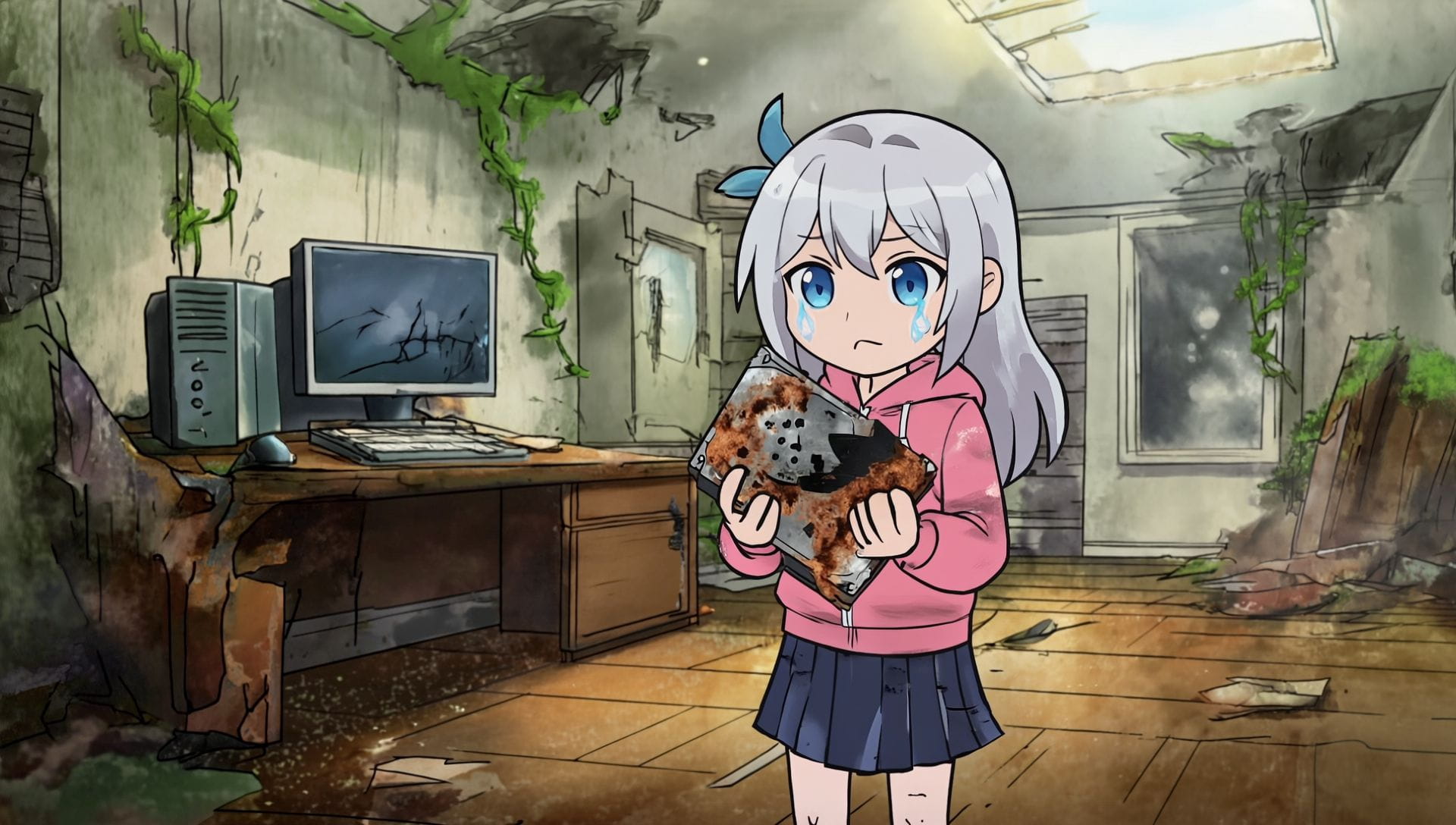
Grid 2: 1000 Years Later
The scene shifts, and the futuristic city has become a cyberpunk ruin. Azure (or her Nth generation android descendant) unearths the box.
I opened it with high hopes—only to be met with despair.
The hard drive has rusted to dust, and the circuit board is completely corroded. Data read failed.
Narrator: Physical carriers, in the end, cannot withstand the test of time.
Explanation: This is what is known as "Bit Rot". No physical hardware can last for a thousand years.
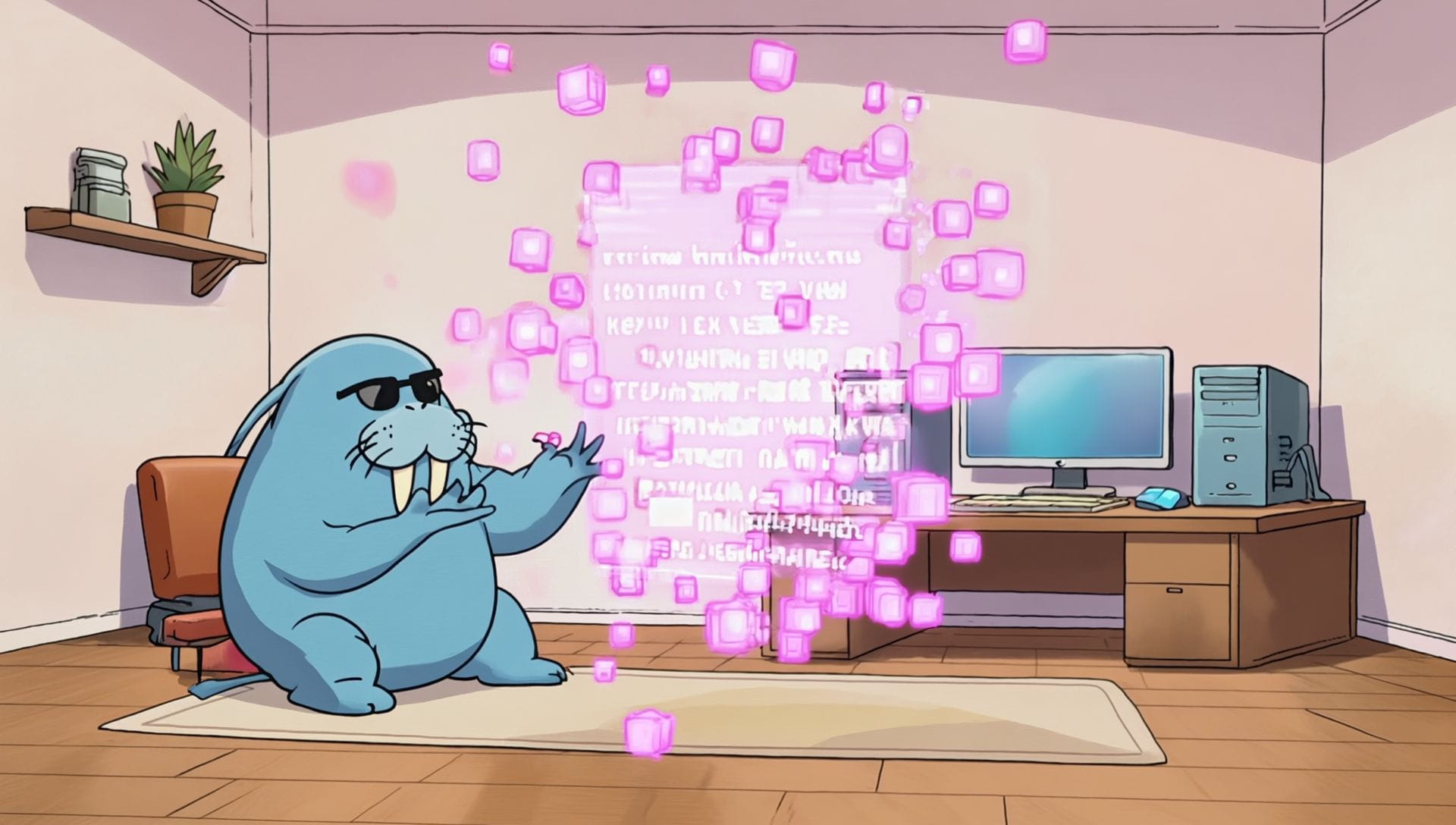
Grid 3: Walrus's Digital Miracle
Wally represents the Walrus protocol; he remains young because code is eternal.
He waved his hand gently, and countless pink Slivers began to converge in the air. These slices were scattered throughout the nodes of the universe; some nodes had died, and some had been newly added, but the data was constantly flowing and being passed down.
Through the reconstruction of two-dimensional erasure codes, the data from a thousand years ago was perfectly reproduced on the holographic screen without losing a single bit.
Wally: Wearing sunglasses, he keeps his achievements hidden.
Explanation: Nodes may replace each other, and hardware may decay, but the Walrus network will last forever.
Chapter Two: Technical Principles – How does Walrus achieve “digital immortality”?
After reading the comic, we need to understand the underlying technical logic. Walrus isn't practicing magic; he's using mathematics to combat probability.
1. Reject "stasis," embrace "flow."
Traditional storage (cold storage) is static; it's left there to remain untouched. But Walrus's data is "alive."
Nodes in the Walrus network constantly perform "heartbeat checks".
If a node is found to be offline (e.g., due to a hard drive failure), other nodes in the network will immediately detect it.
use Red Stuff (2D erasure coding)Due to its characteristics, the remaining healthy nodes will automatically calculate the lost data and "regenerate" it on the new nodes.
This isSelf-Healing。
WalrusJust like a living organism, cells (nodes) metabolize, but the body (data) remains healthy forever. As long as the entire network is still running...WalrusData will never die.
2. Even if nuclear war breaks out...
Walrus's two-dimensional erasure coding allows for an extremely high degree of fault tolerance.
In theory, even if one-third or more of the Earth's territory suffers a devastating blow, resulting in the physical destruction of a large number of nodes, as long as there are still nodes surviving in some corners of the world, Walrus can reconstruct a complete database of human civilization from the remaining fragments.
This is the real "Noah's Ark".
Chapter 3: The Battle of Life and Death Between Competitors – Walrus vs Arweave

When discussing "permanent storage," Arweave (AR) must be mentioned. It was the dominant player in the previous generation of "permanent storage."
However, Azure's teachers believe that Walrus is a game-changer for Arweave.
1. Arweave's Achilles' heel: Immutable zombies
Arweave's logic is: "Write once, never change." This sounds wonderful, but it's a disaster for modern applications.
Game: Requires an updated version patch and modification of player save files.
AI: The model needs fine-tuning, and the knowledge base needs updating.
social contactUsers may need to modify their profile or even delete their past misdeeds (GDPR compliance).
On Arweave, data is "carved in stone" and cannot be altered. This means it can only store static files (history books), not live applications.
2. The Evolution of Walrus: The Variable Eternity
Walrus introduced a revolutionary concept: Mutable Permanence.
Based on Sui's object model, Walrus allows users with private keys to update the contents of buckets and even delete specific slices (in compliance with privacy regulations) while still ensuring data persistence.
This meansYou canWalrusRun an "always online" application.But alsoWebsites, games, or AI agents that are "updated constantly"**.
This is something Arweave cannot do, and also...WalrusCapable of bearingOnThe key to high-frequency ecological applications.
Chapter 4: Commercial Value – Who is willing to pay for “time”?
No matter how advanced the technology, someone has to pay for it. What is the value of $WAL?
The answer is: certainty.
1. The Century-Long Plan of RWA (Real Assets)
Bonds, real estate certificates, and trust deeds issued by institutions often have a validity period of several decades or even hundreds of years.
Would they dare store their products on Amazon Web Services? What if Amazon goes bankrupt?
They can only choose the decentralized Walrus because only Walrus can mathematically prove that this asset certificate will still be verifiable and verifiable 100 years from now.
This is the source of Walrus's confidence in holding $800 million in RWA assets.
2. The "Memory" of AI Civilization
Future AI may outlive humans. AI needs a brain that "doesn't lose its memory."
Walrus provides a persistent memory layer for AI. No matter how many versions of AI iterate, its original training data and evolution logs remain safely stored in slices of Walrus.
$WAL stands for "memory storage fee" in the AI era.
Chapter 5: Azure's Ultimate Investment Strategy
Having finished watching the finale of Ep.10, my first phase of Blob Life evangelism is also nearing its end.
Let's review:
Episodes 1-3: We talked about Walrus's cost savings (cost advantages).
Ep.04-06: We talked about the Walrus's durability and top speed (performance advantages).
Episodes 7-9: We discussed the implementation and infrastructure attributes (ecological advantages) of Walrus.
Ep.10: We talked about Walrus's ultimate vision—time.
My strategy is very simple:
I don't gamble on short-term fluctuations; I gamble on the future of the Sui ecosystem and the future of Web3 data sovereignty.
I will continue to dollar-cost averaging $WAL, continue to stake, and continue to be a quiet "time ally" in the node.
Because I know that when the tide recedes and time stretches out to 10 years, only infrastructure like Walrus can stand firm amidst the ruins.
(End of article. Thank you to everyone who has accompanied Azure through these 10 episodes. Like and follow for more hardcore money-making tips in the next season!)