

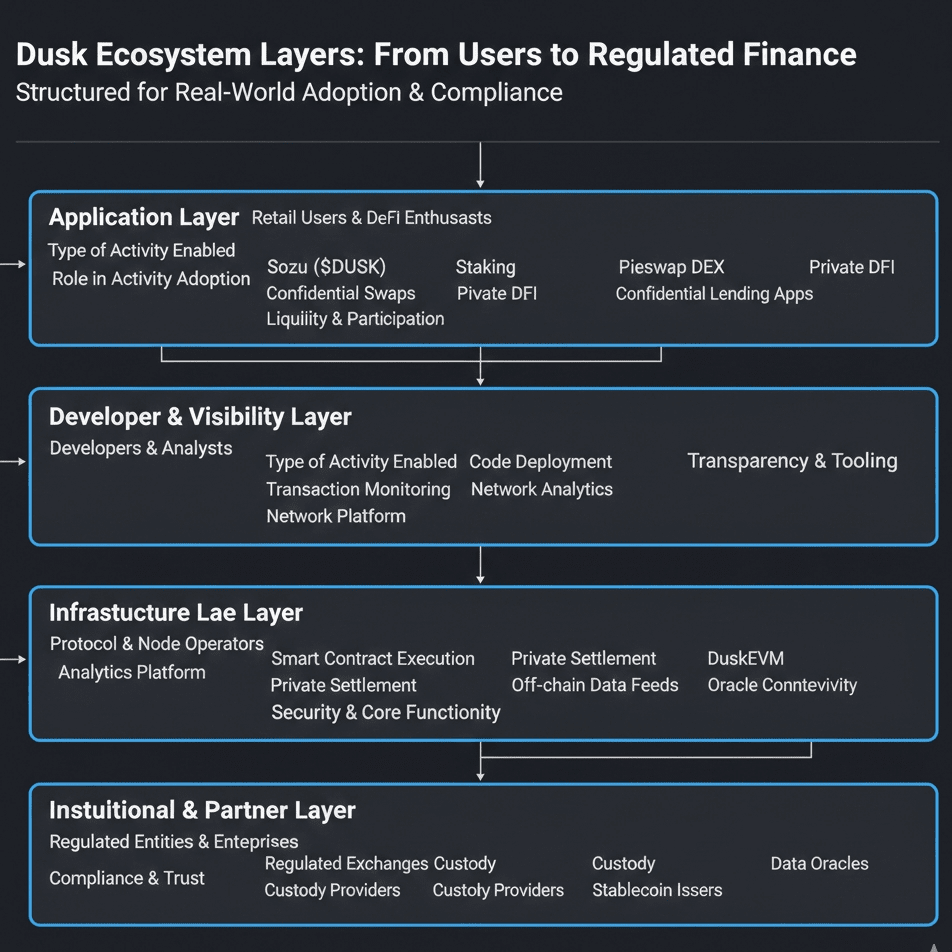
The Dusk Network ecosystem is not just a collection of services built around a single blockchain. It is a layered setup where applications, developer tooling, and regulated financial partners naturally connect with each other. The clear signal is that Dusk's focus is not only on experimentation but also on real-world finance and privacy-centric use cases.
The core of the ecosystem already has some live on-chain applications active. Users can contribute to network security by staking through platforms like Sozu and earn rewards. Alongside this, decentralized exchanges like Pieswap enable liquidity and token swaps on DuskEVM, which organically grows ecosystem activity.
Tooling for developers and advanced users is also a strong pillar of the ecosystem. The Dusk Dashboard helps track network metrics, staking activity, and rewards, while community-run explorers provide the option to inspect transactions and logs in detail. These tools are important not just for visibility but also for building transparency and developer confidence.
Infrastructure and partnerships make the Dusk ecosystem more solid. Integration with Chainlink enables reliable oracle data and cross-chain communication. Collaboration with regulated Dutch exchanges like NPEX makes Dusk relevant for real-world asset issuance and compliant securities workflows. Regulated EUR stablecoin from Quantoz and custody partners like Cordial Systems bring the ecosystem closer to traditional finance.
When looking at all these elements together, a clear picture emerges: Dusk Network is not just a protocol but a functional blockchain infrastructure stack. Here, privacy-focused DeFi, regulated asset issuance, developer-friendly tooling, and institutional integrations are all working in the same direction. This approach differentiates Dusk from speculative narratives and pushes it toward practical blockchain adoption.