

Imagine a world where sending money across borders is as easy as sending a text message—instant, free, and reliable. That’s the vision behind Plasma ($XPL), a Layer-1 blockchain designed from scratch to make stablecoins the native currency of the internet. Unlike general-purpose blockchains, which can choke under heavy traffic or surprise users with unpredictable fees, Plasma’s singular focus is on one thing: making digital dollars work everywhere, instantly, and without friction.
A Stablecoin-First Approach
Plasma isn’t chasing every blockchain trend—it’s betting on what works right now: stablecoins. In today’s world, stablecoins aren’t just crypto tokens; they’re the rails powering cross-border payments, remittances, and institutional settlements. Plasma tackles the biggest pain points head-on:
Zero-Fee Transfers: On Plasma, moving USDT costs nothing. That’s right—no gas fees, no hidden charges. It’s a small but powerful step toward everyday adoption.
Instant Finality: Thanks to Plasma’s custom PlasmaBFT consensus (built on HotStuff), transactions settle in under a second. For merchants and exchanges, this kind of speed is a game-changer.
Bitcoin-Anchored Security: Plasma borrows from the best. By anchoring its state commitments to Bitcoin, the network gains rock-solid security while keeping the flexibility of smart contracts.
The Role of XPL Tokens
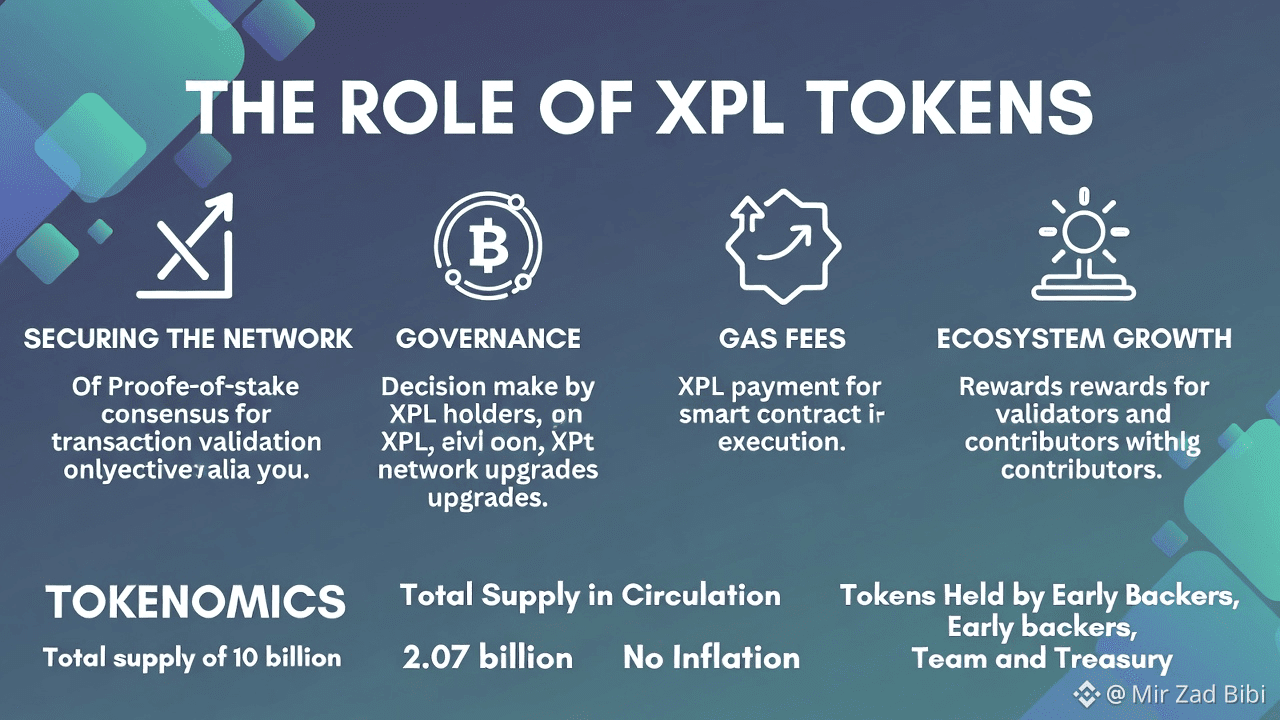
While stablecoins flow freely across the network, the $XPL token is the backbone that keeps Plasma running. Here’s how it matters:
Securing the Network: Validators stake XPL to participate in the Proof-of-Stake consensus, making sure every transaction is safe and reliable.
Governance: XPL holders have a say in how the network evolves—from protocol upgrades to key policy changes.
Gas Fees for Complex Operations: Beyond simple transfers, XPL powers more sophisticated smart contract interactions.
Ecosystem Growth: A chunk of XPL is dedicated to incentivizing developers and liquidity providers, nurturing a thriving ecosystem.
Out of a total supply of 10 billion XPL tokens, about 2.07 billion are currently in circulation, creating a balance between immediate utility and long-term scarcity.
Real-World Backing and Use Cases
Plasma isn’t just a concept—it’s backed by some of the most respected names in the crypto world. Investors like Peter Thiel’s Founders Fund, Framework Ventures, and Bitfinex have collectively poured over $75.8 million into the project. Partnerships with Tether and integrations with DeFi protocols like Aave and Pendle show Plasma is serious about delivering practical financial solutions.
So, what can Plasma actually do?
Cross-Border Payments: Move money internationally in seconds, bypassing slow banks and high fees.
Exchange Settlements: Trading firms can shift large dollar-denominated liquidity between venues quickly and securely.
Global Business Operations: Corporations can pay employees and vendors around the world in real time, all on-chain.
Market Snapshot and the Road Ahead
As of January 23, 2026, XPL trades around $0.1258 USD, a drop from its all-time high of $1.68 in September 2025. Short-term volatility is normal, driven by post-launch market activity and upcoming token unlocks, like the U.S. participant release in July 2026.
But beneath the price swings, Plasma’s fundamentals are solid. It quickly became the second-largest on-chain lending market and now plays a key role in the $63 billion USDT0 cross-chain liquidity network. Looking ahead, 2026 promises the launch of Plasma One, a stablecoin-native neobank, and a trust-minimized Bitcoin bridge to boost liquidity even further.
Why Plasma Matters
At its core, Plasma is a bet on a future where stablecoins become the world’s money rails. It’s not built for hype or speculation—it’s engineered for utility. By solving real financial problems, providing robust security, and enabling seamless global payments, Plasma is positioning itself as a cornerstone of the next era of digital finance.
In short, Plasma isn’t just another blockchain—it’s the backbone for the internet’s native dollar.
